





CSL Launches World’s First Battery-Powered Self-Unloading Bulker in Australia
CSL and Australian construction materials group Adbri have begun operating what they describe as the world’s first battery-powered self-unloading bulk carrier, introducing a lower-emission shipping...

CSL and Australian construction materials group Adbri have begun operating what they describe as the world’s first battery-powered self-unloading bulk carrier, introducing a lower-emission shipping solution into South Australia’s coastal cement supply chain.
Quick Skim
The new 11,900 dwt Yampu has been purpose-built to transport limestone from Adbri’s Klein Point quarry on the Yorke Peninsula to its Birkenhead cement plant in Adelaide.
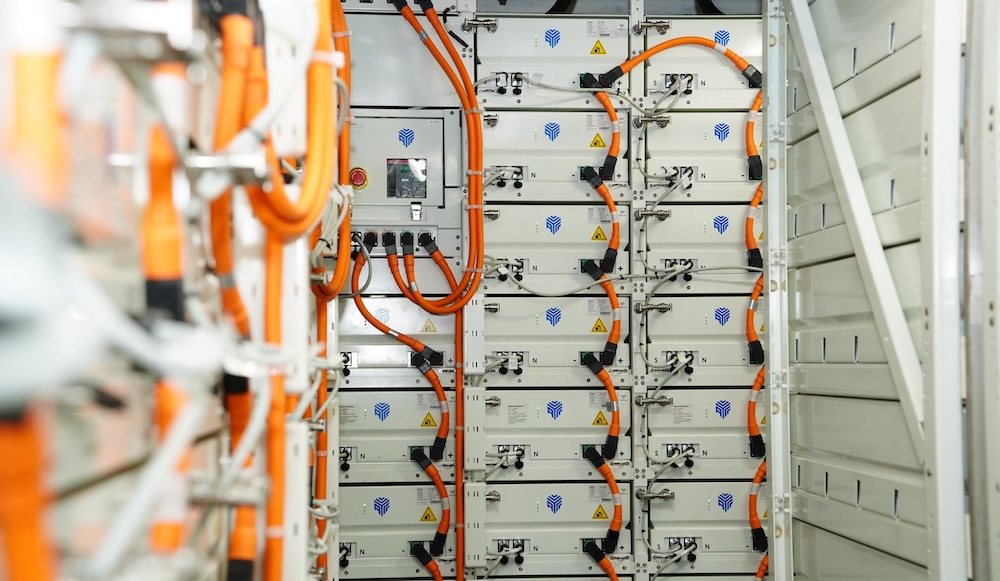
The 125-metre vessel is equipped with a 6,758 kWh battery system and is expected to operate on battery power for around 40% of its operating time.
Battery System Cuts Diesel Consumption
Yampu’s batteries are recharged while the vessel is alongside at Birkenhead.
Compared with the vessel it replaces, Accolade II, the new bulker is expected to reduce diesel consumption by more than 500,000 litres each year.
CSL also expects the vessel to cut Scope 1 emissions by around 40%, supporting Adbri’s efforts to lower emissions across its industrial supply chain.
The vessel has also been designed so that it could eventually operate entirely on battery power in the future.
Self-Unloading Vessel Supports Cement Supply Chain
Yampu will transport around 2.7 million tonnes of limestone annually between Klein Point and Birkenhead.
The vessel is expected to increase annual transport capacity on the route by approximately 35%, while maintaining the regular movement of raw material required for Adbri’s cement manufacturing operations.
As a self-unloading bulk carrier, Yampu can discharge its own cargo without relying entirely on shore-based unloading equipment, supporting faster and more efficient material handling.
The vessel forms part of an integrated coastal logistics network connecting quarry operations directly with cement production.
Battery-Electric Technology Moves Into Bulk Shipping
Battery-electric propulsion has been gaining ground across ferries, harbour vessels and short-sea shipping, but Yampu extends the technology into self-unloading bulk transport.
The vessel’s fixed coastal route provides conditions suited to partial battery operation because it regularly returns to the same terminal where charging infrastructure is available.
This allows the vessel to combine battery power with conventional propulsion while reducing fuel use across repeated voyages.
The approach could provide a model for other short-distance industrial shipping routes where vessels operate between fixed ports and have predictable energy requirements.
Australian Coastal Shipping Adopts Lower-Emission Technology
Yampu is owned and operated by CSL and crewed by Australian seafarers.
The vessel’s deployment combines new propulsion technology with an existing industrial logistics operation rather than creating a separate demonstration project.
By integrating battery power into the routine transport of limestone, CSL and Adbri are testing how electrification can be applied to commercial bulk shipping while maintaining cargo capacity and operational requirements.
The project also highlights the growing role of vessel efficiency and alternative propulsion technologies as industrial companies seek to reduce emissions across their logistics operations.