




Thailand Increases TIWF Exhibition Size by 51% to Boost ASEAN Woodworking Industry
The Thailand International Woodworking & Furniture Exhibition 2026 expanded by over 50%, reflecting growing international interest and technological adoption in ASEAN’s woodworking sector.

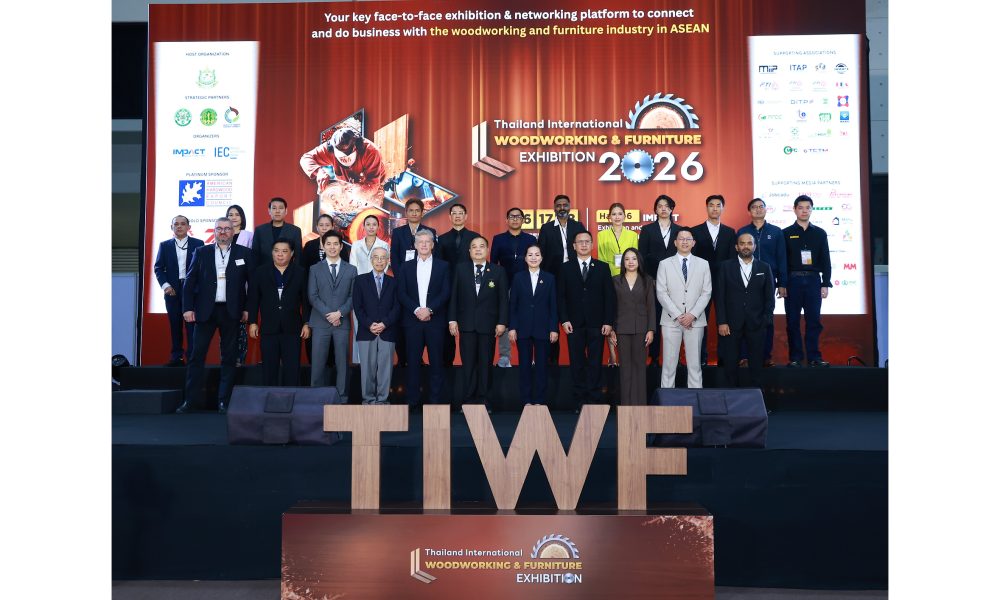
The Thailand International Woodworking & Furniture Exhibition (TIWF) 2026 opened at the IMPACT Exhibition and Convention Center, Muang Thong Thani, expanding its exhibition area by 51% compared to 2024, underscoring Thailand’s growing role in ASEAN’s woodworking and furniture industry.
Quick Skim
- Exhibition Growth Signals Rising Market Demand
- Focus on Sustainability and Resource Management
- Integration of Advanced Technologies in Manufacturing
- Industry Collaboration and Knowledge Exchange
- Expanding International Networks and Market Access
- Implications for the Woodworking and Furniture Industry
- Future Outlook
Exhibition Growth Signals Rising Market Demand
TIWF 2026 brought together more than 400 brands from 200 companies across 19 countries, marking a significant increase from its inaugural edition. This expansion reflects rising international interest in technology and innovation within Thailand and the broader ASEAN woodworking sector.
According to Mr Ludger Müller, Managing Director of IEC Messevertriebs GmbH, the enlarged scale and diverse participation demonstrate both the market’s strength and Thailand’s position as a regional business hub for technology providers, manufacturers, and industry stakeholders.
Focus on Sustainability and Resource Management
Ms Darika Saranket, Advisor to Thailand’s Minister of Natural Resources and Environment, highlighted the exhibition’s role in promoting sustainable use of plantation and economic timber and responsible forest resource management. She emphasised that TIWF fosters collaboration among public and private sectors to balance economic development with conservation efforts.
The ministry’s involvement indicates a governmental commitment towards industry practices that support decarbonisation and environmental responsibility within the woodworking supply chain.
Integration of Advanced Technologies in Manufacturing
TIWF 2026 showcased a comprehensive range of technologies spanning the woodworking value chain, including wood-processing machinery, automation systems, materials, surface treatments, hardware, software, and factory management systems. Manufacturers are increasingly adopting these to enhance productivity, reduce waste, and improve product precision.
Mr Loy Joon How, General Manager of IMPACT Exhibition Management Co., Ltd., noted that TIWF serves as a gateway for connecting international technology providers with Thai and regional manufacturers, facilitating improvements in production efficiency and competitiveness.
Industry Collaboration and Knowledge Exchange
Alongside the exhibition floor, TIWF 2026 featured forums and knowledge-sharing sessions addressing topics such as sustainable manufacturing, design innovation, hardwood applications, and timber certification. Programmes included the Sustainability Masterclass Forum, Design Talk, and regional industry forums providing practical insights and professional skill development.
The event provided platforms for technical learning, exemplified by the Carpentry Masterclass, supporting skill advancement in professional woodworking techniques.
Expanding International Networks and Market Access
The event was supported by 23 associations across 6 countries and 25 media organisations from 14 countries, facilitating extensive international networking. This broad participation enables Thai manufacturers to access new technologies, forge global partnerships, and adapt efficient production approaches.
For international exhibitors and visitors, TIWF provides direct engagement with one of Southeast Asia’s key manufacturing hubs, promoting business development within Thailand and the ASEAN region.
Implications for the Woodworking and Furniture Industry
The expansion and scope of TIWF 2026 indicate accelerating adoption of automation, digitalisation, and sustainable production methods in Southeast Asia’s woodworking industry. These trends are likely to influence supply chain optimisation, product development, and regulatory compliance across regional operations.
The increased presence of environmental and resource management stakeholders points towards greater industry alignment with sustainable practices, potentially improving workforce safety and environmental outcomes.
Future Outlook
Going forward, TIWF is positioned to continue facilitating technology transfer and industrial collaboration between ASEAN manufacturers and global providers. The dialogue between industry, government, and academia at the event may accelerate the region’s transition to more efficient and environmentally responsible woodworking and furniture production.