

KRISO and KOMSA Collaborate on Alternative Fuel Testing and Smart Ship Monitoring
KRISO and KOMSA have partnered to advance eco-friendly vessel technologies and remote monitoring systems supporting maritime decarbonisation in South Korea.

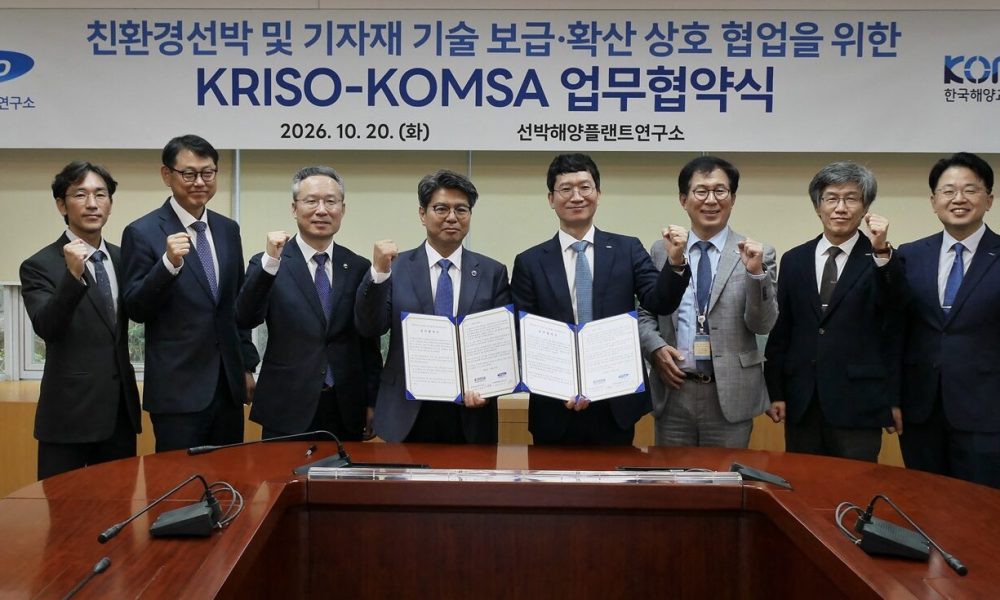
The Korea Research Institute of Ships & Ocean Engineering (KRISO) and the Korea Maritime Transportation Safety Authority (KOMSA) signed a memorandum of understanding (MoU) on 20 October 2026 to enhance research and development of eco-friendly ships and maritime equipment technologies in South Korea.
Quick Skim
- KRISO’s Alternative Fuel Test Vessel Supports Green Technology Development
- KOMSA Develops Shore-Based Remote Monitoring System
- Collaboration Aims to Combine Research and Industrial Application
- Focus on Decarbonisation and Digital Transformation in Coastal Maritime Sector
- Support from Government and Regional Organisations
- Implications for Maritime Operations and Industry in Asia-Pacific
- Next Steps in Maritime Technology Integration
KRISO’s Alternative Fuel Test Vessel Supports Green Technology Development
KRISO operates the 2,600-GT K-GTB vessel, designed to evaluate multiple alternative marine fuels concurrently. The vessel tests technologies such as megawatt-scale marine batteries, fuel cells, and engines capable of co-firing carbon-free fuels under actual sea conditions.
Since 2025, KRISO has used the K-GTB to demonstrate next-generation antifouling coatings, onboard accident response mechanisms, and buoyancy assistance systems, integrating these developments into its green maritime research programme.
KOMSA Develops Shore-Based Remote Monitoring System
KOMSA is advancing a remote monitoring platform that utilises real-time operational data to enhance vessel safety and maintenance. This system enables domestic shipyards and marine equipment manufacturers to access performance information, aiding fault diagnosis, predictive maintenance, and improved operational safety.
The integration of K-GTB’s operational data into KOMSA’s system forms a core part of the partnership, linking vessel test data directly with shore-based monitoring capabilities.
Collaboration Aims to Combine Research and Industrial Application
Under the MoU, KRISO will provide KOMSA with demonstration data from the K-GTB, reference models for coastal vessel green transition, and information on maritime safety technologies. This data exchange supports the practical application of innovations in the South Korean maritime industry.
KRISO President Jung Jong-jin emphasised that connecting research outputs with industrial use is vital to enhancing the competitiveness of eco-friendly shipping technologies.
Focus on Decarbonisation and Digital Transformation in Coastal Maritime Sector
KOMSA Chairman Ahn Young-cheol highlighted the importance of decarbonisation and digitalisation within the coastal maritime sector. He noted that the partnership will broaden access to technological information and underpin the domestic maritime industry’s transition to greener operations.
Support from Government and Regional Organisations
The development of the K-GTB vessel and KOMSA’s remote monitoring system has been backed by South Korea’s Ministry of Oceans and Fisheries, the Korea Institute of Marine Science & Technology Promotion (KIMST), and regional authorities.
Implications for Maritime Operations and Industry in Asia-Pacific
The collaboration between KRISO and KOMSA integrates alternative fuel testing with smart monitoring, which may optimise vessel operations and maintenance processes. Real-time data sharing can improve fault detection and predictive maintenance, potentially reducing operational downtime and enhancing safety.
For the Asia-Pacific maritime sector, this approach supports broader decarbonisation goals by facilitating the adoption of multiple zero-carbon fuel technologies and providing manufacturers and operators with actionable performance insights.
Furthermore, the partnership exemplifies a coordinated model where research institutes and regulatory bodies jointly accelerate technology adoption in shipping, which could serve as a template for other economies navigating similar transitions.
Next Steps in Maritime Technology Integration
Moving forward, the integration of operational and safety data from vessels like the K-GTB into real-time shore-based monitoring platforms will be critical. The ongoing collaboration seeks to validate these systems under operational conditions and expand their application among domestic industry stakeholders to support green maritime development in South Korea.