Intermodal Terminal Company Begins Freight Operations at Melbourne’s Largest Facility
The Intermodal Terminal Company has commenced operations at Melbourne Intermodal Terminal, Australia’s largest, enhancing regional supply chains and rail freight capacity.

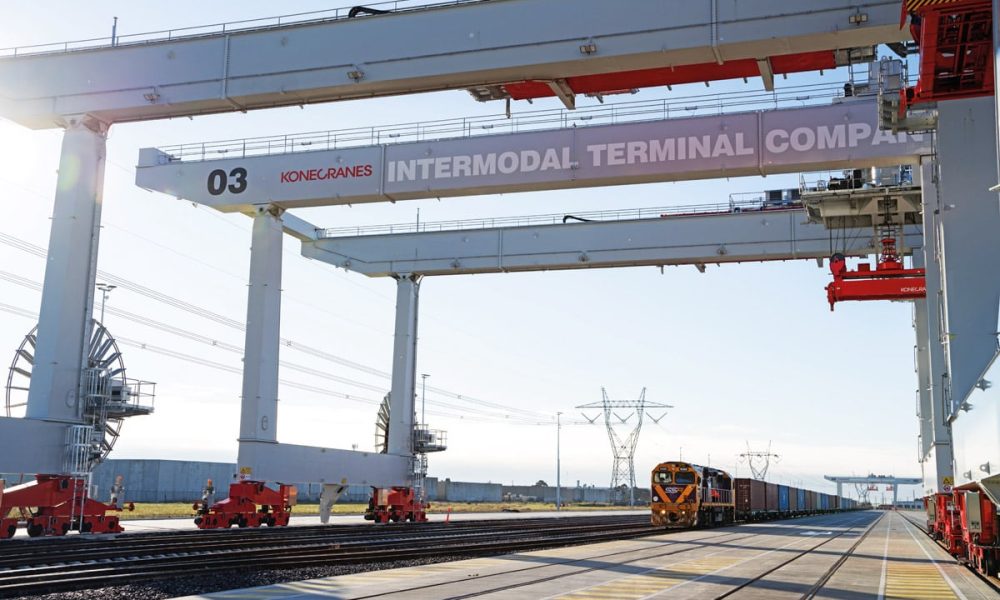
The Intermodal Terminal Company (ITC) has started freight operations at the Melbourne Intermodal Terminal (MIT), the largest facility of its kind in Australia, positioned to improve supply chain resilience and support the country’s transition to efficient rail freight transport.
Quick Skim
Melbourne Intermodal Terminal Delivered to Boost Supply Chain Efficiency
The ITC, chaired by John Fullerton, completed the MIT within two years through collaboration with shareholder Aware Super, transport agencies, rail operators such as the Australian Rail Track Corporation (ARTC), and contractors including Acciona, Konecranes, and Kalmar. The S$400 million terminal is situated in Melbourne’s northern industrial zone, approximately 20 kilometres by rail from the Port of Melbourne.
Fullerton highlighted MIT’s strategic location within a key logistics corridor, with access to both broad-gauge Victorian and standard-gauge interstate rail networks, as well as proximity to the Hume Highway, facilitating integrated transport modes.
Facility Features and Capacity Specifications
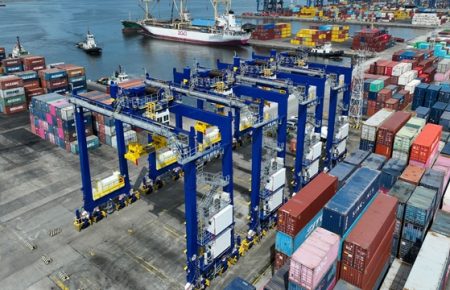
The MIT spans over 45 hectares, combining interstate and import-export terminals. It offers 30 hectares of concrete hardstands capable of stacking full containers five-high and empties seven-high.
Rail infrastructure includes dual-gauge sidings and seven semi-automated rail-mounted gantry cranes, each with a capacity of up to 40 container moves per hour. The initial annual throughput capacity is set at one million twenty-foot equivalent units (TEUs), split between 650,000 TEUs for interstate and 350,000 TEUs for port shuttle operations.
Integration with Wider Industrial and Logistics Development
The MIT forms the core of a S$1.6 billion Melbourne Intermodal and Industrial Exchange (MIIX), a 99-hectare industrial and logistics precinct in Somerton. Internal roadways enable the movement of containers above public road weight limits, reducing interfacility transfer costs.
ITC Acting CEO Brendon Gibson noted that the terminal provides customers with customs-bonded storage, container parks, on-hiring and de-hiring services, alongside container washing, fumigation and repair facilities on site. These integrated services facilitate operational efficiencies and scale flexibility for users.
Operational Impacts on Freight Logistics
The MIT offers direct rail access which enables freight to avoid city motorway congestion and tolls, streamlining port-to-warehouse transfers in Melbourne’s northern industrial zone.
Since beginning operations in late 2025, the terminal has handled over 400 rail freight services between the MIT and the Port of Melbourne, supporting the Victorian Port Rail Shuttle Network. Each shuttle train averages around 80 TEUs per 600-metre consist.
Industry participants including COSCO Shipping, Harders Global Logistics, Plasdene Glass-Pak, and O’Brien Logistics Group have adopted MIT services. COSCO Shipping emphasised that the terminal’s single through bill of lading for containers reduces port-side congestion and simplifies inland transport. Harders highlighted rail freight’s lower emissions and safety advantages in supply chains.
Context Within National Freight Strategy
The Australian Government’s 2025 National Freight and Supply Chain Strategy identifies fully integrated intermodal precincts as crucial to enhancing national supply chain productivity and competitiveness.
The Victorian Rail Freight Plan 2026-36 further underscores the strategic importance of intermodal terminals like MIT in supporting intercity rail freight and facilitating modal shifts from road to rail.
Outlook for Rail Freight Growth
Fullerton indicated that the volume of container freight on rail is expected to grow steadily to 2050, notably along the Melbourne-Adelaide-Perth corridor, positioning MIT as a key enabler of this expansion.
The facility’s access to prime industrial land and proximity to major transport networks provides supply chain operators with opportunities to optimise freight flows and logistics operations in the region.