


EPG Advances Modular Data Centre Manufacturing with US$120 Million Malaysia Factory
EPG Modular Data Center has topped out its new US$120 million factory in Johor, Malaysia, enhancing production capacity for Southeast Asia.

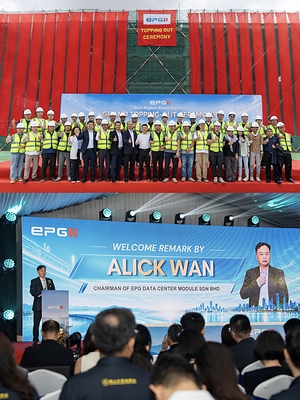
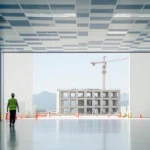
EPG Modular Data Center has marked the topping-out of its Free Industrial Zone (FIZ) factory at Senai Airport City in Johor, Malaysia, representing a significant step in expanding manufacturing capacity closer to customers in Southeast Asia. The development is set to enhance EPG’s ability to meet regional demand for modular data centre infrastructure.
Quick Skim
- US$120 Million Investment Supports Large-Scale Production Facility
- Comprehensive Manufacturing and R&D Infrastructure
- Automation and Digital Integration in Manufacturing Processes
- Regional Production Benefits and Supply Chain Coordination
- Commitment to Sustainable and Responsible Operations
- Implications for Industrial Operations in Asia-Pacific
- Outlook for EPG’s Manufacturing Expansion
US$120 Million Investment Supports Large-Scale Production Facility
The FIZ Factory spans 107,450 square metres, incorporating 70,000 square metres dedicated to production space. The construction is expected to complete in the first quarter of 2027. Based on current projections, the facility will be one of the largest single-site modular data centre module manufacturing locations by production capacity within the sector.
Upon full operation, the factory will employ over 800 people locally, contributing to workforce development in the Johor region.
Comprehensive Manufacturing and R&D Infrastructure
The site includes five main buildings designated for sheet metal fabrication, power transfer unit product manufacturing, diesel generator production, final assembly, and facilities for research and development alongside office spaces.
Production will cover modular data centre shelters and auxiliary equipment such as diesel generator sets and power transfer unit (PTU) power modules.
Automation and Digital Integration in Manufacturing Processes
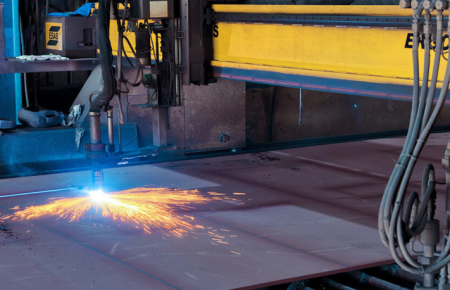
Designed for flexibility and digital enablement, the factory will integrate automation and intelligent control systems, including automated welding technology. The production lines aim for an automation rate of at least 80%, encompassing processes such as pretreatment, laser cutting, robotic welding, and dust-free coating.
A modular line design will allow for multiple product types and specifications to be manufactured concurrently.
Digital platforms will link various operational aspects through supplier relationship management (SRM), product lifecycle management (PLM), manufacturing execution systems (MES), quality management systems (QMS), and warehouse management systems (WMS). Digital twin technology will provide production visibility and traceability, while intelligent sensing and real-time alerts will enhance workplace and equipment safety.
Regional Production Benefits and Supply Chain Coordination
By consolidating modular data centre shelter and critical power equipment manufacturing in Malaysia, EPG aims to position production closer to key customers in the region. The factory is expected to improve coordination between production and assembly processes, supporting timely project delivery and greater operational flexibility.
Commitment to Sustainable and Responsible Operations
EPG has outlined commitments to resource efficiency, waste reduction, environmental protection, employee safety, and local talent development within the facility. The company will operate in compliance with Malaysian legal and regulatory frameworks, integrating environmental, social and governance (ESG) principles into its management, compliance, and risk processes.
Collaboration with Malaysian suppliers and partners forms a key part of EPG’s local engagement strategy.
Implications for Industrial Operations in Asia-Pacific
The establishment of this factory is anticipated to strengthen the supply chain resilience for modular data centre components in Southeast Asia, reducing lead times and logistics complexity. The high degree of automation and digital integration may optimise production efficiency and quality control, while also requiring a workforce skilled in advanced manufacturing technologies.
Such developments support the broader digital infrastructure expansion across the APAC region, aiding enterprises and cloud providers to deploy scalable data centre resources more effectively.
Outlook for EPG’s Manufacturing Expansion
EPG’s founder and chairman, Alick Wan, noted that the FIZ Factory establishes a strategic manufacturing base that can adapt to evolving customer requirements in regional and potentially other global markets. Future work will focus on leveraging advanced manufacturing capabilities and local partnerships to support growing data centre infrastructure demand across APAC and beyond.