

Kawasaki Automates Production Line for Vacuum-Insulated Piping in LH2 Plants
Kawasaki has launched an automated production line for vacuum-insulated double-wall piping for liquefied hydrogen plants to support commercial-scale supply chains.

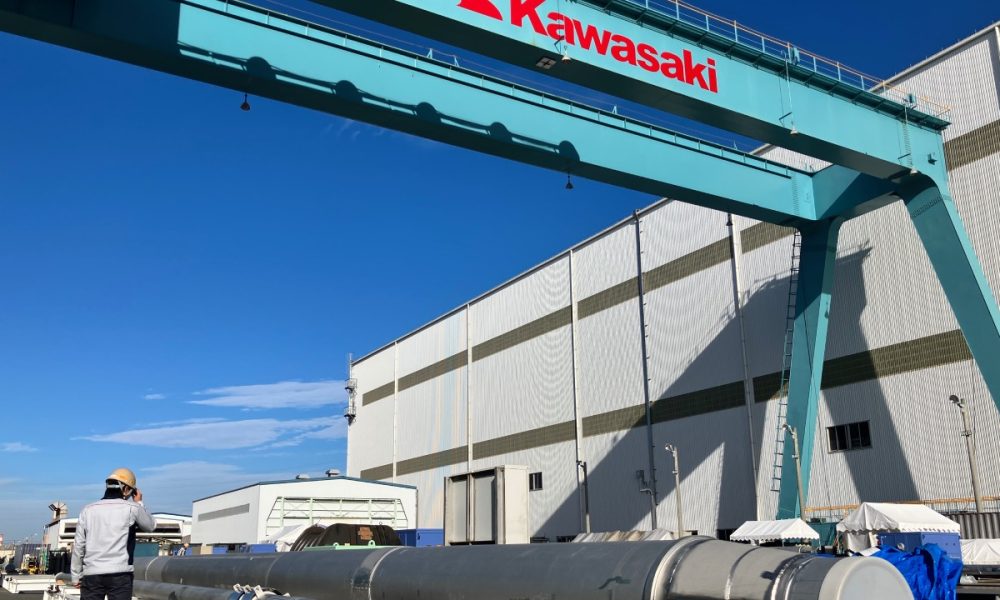
Kawasaki Heavy Industries has established an automated production line at its Harima Works in Japan to manufacture vacuum-insulated double-wall piping for commercial-scale liquefied hydrogen plants, marking a significant step in improving liquefied hydrogen supply chains.
Quick Skim
Automated Production Line Enhances Manufacturing Efficiency
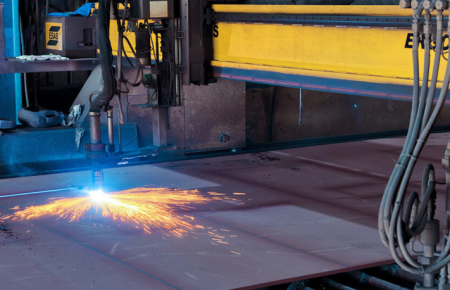
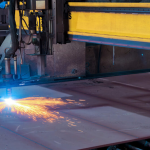
The newly established line automates critical processes such as machining, welding, and nondestructive testing using dedicated machines and robots developed in-house. The facility covers approximately 5,400 m² and represents an investment of about ¥2 billion.
The production line consists of two main sections: a raw-pipe processing line, which performs automated marking, cutting, machining, and small component welding; and a subassembly line that handles butt welding, insulation wrapping, and nondestructive testing. Together, these processes allow the assembly of spools—prefabricated piping units tailored by diameter, length, and shape.
Improved Quality Control and Traceability
Kawasaki has implemented a system that uses two-dimensional codes on individual components to automatically identify processing parameters, ensuring quality and facilitating traceability. A similar system is planned for on-site installation operations to optimise efficiency. Operational data from machines are continuously collected and analysed to support process improvements.
On 10 November, Kawasaki completed and shipped the first batch of spools produced via this automated line to the Kawasaki LH2 Terminal in Kanagawa Prefecture. This facility is part of the Liquefied Hydrogen Supply Chain Commercialisation Demonstration Project led by the New Energy and Industrial Technology Development Organization (NEDO).
The spools handle liquefied hydrogen at cryogenic temperatures of -253°C by minimising heat ingress through their vacuum-insulated double-wall design. The current commercial-scale project involves approximately 33 times more spools than Kawasaki’s 2020 pilot demonstration, with inner pipe diameters increased by about 2.3 times.
Implications for Liquefied Hydrogen Supply Chains in Asia-Pacific
Automating this production addresses challenges related to scaling up manufacturing while maintaining quality and shortening lead times, which are critical for meeting increasing demand for liquefied hydrogen infrastructure. Kawasaki highlighted that ongoing efforts will focus on reducing costs and enhancing the reliability of liquefied hydrogen production, storage, and transport.
These developments contribute to advancing hydrogen supply chain deployment, supporting Japan’s carbon-neutral targets and energy security objectives. Industry observers will monitor how such automation translates into operational efficiencies and cost reductions across supply chains in the Asia-Pacific region.