


China Advances EV Battery And Renewable Equipment Recycling As Waste Increases
China issues new guidelines to develop a comprehensive recycling system by 2030 for electric vehicle batteries and retired renewable energy components.

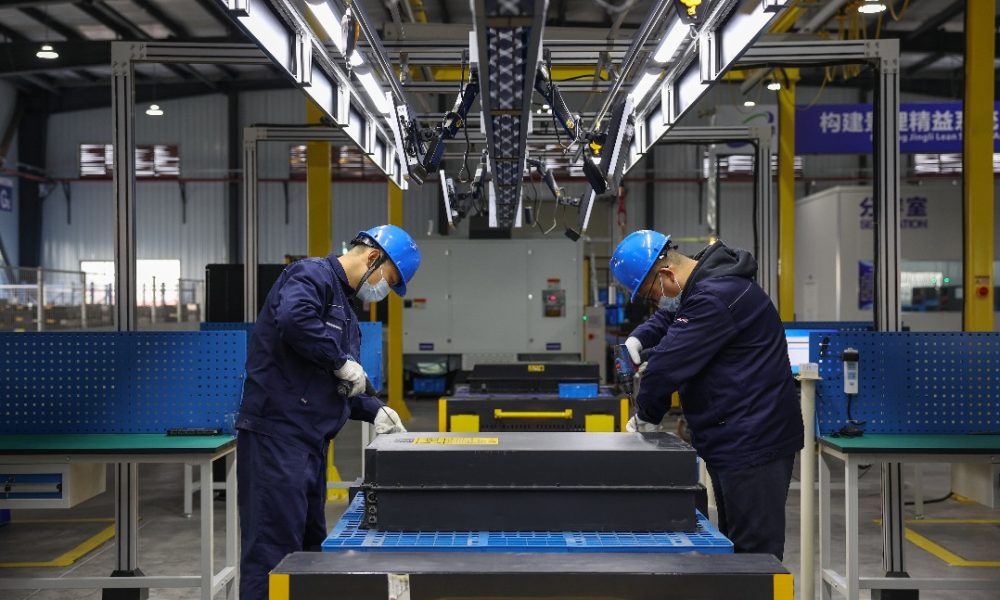
China has issued new national guidelines aimed at strengthening recycling of electric vehicle (EV) batteries and retired renewable-energy equipment, addressing the anticipated volume of waste amid growing deployment of new energy technologies.
Quick Skim
Guidelines Set Tasks and 2030 Recycling Targets
The joint document, released by nine central government departments, outlines 16 key tasks to improve collection, sorting and environmentally sound processing. By 2030, China aims to establish a recycling network characterised by convenient collection, efficient sorting and advanced processing technology.
Yuan Xiaoming, assistant minister of commerce, highlighted that batteries from new energy vehicles are now entering a phase of large-scale retirement, while photovoltaic modules and wind turbine blades are also expected to reach peak retirement soon.
Focus on Battery Life Cycle and Equipment Take-Back
The guidelines introduce a digital identification system to track the life cycles of EV batteries and promote scrapping of vehicles together with their batteries. Recovery efforts will extend to batteries used in energy storage and consumer products beyond vehicles.
For retired solar panels and wind turbine blades, dedicated recycling rules are proposed. The document encourages power generation companies to establish take-back systems, and advocates collaboration between state-owned power enterprises and recycling firms to build collection networks and utilisation facilities.
Companies are also urged to apply artificial intelligence and advanced equipment in dismantling and processing operations as part of a full-chain approach spanning design, manufacturing, usage, recycling, dismantling and reuse.
Expanded Recycling Services and Digital Platforms
Beyond new energy equipment, the guidelines promote broader initiatives such as online recycling services, smart collection bins, mobile collection vehicles, and home pickup services for bulky household goods. Urban areas will develop three-tier collection and sorting networks while rural coverage will be enhanced through county-level commercial and cooperative organisations.
Digital platforms utilising big data, cloud computing and AI will support these operations. Strengthened producer responsibility will be encouraged through recyclable product design and take-back schemes.
According to Yuan, these measures aim to close existing policy and technology gaps, moving recycling efforts beyond end-of-pipe treatment and improving sector maturity. Industrial operations in Asia-Pacific can expect a more systematic approach to managing waste from electric vehicles and renewable infrastructure, with implications for supply chains, maintenance and environmental compliance.
The government’s next focus will be on implementing the guidelines effectively across regions and monitoring progress towards the 2030 targets.