
Vietnam Proposes Maritime Dialogue Mechanism at ASEAN-India Summit
Vietnam suggests an ASEAN-India maritime dialogue to enhance regional maritime cooperation and security, aligning with international law.

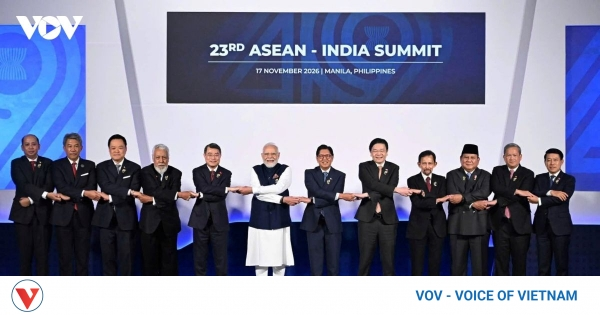
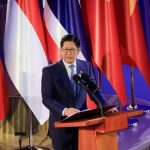
Vietnam proposed the establishment of a maritime dialogue mechanism between ASEAN and India at the 23rd ASEAN-India Summit in Manila on 17 November 2026, aiming to strengthen regional cooperation and ensure peace, stability, and security in maritime domains.
Quick Skim
Proposal for Strategic Maritime Cooperation
Vietnamese Prime Minister Le Minh Hung called on ASEAN and India to move beyond converging interests and implement joint strategic actions. He emphasised elevating maritime cooperation to a strategic priority and enhancing coordination to maintain peace, stability, security, safety, and freedom of navigation and overflight. These efforts should comply with international law, especially the 1982 United Nations Convention on the Law of the Sea (UNCLOS).
Prime Minister Le Minh Hung also acknowledged India’s consistent support for ASEAN’s principled position on the East Sea issue.
Broader Economic and Technological Collaboration
The Prime Minister urged expedited completion of the ASEAN-India Trade in Goods Agreement (AITIGA) review to foster economic integration, supply chain robustness, air connectivity, and resilience in energy and food security. He recommended expanding cooperation in science and technology, including artificial intelligence and the semiconductor sector.
Further proposals included strengthening high-quality human resource development, deeper collaboration among universities and research institutions, and increasing scholarships focused on technology and the green economy. Cultural, historical, and people-to-people exchanges were highlighted as important for deepening ties.
Outcomes Focused on Practical Cooperation
ASEAN members welcomed India’s increased involvement in areas such as digital economy, innovation, education, energy, agriculture, healthcare, and climate change. India’s additional contributions to ASEAN-India cooperation funds were noted as key support to joint programmes.
Prime Minister Narendra Modi reaffirmed India’s commitment to ASEAN unity and centrality, underscoring the joint responsibility of ASEAN and India, representing one-quarter of the global population, to promote regional peace and stability amid global uncertainty.
Both sides agreed to fully implement the ASEAN-India Comprehensive Strategic Partnership plan for 2026-2030 with an emphasis on economic, trade, and investment collaboration. They pledged to accelerate the review of AITIGA, improve maritime and air connectivity, enhance supply chain integration, and increase cooperation in digital transformation, science, and technology.
Implications for Regional Maritime Security and Economic Development
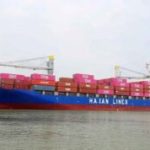
The proposed maritime dialogue mechanism could institutionalise coordination to address maritime security challenges and promote freedom of navigation critical to trade routes vital to ASEAN and India. The focus on compliance with UNCLOS reflects a commitment to rule-based order in the Indo-Pacific, supporting operational predictability for shipping, port operations, and maritime industries across the Asia-Pacific region.
Enhancing economic ties and supply chain resilience aligns with regional efforts to stabilise trade flows and resource availability, with potential benefits for manufacturing and infrastructure sectors dependent on reliable maritime connectivity.
Going forward, industrial observers will monitor the development of the maritime dialogue mechanism and the progress of AITIGA revisions, which may impact cross-border logistics and regional cooperation frameworks.