


ASEAN Grid Operators Discuss Ancillary Services to Enhance Regional Grid Reliability
The 2nd ASEAN Grid System Operators Convention focused on ancillary services to support secure renewable integration and grid resilience across ASEAN.

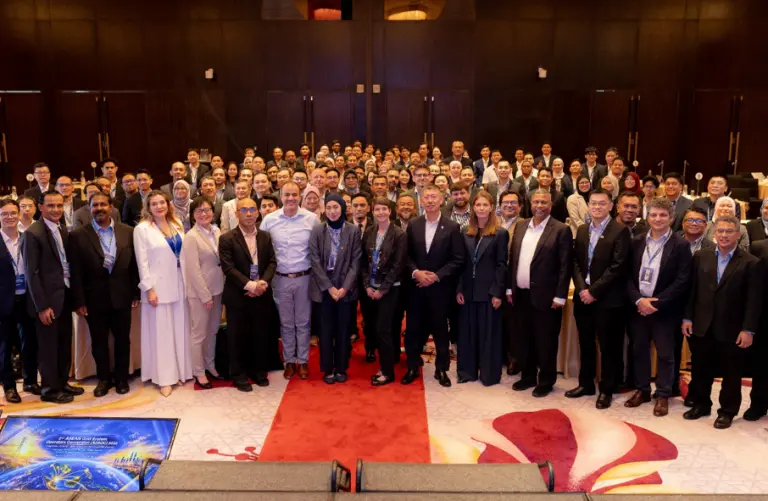
The 2nd ASEAN Grid System Operators Convention (AGSOC) 2026 was held in Kuala Lumpur, Malaysia, on 27–29 October 2026, bringing together ASEAN system operators, European transmission operators and international experts to discuss how ancillary services keep renewable-heavy grids secure.
Quick Skim
- Ancillary Services Highlighted as Essential for Grid Security
- Regional Case Studies Illustrate Ancillary Service Implementation
- Progress and Challenges in Ancillary Services Market Development
- Technical Insights on Grid Disturbance Mitigation and Restoration
- Implications for ASEAN Grid Operations and Energy Transition
- Closing Remarks and Site Visit
The convention was held in conjunction with the 10th APSO Workshop. It was hosted by the Grid System Operator of Tenaga Nasional Berhad, with the ASEAN Centre for Energy, HAPUA Working Group 5 and the EU SCOPE IF.
Ancillary Services Highlighted as Essential for Grid Security
The convention opened with remarks emphasising ancillary services and operating reserves as crucial elements for a sustainable power supply. Abdul Rahim Bin Abd Jamil, Head of International Regulations and Relations at Tenaga Nasional Berhad (TNB), underscored their strategic importance, while Nadhilah Shani of the ASEAN Centre for Energy (ACE) linked the discussions to ongoing ASEAN Power Grid (APG) capacity building efforts. Pedro Pimentel from the EU Sustainable Connectivity Package Investment Facility (SCOPE IF) noted the value of collaborative peer learning among operators.
In the keynote, Stella Westphal of 50Hertz Transmission (Germany) said ancillary services are turning from a byproduct of conventional generation into a product in their own right. She advised starting from the physical system need and procuring performance rather than technology, and noted that principles can travel between regions but institutional designs must fit the local context.
Regional Case Studies Illustrate Ancillary Service Implementation
Presentations encompassed a range of operational experiences. Ir. Fairizat bin Abu Hasan (GSO TNB) highlighted approaches to integrating large data centres as fast, correlated loads capable of significant demand reduction after faults, proposing their distinct categorisation in grid codes.
Giancarlo Marzano of N-SIDE detailed Europe’s progress in standardising balancing products and cooperative platforms such as IGCC and PICASSO, noting ongoing evolution in balancing capacity cooperation.
Phonesavanh Sengmanivanh from Electricité du Laos outlined hydropower flexibility potential constrained by incomplete national grid interconnections.
Peter Bentzen of the Indonesian-Danish Energy Partnership Programme drew on Denmark’s experience, where wind and solar supplied 71% of electricity in 2025, to stress that capability comes first and markets second.
June C. Pascual of the National Grid Corporation of the Philippines (NGCP) said batteries in the Luzon grid already provide reserves through the spot market and bilateral contracts, while Loh Poh Soon of Singapore’s Energy Market Authority (EMA) shared how contracted Fast Start units restore depleted reserves after a contingency.
Progress and Challenges in Ancillary Services Market Development
Panel discussions considered pathways for ASEAN to monetise ancillary services. ACE acknowledged that while countries like the Philippines and Singapore combine market-based reserves with contracts, others might initiate targeted procurement of specific ancillary services such as fast frequency response or black start before advancing to market approaches.
The convention also addressed grid resilience and restoration capabilities. Dr. Aymen Chaouachi of Elia Grid International (Belgium) asserted that stability must be deliberately designed given limitations of flexibility alone, drawing lessons from the Iberian blackout of 2025. He emphasised anticipation, coordination and verification as key strategies.
Country-level insights from Vietnam and Sarawak Energy highlighted the growing role of ancillary services, with Vietnam expecting its secondary frequency reserve to more than triple by 2030 and incorporating BESS, and Sarawak using BESS alongside hydro and thermal units for frequency response.
Indonesia’s PLN emphasised a layered defence strategy against cascading disturbances, including advanced control centres and wide area protections. CESI SpA’s Francesco Comito illustrated how renewables and storage contribute to system adequacy in capacity markets, stressing the importance of validated restoration plans.
Technical Insights on Grid Disturbance Mitigation and Restoration
Dr. Jiaksan Tan of Siemens Energy shared findings from major disturbances in South Australia, Great Britain and Iberia relevant to Peninsular Malaysia, while Sabah Electricity’s Ahmad Fadlishah bin Ahmad Foad discussed the Lahad Datu BESS deployment to restore isolated blackout areas.
The final panel reviewed opportunities for rewarding restoration capabilities through payments linked to availability and performance. Participants also emphasised the need for enhanced coordination and data sharing between neighbouring operators to strengthen regional resilience.
Implications for ASEAN Grid Operations and Energy Transition
According to organisers, ASEAN power systems face common challenges in integrating variable renewable energy. However, the appropriate ancillary service solutions vary by country due to differing grid configurations, market structures and policies. Continued exchange of technical experience and best practices among system operators will be vital for optimising regional grid reliability and supporting the ASEAN Power Grid initiative.
Closing Remarks and Site Visit
The convention concluded with expressions of gratitude to participating organisations and stakeholders, and a technical site visit to a data centre on 29 October 2026 to observe large load management in practice.
Source: ASEAN Centre for Energy. Photo: ASEAN Centre for Energy.