






ASEAN Power Grid Agreement Impacts Regional Data Centre Energy Transition
ASEAN’s new power grid pact aims to support clean power integration for data centres amid rising AI-driven electricity demand in Southeast Asia.

All 11 ASEAN member states signed an enhanced memorandum of understanding for the ASEAN Power Grid (APG) on 15 November in Manila, creating a framework for a regional electricity network designed to support cross-border power trade and infrastructure investment, a move critical for Southeast Asia’s expanding data centre sector and shift towards renewable energy.
Quick Skim
ASEAN Power Grid Targets Reliability and Renewable Integration
The APG agreement seeks to facilitate multilateral power exchanges and build transmission infrastructure including overland lines and subsea cables. The goal is to alleviate supply constraints by harnessing complementary resources across national borders, thereby enhancing grid resilience and enabling wider adoption of intermittent renewable sources.
According to the Philippines’ Secretary of Energy Sharon Garin, the deal emphasises partnership, innovation and system resilience, with an aim to attract private and international multilateral investments to underpin regional power projects.
Investment Needs and Regional Renewable Ambitions
The ASEAN bloc projects that under a high-renewables scenario, the region will require approximately US$764 billion in generation and transmission investments through to 2045. This coincides with global momentum from COP31, pressing governments to accelerate clean electrification.
The APG Financing Initiative, involving ASEAN, the Asian Development Bank and the World Bank Group, is structured to mobilise such funding for grid expansions critical to this transition.
Data Centres Drive Urgent Demand Growth
Global electricity use by data centres increased by 17% in 2025, with AI-focused facilities driving a 50% surge, according to the International Energy Agency. Data centres majorly contributed to roughly 40% of corporate renewable power-purchase agreements worldwide last year.
In Southeast Asia, data centres face practical challenges in sourcing clean energy despite policies supporting market liberalisation, green tariffs and retail competition. Challenges cited include permitting delays, transmission congestion and wheeling charges, which often restrict project timelines and investment returns.
Grid Constraints Risk Fossil Fuel Lock-In
Experts caution that if grid infrastructure is not upgraded in parallel with generation capacity, new renewable projects may face delays, and data centres may resort to on-site gas turbines, which can be more carbon intensive than grid power. BloombergNEF has noted a rise in such installations due to years-long grid connection delays.
Rexor Amancio, Asia-Pacific regional lead for the Global Renewables Alliance, underscores the importance of synchronising grid investments with generation developments to avoid bottlenecks, especially in renewable-rich areas.
Role of Hyperscalers in Financing Clean Energy
Clean energy advocates propose that hyperscaler corporations should underwrite new solar, wind, and geothermal generation and associated energy storage through long-term power purchase agreements. These deals can enhance the financial viability of clean energy projects, facilitate grid management through battery storage, and provide stable clean power directly to industrial consumers.
Robert Cooke of the Global Renewables Alliance highlights the commercial imperative for hyperscalers to invest upfront in grid upgrades to secure stable green power and mitigate weather-related supply disruptions.
Policy Frameworks and Renewable Certification
Regulatory frameworks such as the International Renewable Energy Agency’s COP31 green data centre programme require corporate buyers to demonstrate that their electricity consumption is matched hourly by newly generated, locally sourced renewable power. This approach seeks to close loopholes allowing companies to claim 100% renewable status through purchasing annual green certificates while still using fossil-fuel sourced electricity.
Amancio warned that data centres relying on thermal-heavy grids and non-additional renewable certificates risk displacing green power from other users and increasing marginal fossil gas demand, consequently affecting broader power prices.
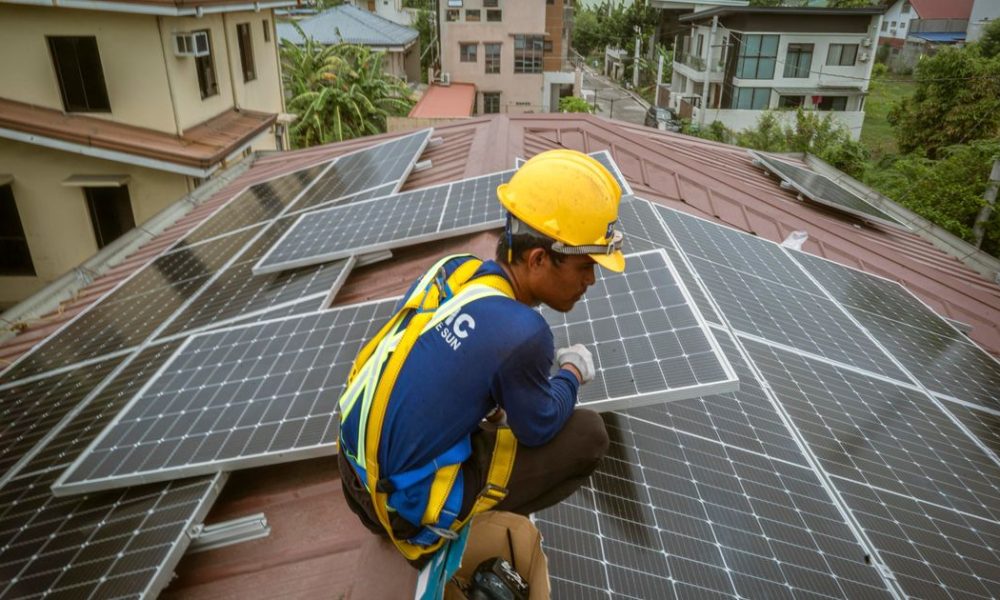
Photo: The Business Times