
ASEAN Centre for Energy Advances Regional Power Market Roadmap with Second Workshop
The ASEAN Centre for Energy held its second regional workshop on the Regional Power Market Roadmap to support multilateral power trading and regional market development.

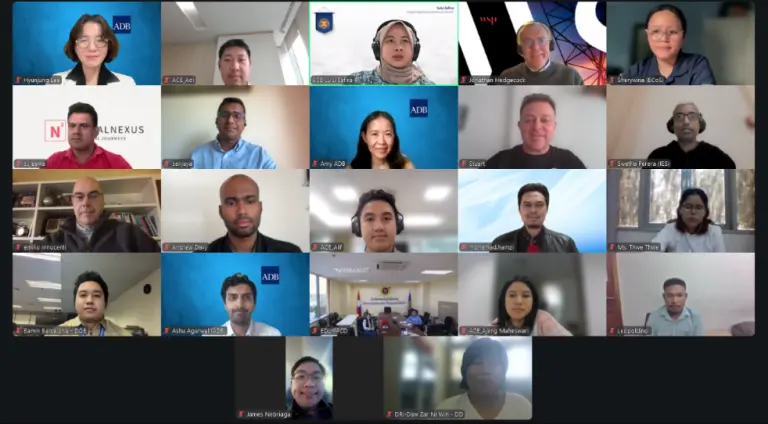
The ASEAN Centre for Energy (ACE), in collaboration with the Asian Development Bank (ADB) and supported by the Australian Government Department of Foreign Affairs and Trade (DFAT), convened the second regional workshop for the Regional Power Market (RPM) Roadmap Study on 9 November 2026, focusing on advancing multilateral power trading across ASEAN member states.
Quick Skim
- Workshop Focuses on Power Trade Simulation and Market Design
- Regulatory and Institutional Frameworks Evaluated
- Subregional Markets and Readiness Milestones
- Power Trade Simulation Platform Provides Practical Market Experience
- Implications for Regional Power Operations and Integration
- Next Steps Towards ASEAN Power Grid Development
Workshop Focuses on Power Trade Simulation and Market Design
The second workshop gathered representatives from ASEAN Member States (AMS) alongside energy consultants to present the RPM roadmap report and introduce the Power Trade Simulation Platform (PTSP). Discussions centred on the design of subregional power markets, lessons learned from other regional power pools, readiness milestones, and a phased approach that aligns with the ASEAN Power Grid (APG) Task Force on Legal and Regulatory work plan.
Regulatory and Institutional Frameworks Evaluated
Jonathan Hedgecock, Technical Director at WSP, presented a regulatory gap analysis identifying a recommended minimum regulatory package for regional power trading. This package involves harmonising legal, institutional, technical, and commercial rules, such as enhancing national regulators, establishing market participation requirements, standardising trade licensing, dispute resolution mechanisms, and grid code alignment.
Subregional Markets and Readiness Milestones
The study focused on six ASEAN countries—Cambodia, Indonesia, Lao PDR, Malaysia, Thailand, and Viet Nam—which were selected based on physical grid connections, the existence of working groups, alignment with national planning, and data availability. Ignatius Primadi of ACE highlighted proposed subregional market designs for the West and East Subregions, establishing readiness milestones necessary for phased multilateral power trading implementation.
Power Trade Simulation Platform Provides Practical Market Experience
Stuart Thorncraft from IES introduced the PTSP, a voluntary “dry run” of a regional day-ahead market intended to give hands-on experience to power utilities, system operators, and regulators. The simulation is designed to be conducted without liabilities, offering a practical depiction of potential benefits from regional power trading. Outcomes are expected to inform the APG Task Forces on Legal and Regulatory matters, shaping future market frameworks.
Implications for Regional Power Operations and Integration
The workshop outcomes reinforce ASEAN’s approach to creating a coordinated regional power market while acknowledging national priorities and the realities of member states. According to the study, extending the existing third-party access schemes in Peninsular Malaysia, Thailand and Viet Nam is the fastest route to cross-border power trading.
Next Steps Towards ASEAN Power Grid Development
According to ACE, the Regional Power Market Roadmap Study will continue as an input for the APG Task Forces on Legal and Regulatory issues. The progression towards implementing the PTSP represents a strategic step for ASEAN in operationalising the APG Enhanced Memorandum of Understanding and advancing regional electricity trade integration.
Photo: ASEAN Centre for Energy. Source: ASEAN Centre for Energy.