






Hanoi Accelerates Push to Become Vietnam’s Semiconductor Hub
Hanoi is strengthening its semiconductor ecosystem through new investments, international partnerships, infrastructure development and workforce training as Vietnam seeks a larger role in the global...


Hanoi is strengthening its semiconductor ecosystem through new investments, international partnerships, infrastructure development and workforce training as Vietnam seeks a larger role in the global semiconductor value chain.
Quick Skim
The Vietnamese capital is positioning itself as a national centre for semiconductor research, development, chip design and talent development, supported by government policies and growing collaboration between technology companies, universities and research institutions.
The push comes as Vietnam looks to expand beyond its established role in electronics manufacturing and develop greater domestic capabilities across higher-value areas of the semiconductor industry.
Building a Stronger Semiconductor Ecosystem
At Hanoi’s 2026 master plan announcement and investment promotion conference in June, the Hanoi People’s Committee signed a semiconductor technology cooperation agreement with G-Group Technology Corporation, Russia’s Molecular Electronics Research Institute, Hanoi University of Science and Technology and National Security Technology JSC.
The partnership is intended to connect government agencies, technology companies, universities and international organisations to support semiconductor research, technology development and workforce capabilities.
Hanoi has also expanded its cooperation network through 18 memoranda of understanding involving domestic and international businesses and research organisations.
The agreements cover areas including digital infrastructure, artificial intelligence, semiconductors, integrated circuit design, technology transfer and workforce development.
Together, these initiatives form part of Hanoi’s effort to create a more integrated semiconductor ecosystem rather than developing individual projects in isolation.
Viettel Chip Plant Strengthens Domestic Manufacturing
A major part of Hanoi’s semiconductor development is taking shape at Hoa Lac Hi-Tech Park.
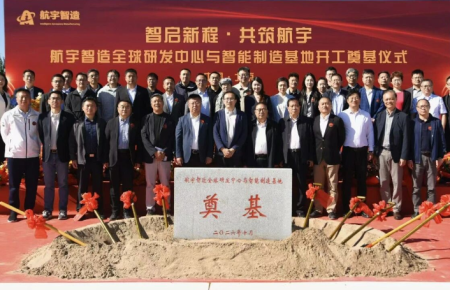
Earlier in 2026, Viettel began construction of Vietnam’s first high-tech semiconductor chip manufacturing plant at the park.
Spanning approximately 27 hectares, the facility is planned as a centre for semiconductor research, design, testing and manufacturing, strengthening a part of the supply chain where Vietnam has historically had limited domestic capacity.
The project is expected to support Vietnam’s broader ambition to build a domestic semiconductor ecosystem and develop greater capabilities in core technologies.
Hoa Lac Hi-Tech Park is also being positioned as a key research and innovation hub for semiconductor, AI and other strategic technology industries.
Hanoi Targets 22,000 Semiconductor Professionals
Workforce development is another major part of the city’s strategy.
Under Hanoi’s semiconductor development plan, the capital aims to train at least 22,000 university-level and postgraduate semiconductor professionals by 2030.
Plans also include establishing an International University of Technology, a data and semiconductor research and development centre, and a semiconductor technician training centre at Hanoi High-Tech Vocational College.
The city also aims to attract at least 20 chip design companies while expanding advanced semiconductor packaging and testing activities.
Hanoi already has an advantage through its concentration of universities, research institutions and engineering talent.
Educational institutions are also strengthening cooperation with industry. Hanoi High-Tech Vocational College, for example, is working with companies including Amkor and Samsung to develop training programmes that better align technical education with industry requirements.
Connecting Research, Industry and Investment
Hanoi’s semiconductor ambitions are being supported by Vietnam’s broader national strategy to develop the industry through 2030, with a longer-term vision towards 2050.
Vietnam is seeking to develop capabilities across semiconductor research, design, fabrication, packaging and testing while attracting more high-value technology investment.
The country has already attracted more than 170 foreign-invested semiconductor projects, while more than 50 foreign companies and around 10 Vietnamese firms are operating in chip design.
Hanoi is expected to play an important role in this expansion due to its research institutions, technology companies, engineering workforce and the continued development of Hoa Lac Hi-Tech Park.
The capital has also been selected to host a national semiconductor chip prototyping support centre, further strengthening its role in semiconductor research and product development.
Moving Further Into the Semiconductor Value Chain
Vietnam’s semiconductor sector is developing as the country looks to increase its participation in higher-value technology industries.
While electronics manufacturing has long been an important part of Vietnam’s industrial economy, semiconductor development requires deeper capabilities in areas such as chip design, advanced engineering, research and development, manufacturing technology and specialised workforce training.
Hanoi’s strategy brings these elements together through investment, infrastructure, education and international collaboration.
As new semiconductor projects move forward and engineering capabilities expand, the capital is strengthening its position as one of Vietnam’s key centres for semiconductor development and helping the country move further into the global technology value chain.