





Japan Targets 10 Million AI Robots by 2040 Under Sovereign AI Push
Japan plans to develop a homegrown artificial intelligence model and deploy around 10 million AI-enabled robots by 2040 as the country strengthens its capabilities in physical AI, robotics and...

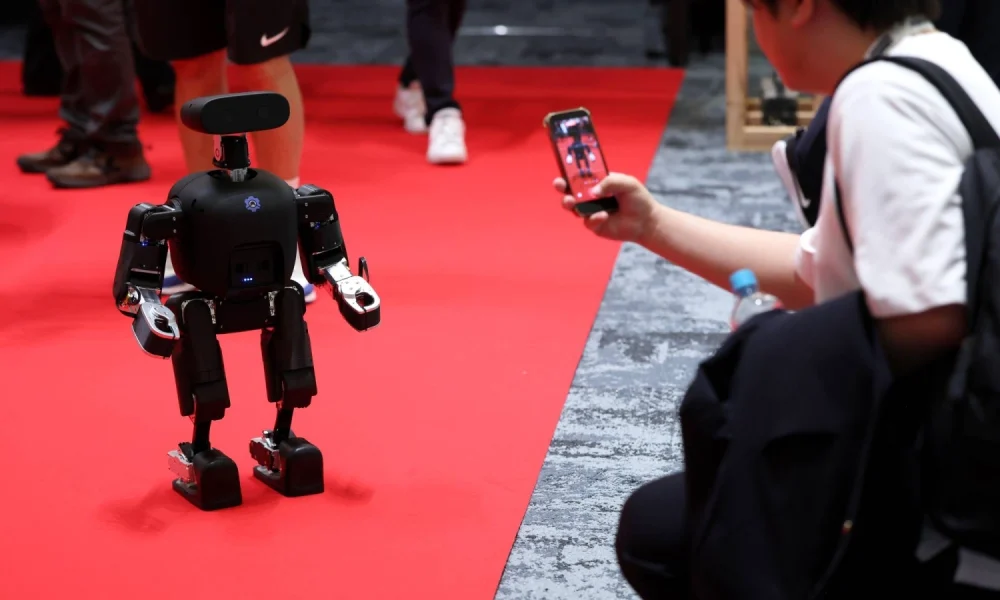
Japan plans to develop a homegrown artificial intelligence model and deploy around 10 million AI-enabled robots by 2040 as the country strengthens its capabilities in physical AI, robotics and advanced manufacturing.
Quick Skim
The strategy is part of Japan’s effort to reduce its reliance on AI technologies developed in the United States and China while building domestic capabilities around technologies where the country already has strengths, including robotics, automotive manufacturing and industrial automation.
The government is expected to provide significant financial support for the development of a Japanese sovereign AI model, while encouraging manufacturers and other companies to contribute industrial data and participate in its development.
Japan Develops Domestic AI Foundation Model
The domestic AI initiative will be led by Noetra, a consortium established by Japanese companies including SoftBank.
Companies including Sony and other major Japanese corporations are expected to participate, with the number of companies investing in the initiative potentially reaching 44 across sectors including automotive, electronics, manufacturing, finance and logistics.
Japan’s Ministry of Economy, Trade and Industry has announced ¥387.3 billion in initial funding for the development of a domestic foundation model focused on physical AI.
Government support could eventually reach as much as ¥1 trillion over five years, depending on the progress of the programme.
Engineers from SoftBank and Japanese AI company Preferred Networks will participate, while the National Institute of Advanced Industrial Science and Technology will support development alongside domestic and international research organisations.
Physical AI Becomes a National Priority
Unlike AI systems that primarily operate through software, physical AI connects artificial intelligence with machines capable of interacting with real-world environments.
Applications include factory robots, autonomous vehicles, logistics systems and humanoid robots.
Noetra’s foundation model will place particular emphasis on physical AI, reflecting Japan’s established capabilities in robotics, automotive engineering and industrial equipment.
The government wants the model to be made available to Japanese companies, allowing manufacturers and technology developers to build physical AI applications using domestically developed technology.
Noetra and AIST are expected to release an initial foundation model as early as fiscal 2026, followed by improved versions each year using additional data collected from manufacturers and other participating companies.
10 Million AI Robots Targeted by 2040
Japan has also revised its national AI robotics strategy, setting a target of approximately 10 million AI-enabled robots operating by 2040.
The government plans to promote deployment across 18 fields, expanding the strategy to include areas such as restaurant operations, food manufacturing and healthcare.
Industry Minister Ryosei Akazawa said Japan will develop data infrastructure for physical AI and robotics while building on areas where the country already has industrial strengths.
Manufacturing is expected to be one of the important areas for deployment as Japanese companies look to increase automation and address workforce constraints.
Robots Could Address Labour Shortages
Japan’s ageing and shrinking population is adding urgency to the adoption of automation.
Robots are increasingly being considered for tasks where companies face difficulties recruiting enough workers, including manufacturing, logistics, food production and services.
AI could enable these machines to perform a wider variety of tasks compared with traditional industrial robots that generally operate according to predefined movements and programmes.
The government’s strategy therefore aims to combine Japan’s existing robotics manufacturing capabilities with newer AI models capable of perception, decision-making and interaction with physical environments.
Manufacturers Expected to Supply Industrial Data
Industrial data will be an important part of developing Japan’s physical AI ecosystem.
Rather than relying only on publicly available information, AI systems designed to operate machinery require data showing how equipment, robots and production processes behave in real environments.
Noetra plans to improve its foundation model using data supplied by manufacturers and other participating companies.
The approach could allow AI models to become increasingly specialised for industrial applications while creating shared technology infrastructure that can be used by Japanese companies.
This also places manufacturers at the centre of Japan’s AI development strategy rather than positioning industrial companies only as users of finished AI products.
Japan Expands Investment in Strategic Industries
The physical AI initiative forms part of a wider industrial growth strategy announced by the Japanese government.
Japan plans to encourage approximately ¥370 trillion in public and private investment over 14 years across 17 strategic sectors. These include physical AI, semiconductors, quantum technology and nuclear fusion.
The strategy reflects increasing competition among major economies to secure domestic capabilities in technologies considered important for future industrial growth and economic security.
For Japan, robotics provides an area where existing manufacturing expertise could be combined with rapidly developing AI capabilities.
Building a Domestic Physical AI Ecosystem
Japan’s plan to develop a sovereign AI model alongside the deployment of 10 million robots represents a significant expansion of its industrial AI ambitions.
The programme brings together AI developers, manufacturers, research organisations and government support with the aim of creating domestic technology that can be deployed across factories and other real-world environments.
While large-scale physical AI deployment remains at an early stage globally, Japan is positioning robotics as one of the key areas where it can compete as AI moves beyond software and increasingly enters industrial equipment and physical operations.