
Korea Industrial Complex Corporation Expands Support Programme for Open Innovation Startups
The Korea Industrial Complex Corporation will run eight scale-up support sessions for open innovation startups through April 2027 to aid fundraising and commercialisation.

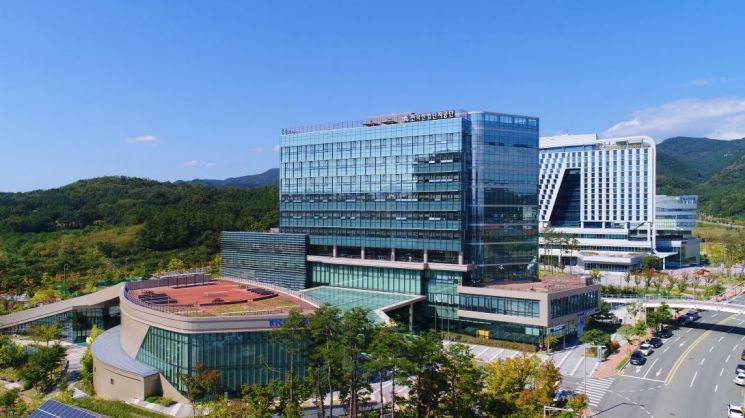
The Korea Industrial Complex Corporation (KICOX) announced it will conduct the “KICXUP Practical Scale-up Office Hours (Super-Gap 8 Weeks)” programme eight times from November 16, 2026, to April 2027, aiming to enhance startup self-sufficiency and facilitate scale-up in open innovation.
Quick Skim
Programme Details and Eligibility Expansion
The programme, previously limited to startups hosted at KICXUP Centres, has extended eligibility to companies selected for both the “KICXUP Challenge” and “KICXUP Local+” initiatives. It integrates practical lectures with mentoring to support key scale-up areas including fundraising, business-to-business (B2B) dealings, and commercialisation efforts.
The sessions focus on three main topics: preparation for year-end closing and entering the proof-of-concept (PoC) stage; securing funding and managing risks for 2027; and scaling achievements toward exits. Specific workshops will address financial modelling, strategies to secure government research and development (R&D) projects in deep tech, and crafting proposals for PoCs with large companies.
Initial Session and Scheduled Courses
The first session on November 16 will be held at the Korea Credit Guarantee Fund’s “NEST AI LAB” in Gwangjin-gu, Seoul, featuring a hands-on lecture and networking on workplace automation using artificial intelligence. Additionally, a specialised course targeting young entrepreneurs is planned for February 2027.
Implications for Industrial Operations and Startup Ecosystem
KICOX Chairman Kim Daeja highlighted that successful open innovation requires startups not just to be identified but to acquire practical skills for commercial viability and scale-up. The programme’s focus on developing hands-on capabilities and supporting fundraising addresses critical challenges in the Asian-Pacific startup ecosystem’s integration with industrial operations.
By equipping startups with these skills, KICOX anticipates improving the rate of commercialisation and long-term sustainability, which is significant for maintaining technological innovation and competitiveness in manufacturing and related sectors.
Looking ahead, KICOX plans to continue evolving support measures to help startups adapt to changing industrial and market conditions, aiming to sustain an environment conducive to practical growth and innovation within Korea’s industrial complexes.