



Taiwan Advances AI-Driven Maritime Drone Swarm for Extended Surveillance
Taiwan’s Ocean Affairs Council funds National Cheng Kung University team to develop AI-based multi-drone system for maritime monitoring and law enforcement.

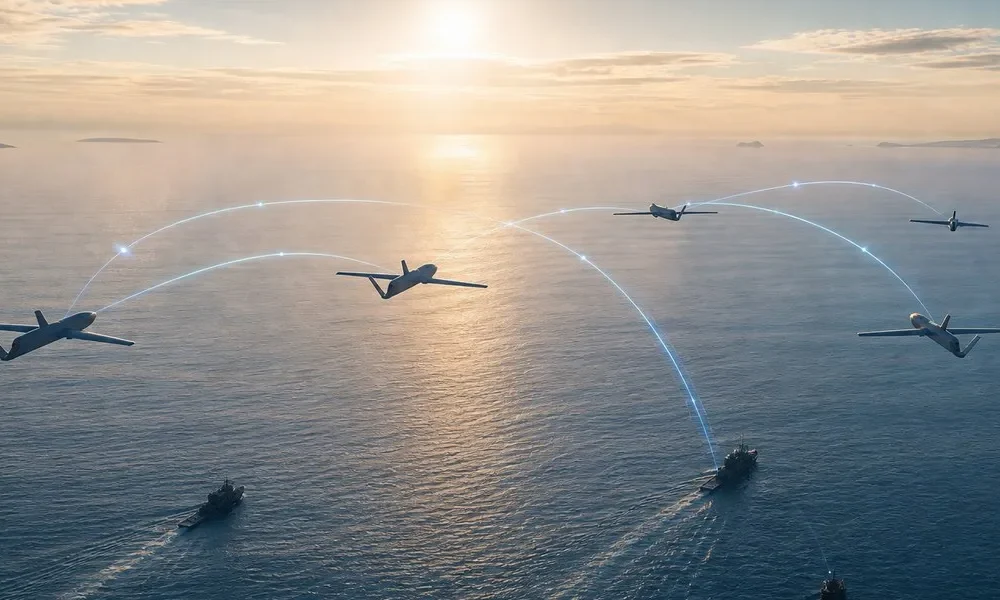
Taiwan’s Ocean Affairs Council is supporting development at National Cheng Kung University of an AI-based system that coordinates multiple drone types for maritime surveillance, aiming to enhance law enforcement and situational awareness at sea.
Multi-Drone Coordination Employs AI and Flight Dynamics
The project, led by Associate Professor Chueh Chih-che of the aeronautics and astronautics department, integrates artificial intelligence with fixed-wing vertical takeoff and landing drones, flight dynamics, and swarm coordination technologies. Researchers analysed three drone models—Jump 20, V-Bat and Flexroter—using three-dimensional modelling, aerodynamic parameter assessment, and six-degree-of-freedom flight simulation.
Simulated Swarm Exhibits Autonomous Task Allocation and Safety Protocols
Using multi-agent reinforcement learning, the drones autonomously assign tasks, plan routes, and coordinate formations. Safety measures include leader-follower control and a dynamic obstacle avoidance system. Simulations involved two drone groups totalling 20 units, maintaining three-dimensional spacing with a minimum vertical separation of 30.5 metres to prevent collisions.
According to the Council, the system contributes to a multi-tier coast guard surveillance network and counters “gray-zone” maritime incursions. Planned next steps include hardware-in-the-loop tests, prototype assembly, and open-water flight trials under variable sea conditions.