






Indonesia–China Engineering Programme Puts AI, Predictive Maintenance and Power-Sector Skills in Focus
Indonesian engineers are deepening technical cooperation with their counterparts in China as the energy sector faces growing demand for expertise in artificial intelligence, intelligent power systems...

Indonesian engineers are deepening technical cooperation with their counterparts in China as the energy sector faces growing demand for expertise in artificial intelligence, intelligent power systems and predictive maintenance.
Quick Skim
- Building Engineering Capability for a Changing Energy Sector
- From Engineering Classroom to Power Plant Operations
- Predictive Maintenance Becomes an Engineering Competency
- AI Does Not Remove the Engineer From the Process
- Engineering Collaboration Extends Beyond Technology Transfer
- Industrial Digitalisation Is Also a People Challenge
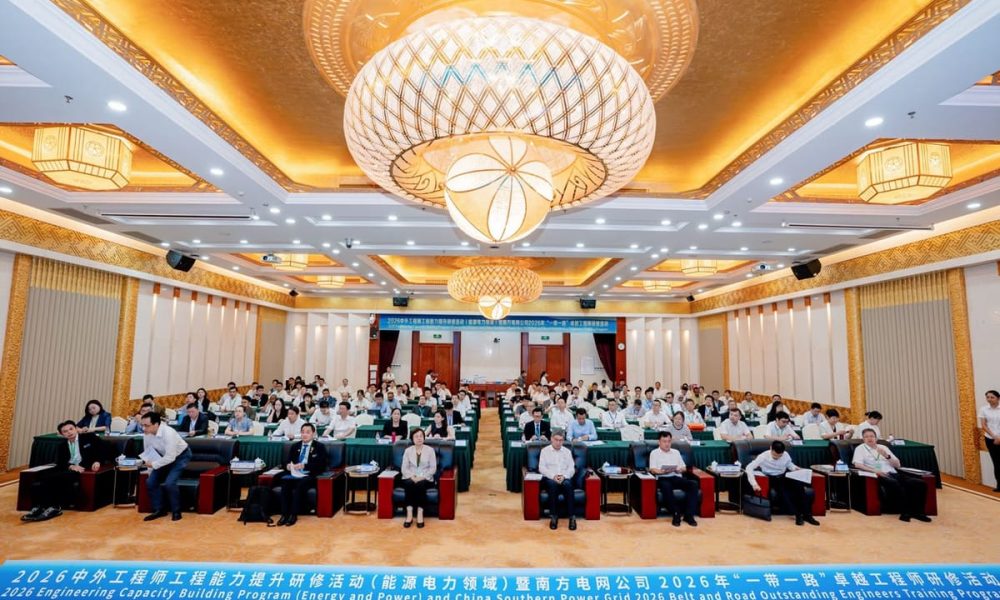
The Institution of Engineers Indonesia (PII) has strengthened its cooperation with the Chinese Society of Engineers (CSE) through its participation in the 2026 Engineering Capacity Building Program for Energy and Power in Beihai, Guangxi Province, China.
The programme brought together engineering professionals from Indonesia and a wider group of countries including Brunei Darussalam, China, India, Malaysia, the Philippines and others, creating a platform for technical knowledge exchange around the energy transition, emerging technologies and sustainable development.
For Indonesia, the initiative comes as engineering capabilities increasingly need to extend beyond traditional disciplines. Modern energy infrastructure is becoming more connected, automated and data-driven, requiring engineers to understand not only physical equipment but also how technologies such as artificial intelligence, digital monitoring and predictive maintenance can support day-to-day operations.
Building Engineering Capability for a Changing Energy Sector
PII was represented by Dr. Ir. Agus Wiramsya Oscar and Ir. Arief Koeswanto.
During the programme, participants took part in lectures, technical discussions and professional exchanges covering modern power systems, energy development, artificial intelligence, engineering competency development and sustainable energy technologies.
A central theme was Continuing Professional Development (CPD) — ensuring that engineering knowledge continues to develop as industrial technologies and operating requirements change.
For industrial organisations, that challenge is becoming increasingly important.
An engineer responsible for a power plant, manufacturing facility or other critical infrastructure today may be expected to understand equipment reliability, automation systems, operational data, environmental performance and increasingly AI-supported decision-making.
Technical capability therefore cannot remain static.
As plants adopt more sensors, connected equipment and digital platforms, engineers also need to understand how to interpret information generated by these systems and translate it into practical maintenance and operational decisions.
CSE said the programme was designed to strengthen international engineering cooperation while giving engineers opportunities to exchange emerging technologies and practical engineering experience.
From Engineering Classroom to Power Plant Operations
One of the programme’s most industry-relevant components was a technical visit to Guoneng Guangtou Beihai Power Generation, also referred to as the Shenhua Power Plant, in Guangxi.
The facility has approximately 4 GW of installed generating capacity and produces more than 20 billion kWh of electricity annually, according to programme information reported by Tambang.
Participants were introduced to the plant’s generating systems, environmental technologies and integrated operations covering electricity production, fuel storage, port infrastructure and transportation.
But one development was particularly relevant to the future of industrial maintenance: the use of a “5G + AI” platform for plant operations.
The system supports functions including real-time equipment monitoring, digital inspection and predictive maintenance, with the aim of improving operational reliability.
This reflects a broader change taking place across asset-intensive industries.
Maintenance teams have traditionally depended heavily on periodic inspection, preventive maintenance schedules and technician experience to determine when equipment requires attention.
Digital monitoring adds another layer.
By continuously examining equipment behaviour, industrial operators can identify changes that may indicate deterioration before those conditions develop into more significant failures.
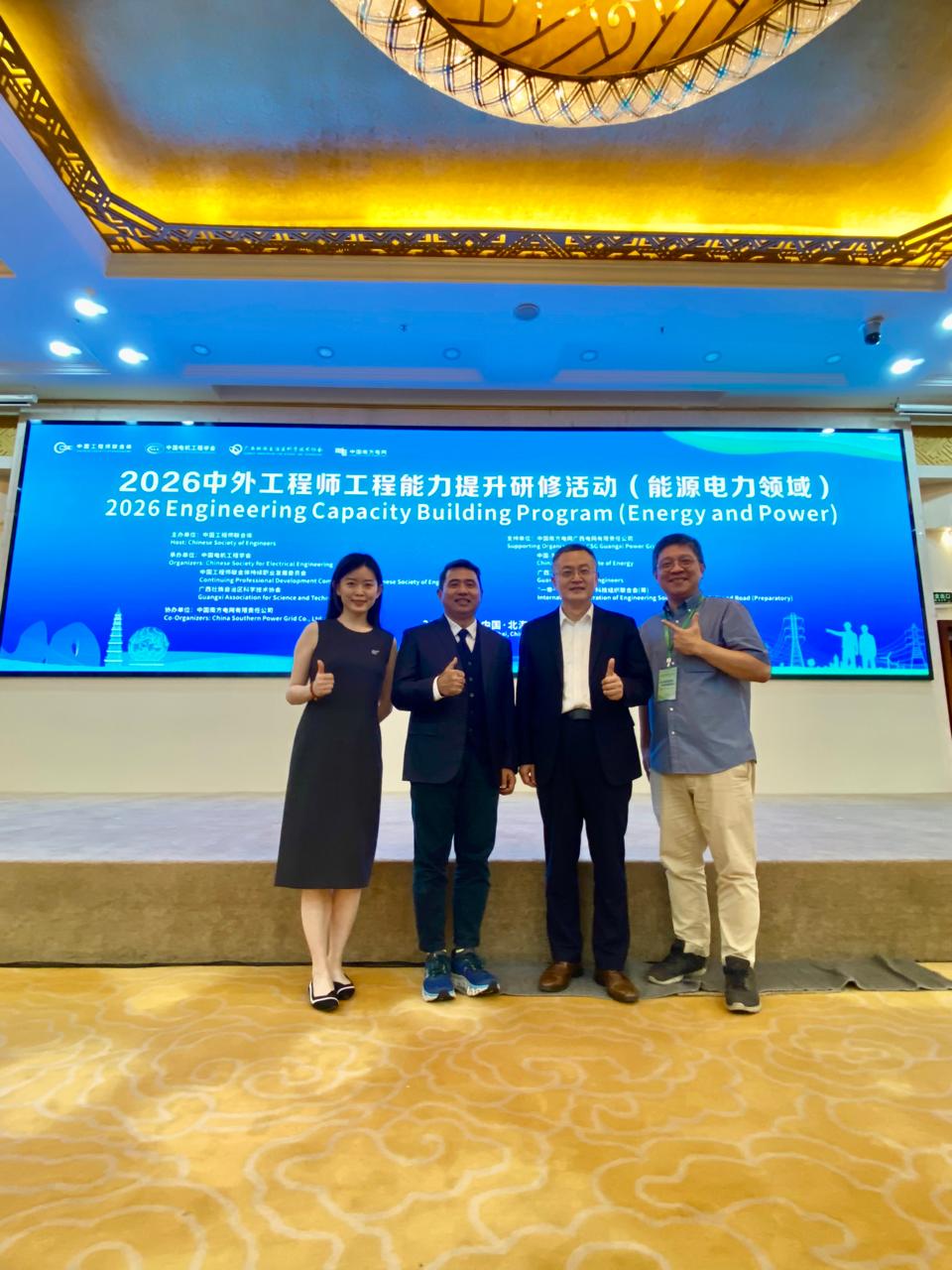
Ms. Zhang Yiyan – Program Officer of the Secretariat of the Chinese Society of Engineers (CSE),Mr. Agus Wiramsya Oscar – The Institution of Engineers Indonesia (PII), Mr. Zhao Yong – Deputy General Manager of Engineering Construction Department, China Southern Power Grid International Co., Ltd., Mr. Arief Koeswanto – The Institution of Engineers Indonesia (PII)
Predictive Maintenance Becomes an Engineering Competency
Predictive maintenance is often discussed as a technology investment, but successful implementation also depends heavily on engineering capability.
Detecting an abnormal pattern is only one part of the process.
Engineers still need to determine whether the change is operationally significant, understand which component may be affected and decide what physical inspection or maintenance action should follow.
That requires combining digital information with engineering knowledge.
For power-generation facilities, this can involve monitoring critical rotating and electrical equipment such as turbines, generators, pumps, fans, motors and supporting systems.
Instead of simply asking whether a machine has crossed a fixed alarm threshold, a condition-based approach can help teams examine how its behaviour is changing relative to its established operating condition.
This creates an opportunity for maintenance organisations to shift from:
“When is the next scheduled inspection?”
towards:
“Which asset is showing evidence that it needs attention first?”
The distinction becomes increasingly important across large industrial facilities where engineering teams may be responsible for thousands of assets and cannot inspect every piece of equipment with the same frequency.
AI Does Not Remove the Engineer From the Process
The technical exposure provided through programmes such as the PII–CSE initiative also highlights an important reality about industrial AI.
Automation can expand the amount of equipment that can be monitored, while analytics can help identify patterns that would be difficult to detect manually.
But physical engineering knowledge remains essential.
When an AI system identifies a developing condition, maintenance personnel still need to understand the operating environment, verify the equipment and determine the appropriate intervention.
This makes workforce development an important part of industrial digitalisation.
Building smarter plants is therefore not solely about installing more technology. Organisations also need engineers who are capable of working effectively alongside increasingly intelligent systems.
PII delegate Arief Koeswanto said the power-plant visit provided practical insight into how operational excellence, environmental considerations and AI could be integrated within modern power operations, including intelligent monitoring and predictive maintenance.
Engineering Collaboration Extends Beyond Technology Transfer
The programme also forms part of a longer-running relationship between PII and CSE.
The two organisations established cooperation through an MoU in 2023, which subsequently supported capacity-building initiatives involving Indonesian and Chinese engineers.
Beyond individual training programmes, both sides have indicated interest in expanding collaboration through technical workshops, research initiatives, engineer exchanges and professional development.
Such cooperation could become increasingly important as Asian economies expand energy infrastructure while simultaneously navigating decarbonisation, digitalisation and changing technical requirements.
For Indonesia in particular, the transition will require not only investment in new infrastructure but also a workforce capable of operating and maintaining increasingly sophisticated industrial systems.
Industrial Digitalisation Is Also a People Challenge
The PII–CSE programme demonstrates a dimension of industrial transformation that can sometimes receive less attention than new equipment or software: technology adoption depends on engineering capability.
AI, connected monitoring systems and predictive maintenance can give industrial teams more visibility into asset condition.
Their value, however, depends on whether organisations can turn that visibility into better engineering decisions.
As industrial infrastructure becomes more digital, the competitive advantage may therefore come not only from which technologies companies deploy, but also from whether their engineers have the skills to interpret, validate and act on the information those technologies provide.
For the next generation of energy and industrial engineers, understanding the physical machine and understanding its digital signals are increasingly becoming part of the same job.