





Seoul’s Driverless Sillim Line Uses Digital Twin and AI to Strengthen Predictive Maintenance
Seoul’s automated Sillim Line is using digital twin technology, condition monitoring and AI-supported predictive maintenance to improve the reliability, safety and efficiency of its driverless metro...

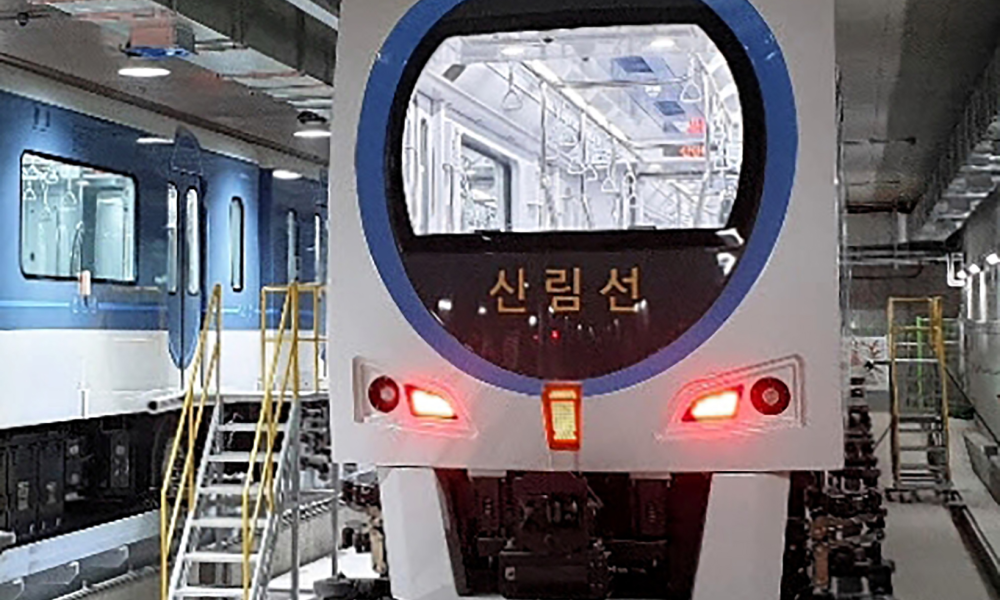
Seoul’s automated Sillim Line is using digital twin technology, condition monitoring and AI-supported predictive maintenance to improve the reliability, safety and efficiency of its driverless metro operations.
Quick Skim
Railway software and AI engineering company VisionIT has worked with operator Rotem SRS to deploy advanced maintenance technologies across the Sillim Line, a rubber-tyred light metro serving southern Seoul.
The project brings together operational data from existing train systems into a digital environment where equipment condition can be monitored and potential failures identified earlier.
The approach is designed to support a shift from reactive and time-based maintenance towards more condition-based maintenance practices.

Digital Twin Connects Existing Train Data
The Sillim Line’s digital twin creates a virtual representation of the train fleet using information already generated by onboard systems.
Data sources include traction and braking performance, door operation records, HVAC readings, electrical subsystem parameters and signalling information.
By consolidating these different data streams into a single analytics environment, maintenance teams can monitor equipment performance and identify changes in asset condition without installing additional onboard sensors or hardware.
This allows existing operational data to be used more effectively for maintenance planning and reliability management.
The technology has been deployed across the 7.8 km Sillim Line, which operates entirely underground and connects Saetgang with Seoul National University. The line has 11 stations and uses automated rubber-tyred trains.
Moving Towards Condition-Based Maintenance

Predictive analytics is being used to support maintenance decisions based on the actual condition of equipment rather than relying only on predetermined maintenance intervals.
The system continuously analyses data from vehicle systems and identifies abnormal patterns that could indicate developing equipment issues.
Maintenance teams can then investigate these conditions before they develop into more significant failures.
According to reporting on the deployment, the technology has contributed to a 50% reduction in failure analysis time, a 10% decrease in corrective maintenance activities and a 50% reduction in false alarms.
Real-time condition monitoring has also supported the line in avoiding unplanned service interruptions caused by vehicle system failures.
For an automated railway, equipment visibility is particularly important because there is no driver onboard to identify unusual behaviour during normal operations.
Digital monitoring therefore provides maintenance teams with another way to continuously assess the condition of critical train systems.
AI Supports Maintenance Teams
The platform also includes an offline Korean-language AI assistant known as VisBo, which allows maintenance personnel to access operational and maintenance information more efficiently.
The AI tool operates within the railway’s secure environment rather than relying on an external cloud platform.
It is designed to help staff retrieve information and support maintenance analysis, reducing the amount of time required to search through technical and operational records.
The AI assistant is estimated to have saved around 2,600 staff hours annually, according to reporting on the project.
The combination of AI with digital twin and condition-monitoring technology provides maintenance teams with both real-time equipment visibility and faster access to information needed for maintenance decisions.
Digital Maintenance Expands Across Rail Operations

The Sillim Line deployment reflects the rail industry’s increasing adoption of digital technologies to improve asset management and operational reliability.
VisionIT’s Intelligent Digital Twin platform is reported to monitor more than 1,000 rail vehicles across three continents, with deployments covering projects in locations including Egypt, Ukraine, Poland and Uzbekistan.
Rotem SRS is also expanding digital maintenance systems across other railway projects.
In 2025, the company announced projects to implement Maintenance Management Information Systems for high-speed trains in Saudi Arabia and Uzbekistan, using digital systems to support railway vehicle inspection and maintenance management.
The company also operates and maintains the Sillim Line and has experience across metro and railway maintenance projects in markets including South Korea and Egypt.
Technology Supports More Proactive Metro Maintenance

The Sillim Line project demonstrates how existing railway data can be combined with digital twins, condition monitoring and AI to support more proactive maintenance.
Rather than waiting for faults to occur or depending entirely on scheduled inspections, operators can use equipment data to identify signs of deterioration earlier and prioritise maintenance according to actual asset condition.
As automated rail networks continue to expand, technologies that improve visibility into equipment health are expected to become increasingly important for maintaining reliability and service availability.
For Seoul’s Sillim Line, integrating AI-supported predictive maintenance into daily operations provides a way to strengthen asset reliability while improving the efficiency of maintenance teams.