






BYD Enters Humanoid Robotics Race as Competition With Hyundai Intensifies
Chinese electric vehicle maker BYD is entering the humanoid robotics market, bringing its vertically integrated manufacturing and supply-chain capabilities into an increasingly competitive physical...

Chinese electric vehicle maker BYD is entering the humanoid robotics market, bringing its vertically integrated manufacturing and supply-chain capabilities into an increasingly competitive physical AI sector.
Quick Skim
The move puts BYD in closer competition with automakers including Hyundai Motor Group, which is already preparing to introduce Boston Dynamics’ Atlas humanoid robots into automotive manufacturing.
BYD is taking a different initial approach, focusing on retail and service applications before expanding into industrial environments.
BYD Starts With Retail and Service Robots
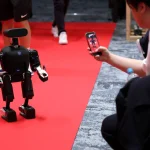
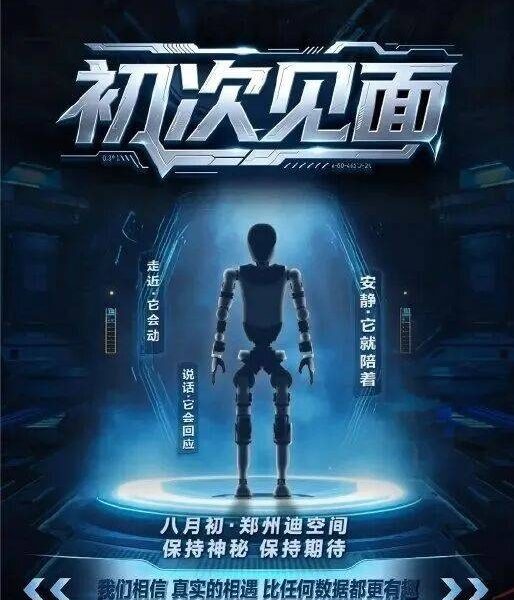
BYD is preparing its first bipedal humanoid robot, codenamed Xiao Di, for customer-facing applications at its dealerships.
The robot is expected to support interactions with customers at BYD locations, providing the automaker with a controlled environment in which to test and improve the technology before considering broader deployment. Commercial viability could be reached within the next one to two years.
The retail-first strategy differs from many of China’s dedicated humanoid robotics companies, which are already targeting industrial applications.
Companies including Unitree Robotics, UBTech Robotics and AgiBot have been developing robots for manufacturing and other commercial environments, creating an increasingly competitive domestic market.
BYD’s approach could allow it to establish commercial deployments in service environments before gradually extending humanoid robots into industrial operations.
Integrated Supply Chain Could Support Lower Costs
One of BYD’s potential advantages is its highly integrated manufacturing structure.
The company already develops and manufactures many of the key technologies used across its electric vehicles, including batteries, motors, electronics and software.
According to the Korea Herald report, BYD is expected to use this vertically integrated supply chain to help reduce humanoid robot production costs as the business scales.
Cost is becoming an increasingly important factor in humanoid robotics as companies move beyond prototypes towards commercial production.
Manufacturers must not only demonstrate that robots can perform specific tasks, but also bring hardware and operating costs down sufficiently for deployment across factories, logistics operations and other workplaces.
Hyundai Takes a Factory-First Approach
Hyundai Motor Group, meanwhile, is building its humanoid robotics strategy around industrial deployment.
Its Boston Dynamics subsidiary unveiled the production version of Atlas at CES 2026, with the robot designed for manufacturing tasks including material sequencing, component assembly and machine tending.
Hyundai plans to begin deploying Atlas at its US manufacturing operations in 2028, initially using the robots for parts sequencing.
Applications are expected to expand into component assembly from 2030 as the technology is validated across production environments.
The group is also targeting production capacity of 30,000 robots annually by 2028, supporting broader commercialisation of Atlas and other robotics platforms.
Automotive Manufacturing Becomes a Robotics Testbed
Automakers are becoming increasingly active in humanoid robotics as technologies developed for electric vehicles and autonomous driving overlap with physical AI.
Electric motors, batteries, sensors, control systems, computer vision and AI software used in vehicles can also support the development of intelligent robots.
Manufacturing plants provide another advantage by offering controlled environments where robots can perform repetitive tasks and collect operational data.
Hyundai plans to use its factories as part of this development process, combining real-world production data with robotics training and validation. Its Robot Metaplant Application Center in the US is expected to support training before Atlas units are deployed commercially.
BYD could eventually follow a similar path as its robotics programme develops, although its immediate focus remains customer-facing applications.
Physical AI Competition Expands
The entry of major automotive manufacturers into humanoid robotics reflects the rapid growth of physical AI, where artificial intelligence is integrated with machines capable of operating in real-world environments.
Hyundai is approaching the market through industrial automation, using Atlas to address repetitive, physically demanding and higher-risk manufacturing tasks.
BYD is beginning with retail and service applications while using its manufacturing scale and integrated supply chain as potential advantages in bringing robot costs down.
As humanoid robotics moves towards larger-scale commercial deployment, competition is increasingly shifting from demonstrations towards manufacturing capability, cost, reliability and the ability to perform useful work consistently.
For BYD and Hyundai, robotics is becoming another area where automotive manufacturing, AI and automation are beginning to converge.