







Repeated LRT Failures Highlight Need for System-Level Reliability Focus
Malaysia’s rail reliability has improved significantly in recent years, but recurring failures involving the same components or subsystems could indicate deeper system-level reliability issues that...

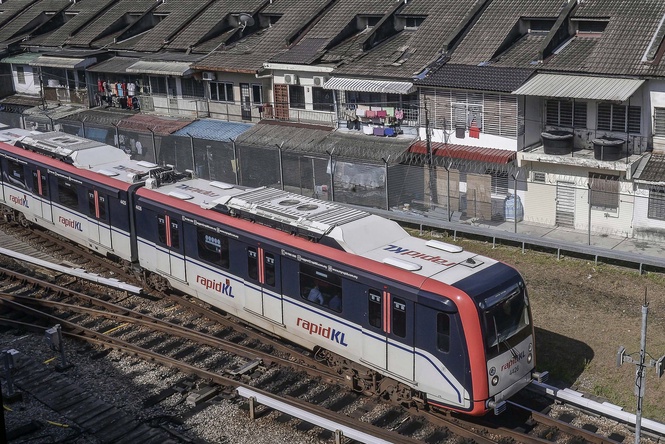
Malaysia’s rail reliability has improved significantly in recent years, but recurring failures involving the same components or subsystems could indicate deeper system-level reliability issues that require condition-based maintenance and root-cause analysis.
Quick Skim
Rail disruptions in Malaysia declined from 177 incidents in 2022 to 28 in 2025, with only 12 cases recorded during the first five months of 2026, according to government figures cited by Universiti Putra Malaysia Road Safety Research Centre head Prof Dr Law Teik Hua.
Despite the improvement, Law said repeated failures involving the same components, locations or rail subsystems should be treated differently from isolated equipment faults.
Repeated Failures Can Point to Wider Reliability Issues
Mechanical failures are unavoidable in complex rail systems, but the frequency and recurrence of faults can provide important information about overall system condition.
Law said recurring problems affecting specific lines or components could represent system-level reliability deficiencies, whether the issue originates from trains, signalling, power distribution or trackside equipment.
Rail networks consist of highly interconnected systems, meaning a fault in one area can affect wider operations.
Switches and signalling equipment have been among the components highlighted in recent public discussions around disruptions.
Ageing infrastructure can also contribute to reliability problems as older equipment may require more frequent maintenance and become increasingly difficult to replace or upgrade. However, Law cautioned against attributing disruptions solely to asset age.
Rail Reliability Depends on Multiple Systems
Overall rail reliability depends on the interaction between maintenance strategies, asset condition, signalling, power supply, train availability and daily operations.
Passenger loads can further influence the operational impact of failures.
High passenger volumes do not directly cause technical faults, but overcrowded services have less spare capacity available when disruptions occur, increasing the effect on commuters.
Malaysia’s recent reliability figures indicate that maintenance improvements are already producing results.
Government data showed that the average distance travelled between failures increased from approximately 90,000 km in 2022 to 930,000 km by May 2026.
Predictive Maintenance Recommended for Rail Assets
Law said preventive maintenance should extend beyond periodic equipment inspections.
Modern rail operators should increasingly adopt condition-based and predictive maintenance, using equipment performance and failure-pattern data to determine when intervention is required before equipment malfunctions.
Condition-based maintenance allows operators to monitor how equipment performs over time rather than relying entirely on fixed maintenance intervals.
For rail networks, this approach can be applied across critical assets including signalling equipment, power systems, trackside infrastructure and rolling stock.
The objective is to identify deterioration earlier and schedule maintenance before equipment condition develops into a service disruption.
Root-Cause Analysis Needed After Disruptions
Root-cause analysis is also important when the same problem returns after repairs.
Simply replacing a failed component may not resolve the underlying reliability problem if the same fault continues to occur.
Law said operators should investigate whether changes are required to the equipment design, operating environment, maintenance intervals or system configuration.
This shifts maintenance from addressing individual failures towards understanding why those failures continue to happen.
Recurring failure patterns can provide maintenance teams with information that helps improve asset management and prevent similar disruptions in the future.
Reliability Also Affects Passenger Confidence
Technical reliability has a direct impact on how passengers view public transport.
Law noted that commuters value not only average service performance but also predictability.
Repeated unexpected disruptions can reduce confidence in whether passengers will arrive at work, meetings or connecting services on time. Over time, unreliable services could encourage some commuters to return to private vehicles.
Malaysia’s significant decline in LRT disruptions since 2022 provides a positive indication that overall rail reliability is improving.
Maintaining that progress, however, will require operators to continue moving beyond rapid fault repair towards preventing the same failures from recurring.
The growing focus on condition monitoring, predictive maintenance and root-cause analysis provides rail operators with tools to identify system-level reliability problems earlier and improve long-term network performance.