





Vietnam Embeds Climate Preparedness Into Economic and Infrastructure Planning
Vietnam is moving climate resilience deeper into its economic development strategy, with AI-based forecasting, resilient infrastructure and low-emission agriculture becoming part of efforts to reduce...


Vietnam is moving climate resilience deeper into its economic development strategy, with AI-based forecasting, resilient infrastructure and low-emission agriculture becoming part of efforts to reduce the economic impact of increasingly severe weather events.
Quick Skim
- Vietnam Shifts From Disaster Response to Risk Prevention
- Đà Nẵng Uses AI and IoT for Flood Management
- Climate Resilience Expands Into Infrastructure Planning
- Agriculture Becomes a Major Climate Test
- Mechanisation and Data Support Low-Emission Farming
- Climate Preparedness Becomes Part of Economic Competitiveness
The shift comes as floods, drought, landslides and saltwater intrusion place growing pressure on infrastructure, agriculture and supply chains.
Between January and the end of July 2026, Vietnam recorded 17 types of natural disasters, resulting in 46 deaths and damage to more than 22,000 homes. Nearly 32,000 hectares of rice and other crops were submerged, while losses during July alone were estimated at around VND600 billion (US$23 million).
Vietnam Shifts From Disaster Response to Risk Prevention
Vietnam is seeking to move away from primarily responding to natural disasters after they occur towards identifying and managing climate risks before they cause major disruption.
On 28 July 2026, the country issued Conclusion 75, updating the strategic approach established under Resolution 24 in 2013.
The new direction places greater emphasis on forecasting, prevention and data-based risk governance, while integrating climate resilience into investment, production and economic planning.
The approach reflects the growing economic impact of climate-related disruption, particularly as Vietnam pursues faster economic growth while also meeting environmental and international trade requirements.
Đà Nẵng Uses AI and IoT for Flood Management
Đà Nẵng is already applying digital technology to strengthen climate preparedness.
The central Vietnamese city faces significant exposure to storms, flooding and coastal risks due to its more than 200 km of coastline and its location where river systems meet the sea. Rapid urbanisation has also increased pressure on drainage infrastructure.
The city has reinforced 23.7 km of seawall around Đà Nẵng Bay, alongside breakwaters and other coastal protection infrastructure.
At the same time, it is deploying digital monitoring technology to improve its response to flooding.
A network of IoT sensors collects real-time information on groundwater, rainfall and water flow, feeding data into Đà Nẵng’s Intelligent Operations Centre.
An AI-powered flood mapping system then uses this information to predict where severe flooding could occur several hours in advance.
When risks are detected, alerts can be sent to residents, traffic can be redirected and pumping stations activated.
The system combines physical infrastructure with real-time monitoring and AI-based forecasting to improve the city’s ability to respond before flooding becomes more severe.
Climate Resilience Expands Into Infrastructure Planning
Vietnam’s approach also includes reconsidering where infrastructure and communities should be located.
Đà Nẵng passed a municipal resolution in June 2026 supporting the development of a resettlement programme for households located in areas exposed to landslides and flash floods.
The initiative is intended to move communities away from higher-risk locations while supporting more resilient long-term development.
Climate risk is also increasingly becoming part of infrastructure and investment decisions internationally.
The Vietnam News report highlighted Singapore’s investments in reservoirs, recycled-water systems, desalination facilities and storm-integrated waterfront infrastructure as an example of climate resilience supporting broader economic and logistics competitiveness.
Agriculture Becomes a Major Climate Test
Agriculture remains one of Vietnam’s most exposed industries.
Meteorologists have warned that the El Niño pattern developing through 2026 and into 2027 could threaten around 350,000 hectares of winter-spring rice, particularly in areas affected by shorter rainy seasons and increasing saltwater intrusion.
Vietnam is responding through its programme to develop one million hectares of high-quality, low-emission rice in the Mekong Delta.
The initiative aims to reduce agricultural emissions while improving productivity and farmer incomes.
The programme also reflects growing international requirements around emissions measurement, traceability and sustainability across agricultural supply chains.
Mechanisation and Data Support Low-Emission Farming
Greater mechanisation is expected to support Vietnam’s agricultural transition.
The Ministry of Agriculture and Environment is seeking to move beyond mechanising individual farming activities towards a more integrated model combining machinery, agricultural data, cooperatives and low-emission production methods.
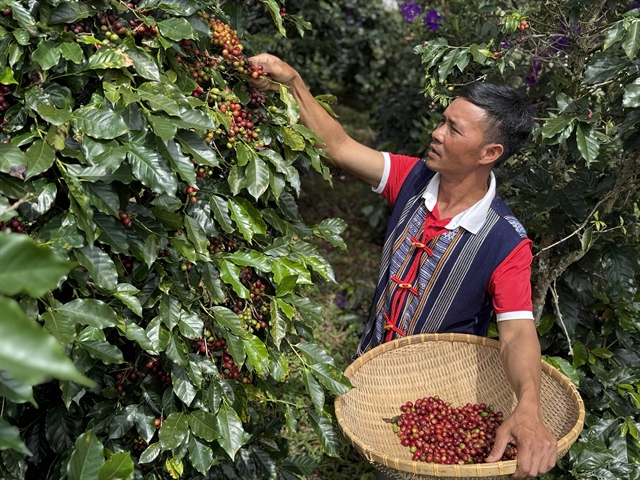
Coffee production is another area where Vietnamese companies are adopting more sustainable practices.
Vĩnh Hiệp, a major coffee exporter, has expanded internationally certified production areas, circular farming practices and organic cultivation as sustainability requirements become increasingly important in export markets.
Vietnam also plans to introduce low-emission labels for agricultural products including rice, coffee, fruits and vegetables.
Climate Preparedness Becomes Part of Economic Competitiveness
Vietnam’s updated strategy reflects a broader shift in how climate resilience is being approached.
Rather than treating disaster prevention and environmental protection separately from economic development, the country is increasingly incorporating climate preparedness into infrastructure, agriculture, investment and production planning.
Conclusion 75 sets a longer-term target of developing a green, circular and low-carbon economy by 2045, alongside Vietnam’s existing commitment to achieve net-zero emissions by 2050.
From AI flood forecasting in Đà Nẵng to low-emission agriculture in the Mekong Delta, Vietnam is expanding the use of technology, infrastructure and data to reduce its exposure to climate-related disruption.
The approach positions climate preparedness not only as an environmental requirement, but increasingly as part of maintaining economic resilience and long-term industrial growth.