



Vietnam Seeks Chinese Investment in Energy and Infrastructure to Boost Digital Transformation
Vietnam engages leading Chinese firms to support digital infrastructure, clean energy, and transport projects amid economic development goals.

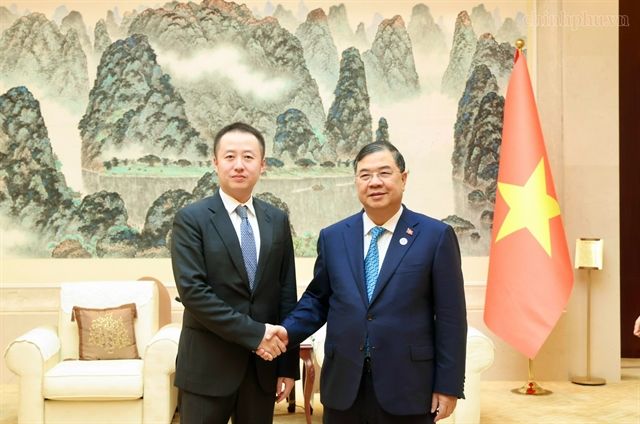
Vietnam is actively courting investment and cooperation from prominent Chinese corporations in the technology, energy, and infrastructure sectors to advance its digital transformation and sustainable development objectives, Deputy Prime Minister Pham Gia Tuc said during meetings in Nanning, China.
Quick Skim
- Engagement With Huawei Focuses on Digital and Green Technologies
- China Communications Construction Company Invited to Expand Infrastructure Cooperation
- China Energy Engineering Corporation Targets Renewable Energy and Power Capacity Expansion
- Vietnam’s Energy Demand and Green Transition Drive Investment Requests
- Implications for Industrial Operations in Vietnam
- Looking Ahead to Cooperative Project Development
Engagement With Huawei Focuses on Digital and Green Technologies
During discussions with Huawei’s vice-president for Asia-Pacific and CEO of South-East Asia, Will Wang, Pham Gia Tuc highlighted Vietnam’s prioritisation of digital infrastructure, artificial intelligence (AI), and green energy development. He encouraged Huawei to move beyond supplying equipment towards joint research and development with local partners. Viet Nam intends for these collaborations to support projects in next-generation telecommunications, computing, data centres, and renewable energy solutions.
Huawei acknowledged the growth potential and reaffirmed readiness to assist Vietnam’s digital economy development, green transition, and high-tech workforce training initiatives.
China Communications Construction Company Invited to Expand Infrastructure Cooperation
Vietnam is expediting infrastructure development across multiple sectors including roads, rail networks, urban transit, aviation, and maritime ports. In meetings with China Communications Construction Company (CCCC) deputy general manager Yang Yisheng, Tuc invited the firm to study Vietnam’s strategic infrastructure plans to identify suitable investment prospects.
CCCC, recognising Vietnam as an important market, expressed interest in deepening cooperation on transport infrastructure, logistics, seaports, and green energy. The firm highlighted potential participation in key railway connectivity projects such as Lao Cai-Hanoi and Noi-Hai Phong, alongside port development and waterway initiatives.
China Energy Engineering Corporation Targets Renewable Energy and Power Capacity Expansion
Vietnam’s push for renewable and new energy sources prompted engagement with China Energy Engineering Corporation (CEEC). Deputy general manager Zhang Deliang indicated the company’s intent to extend cooperation in renewable energy, gas-fired power, and emerging energy technologies.
CEEC is prepared to mobilise investment, technology, and expertise aligned with Vietnam’s energy development plans. The company also expressed interest in cross-border railway projects connecting Vietnam and China, including routes such as Dong Dang-Hanoi and Mong Cai-Ha Long-Hai Phong.
Vietnam’s Energy Demand and Green Transition Drive Investment Requests
Pham Gia Tuc underscored the nation’s growing energy requirements to sustain economic growth, emphasising the importance of wind, solar, and offshore wind power among renewable options. He urged CEEC to propose specific cooperation frameworks and develop solutions to enhance electricity generation and transmission, including the integration of energy storage technologies.
Implications for Industrial Operations in Vietnam
The push for digital infrastructure and advanced technology collaboration with Huawei targets optimisation of data management and intelligence capabilities, which can improve operational efficiency across manufacturing and utilities sectors.
Expansion of transport infrastructure by Chinese firms like CCCC is expected to enhance logistics, reduce supply chain bottlenecks and improve connectivity within Vietnam and with regional partners.
Energy sector investments from CEEC in renewable and gas-fired power projects align with Vietnam’s decarbonisation agenda, potentially stabilising power supply and supporting industrial growth while promoting environmental sustainability.
Looking Ahead to Cooperative Project Development
Vietnam plans to coordinate with Chinese investors and ministries to identify pilot projects with potential for scaled implementation in areas such as AI, green energy, and transport connectivity. The government expects these collaborations to advance towards practical deployment within priority sectors, reinforcing Vietnam’s strategic development goals.