


NTU Singapore and Motherson Develop Magnetic Heating to Cut Manufacturing Energy and Time
NTU Singapore and Motherson are collaborating on magnetic nanoparticle technology to reduce energy use and accelerate industrial coating curing processes.

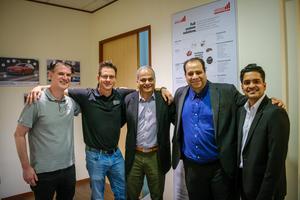
Nanyang Technological University (NTU) Singapore and global automotive supplier Motherson have partnered to develop a magnetic heating technology aimed at reducing the energy consumption and curing time for industrial coatings, which could enhance production efficiency.
Quick Skim
- Spinheat Technology Uses Magnetic Nanoparticles for Localised Heating
- Collaboration Combines Material Science and Manufacturing Expertise
- Potential to Reduce Energy Use and Carbon Emissions
- Implications for Production Efficiency and Facility Requirements
- Significance for Asia-Pacific Manufacturing Supply Chains
- Next Steps for Technology Adaptation and Scale-up
Spinheat Technology Uses Magnetic Nanoparticles for Localised Heating
NTU’s Spinheat technology integrates magnetic nanoparticles into materials such as paints, adhesives and resins. These nanoparticles generate heat when subjected to an alternating magnetic field, enabling internal curing of coatings. This method removes the need to heat entire components in conventional industrial ovens, thus targeting heat application precisely where required.
Collaboration Combines Material Science and Manufacturing Expertise
The partnership draws on NTU’s research strengths in magnetic materials and polymer science and Motherson’s capabilities in automotive engineering and global manufacturing. Motherson, which operates over 475 facilities in 47 countries, supports automotive and aerospace supply chains through design, engineering, production, assembly and logistics services.
Potential to Reduce Energy Use and Carbon Emissions
Spinheat technology could reduce overall energy demands and carbon emissions during curing processes. By eliminating the need for large industrial ovens and lowering energy input, the technology offers a more sustainable approach to component coating, particularly pertinent to automotive and aerospace manufacturing sectors.
Implications for Production Efficiency and Facility Requirements
Besides energy savings, the technology may reduce the physical footprint needed for curing operations by replacing bulky ovens with more compact magnetic systems. This could facilitate more flexible factory layouts and potentially accelerate production cycles by shortening curing durations.
Significance for Asia-Pacific Manufacturing Supply Chains
Given Asia-Pacific’s substantial automotive and aerospace production hubs, deploying the Spinheat process could optimize supply chain energy consumption and throughput. The collaboration between a regional university and a global supplier illustrates a translation of academic research into industrial application relevant to manufacturing operations across the region.
Next Steps for Technology Adaptation and Scale-up
NTU and Motherson intend to adapt Spinheat for industrial-scale production and validate performance under manufacturing conditions. Success in scaling the technology could influence coating practices and energy management strategies in manufacturing facilities within Asia-Pacific and beyond.