
Vietnamese Prime Minister Proposes ASEAN Strategic Infrastructure Priorities Through 2040
Vietnam’s PM Le Minh Hung urges ASEAN to establish a strategic list of infrastructure projects targeting transport, energy, digital links and institutional cooperation through 2040.

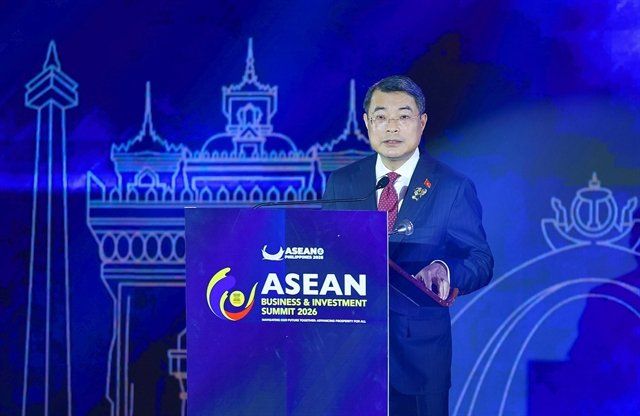
Vietnamese Prime Minister Le Minh Hung has proposed that ASEAN formulate a priority list of strategic infrastructure projects up to 2040, aiming to enhance cross-border transport, logistics, energy networks and digital connectivity to support regional integration and economic growth. He made the proposal at the ASEAN Business and Investment Summit 2026 (ABIS 2026) in Manila on 14 November.
Quick Skim
Four Infrastructure Priorities for ASEAN Connectivity Strategic Plan 2026–35
PM Hung outlined four primary priorities to guide ASEAN’s infrastructure development under the Connectivity Strategic Plan 2026–35. First, cross-border transport and logistics networks should be developed through interconnected economic corridors that integrate transport, manufacturing, logistics, trade, and smart urban systems while enhancing resilience to climate change and emerging risks.
The second priority focuses on energy connectivity. This includes diversifying energy supply sources, strengthening regional infrastructure, and accelerating the transition to sustainable energy. He highlighted the ASEAN Power Grid as a strategic initiative to improve regional energy security and economic stability.
Third, digital connectivity is emphasised, with the goal of establishing a secure and inclusive regional digital ecosystem. PM Hung noted the ASEAN Digital Economy Framework Agreement, signed during the summit, will support policy harmonisation, reduce transaction costs, and enable deeper integration of businesses into regional and global value chains.
The fourth priority concerns institutional and people-to-people connectivity, involving the harmonisation of standards, simplification of customs procedures, and enhanced cooperation in education, science, technology, and skilled worker exchanges.
Measures to Translate Priorities Into Action
To operationalise these priorities, PM Hung proposed four measures. First, ASEAN should develop an infrastructure priority list extending through 2040, identifying strategic projects in areas such as cross-border transport corridors, logistics, power grids, digital infrastructure, and sustainable smart cities, with projects classified by readiness for implementation.
Second, stronger coordination among member states during the planning and execution phases is required. This involves harmonising technical and legal standards as well as establishing mechanisms for sharing costs and benefits of cross-border projects.
Third, ASEAN should develop a regional ecosystem for project preparation and capital mobilisation. This ecosystem would include technical assistance, feasibility studies, financial advisory services, risk assessments, and connections between governments, development banks, investment funds, financial institutions and private investors.
Fourth, the private sector should be recognised as a substantive partner in infrastructure development, contributing not only capital but also technology, innovation, management expertise, and operational efficiency, according to PM Hung.
Vietnam’s Infrastructure Development and Regional Connectivity
PM Hung emphasised Vietnam’s commitment to developing infrastructure in parallel with enhanced ASEAN connectivity. The government aims to achieve double-digit economic growth in 2026 and subsequent years, with modern infrastructure identified as a strategic driver for rapid and sustainable growth.
Vietnam is advancing the completion of its expressway network, and developing seaports, major railway projects, international airports, and power generation and transmission infrastructure. Investment is also increasing in energy, logistics, and digital infrastructure.
The country has achieved 5G coverage for over 90 per cent of its population and is pursuing research into 6G technology. PM Hung noted Vietnam’s strategic location at the intersection of several economic corridors and regional supply chains as a factor enabling its commitment to regional infrastructure development.
ASEAN’s Infrastructure Needs and Economic Context
According to the Vietnam Chamber of Commerce and Industry, ABIS 2026 drew over 2,000 delegates, including about 10 world leaders and more than 40 international experts, reflecting the significance of infrastructure development for ASEAN’s economic objectives.
The region comprises nearly 700 million people and had a combined gross domestic product of over US$4.2 trillion in 2025. Its economy expanded by 4.9 per cent in 2025 and is projected to grow by approximately 4.5 per cent in 2026.
The Asian Development Bank has estimated ASEAN requires around US$210 billion in annual infrastructure investment to meet development needs, in areas such as power and transport.
Photo: The Star