






AI and Semiconductor Investment Strengthens Malaysia’s Manufacturing Growth
Malaysia is emerging as one of Asia’s stronger growth markets as investment in artificial intelligence infrastructure, semiconductors and data centres translates into new industrial capacity and...


Malaysia is emerging as one of Asia’s stronger growth markets as investment in artificial intelligence infrastructure, semiconductors and data centres translates into new industrial capacity and higher electronics exports.
Quick Skim
- AI Investment Translates Into Industrial Growth
- Penang Builds on Semiconductor Manufacturing Base
- Johor Benefits From Data Centre Expansion
- Malaysia Gains From AI Hardware Supply Chain
- Geopolitical Shifts Redirect Industrial Investment
- Industrial Expansion Creates New Capacity Requirements
- AI and Semiconductors Reshape Malaysia’s Industrial Base
Investment is spreading across several of the country’s major industrial regions. Johor is attracting large-scale data centre development, Penang continues to secure semiconductor-related investment, while Sarawak is drawing projects across manufacturing and other industrial sectors.
Malaysia is now among the world’s four largest net exporters of AI-related hardware, alongside South Korea, Taiwan and Thailand, according to International Monetary Fund data cited by The Business Times.
Data centre investments have also reached an estimated level equivalent to nearly 18% of Malaysia’s GDP, the highest share globally, according to HSBC analysts.
AI Investment Translates Into Industrial Growth
Malaysia’s recent investment cycle is increasingly moving from project announcements towards physical infrastructure and manufacturing output.
The country’s economy expanded 5.8% year on year in the second quarter of 2026, exceeding the 5.2% consensus forecast. Growth was supported by domestic demand, electronics exports and investment linked to artificial intelligence infrastructure.
Following the stronger performance, JPMorgan Chase raised its forecast for Malaysia’s 2026 GDP growth to 5.3%.
Investment has been building across the country for several years.
Sarawak attracted more than RM116 billion (US$28.4 billion) in investment inflows over the five years through 2025, while new manufacturing projects continue to evaluate the state as a location for industrial expansion.
The state is also benefiting from Malaysia’s established industrial base and position within regional supply chains.
Penang Builds on Semiconductor Manufacturing Base
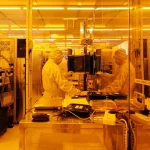
Penang remains a key centre of Malaysia’s semiconductor industry and is attracting new investment as global demand for AI computing infrastructure increases.
The state has developed a semiconductor ecosystem over several decades, covering areas including manufacturing, assembly, testing and electronics production.
Malaysia has attracted investment from technology companies including Infineon Technologies, Nvidia and ByteDance, alongside other companies expanding their presence in the country.
Penang is also developing Silicon Island, a major land reclamation and industrial development project intended to provide additional space for semiconductor and high-technology manufacturing.
The project is expected to support the state’s move towards higher-value manufacturing while creating additional capacity for technology companies seeking to expand in Malaysia.
Malaysia’s exports of electrical and electronic products, including semiconductors, are expected to exceed RM800 billion in 2026, highlighting the growing importance of the sector to the country’s industrial economy.
Johor Benefits From Data Centre Expansion
Johor has become another major centre of Malaysia’s technology investment cycle, particularly for data centres.
Approved data centre investments nationwide between 2021 and the first half of 2025 reached RM144.4 billion.
The growth of AI infrastructure is creating demand beyond the data centres themselves.
Construction, engineering, electrical systems, cooling infrastructure, power generation and other industrial services are benefiting as developers build new computing facilities.
Malaysian construction and engineering company Gamuda reported a record RM52 billion order book in June 2026, with data centre projects helping offset weaker activity in its property and traditional infrastructure segments.
The company expects its pipeline of data centre-related projects to continue expanding.
Malaysia Gains From AI Hardware Supply Chain
The global AI investment cycle is creating demand across a much broader manufacturing supply chain than semiconductor fabrication alone.
AI data centres require processors, memory, networking equipment, printed circuit boards, power systems, cooling infrastructure and other specialised electronic and electrical components.
Malaysia’s established electronics manufacturing base gives it an opportunity to participate across several parts of this supply chain.
The country also offers a relatively developed industrial ecosystem, an English-speaking workforce and comparatively competitive operating costs, helping it attract companies looking to expand manufacturing capacity in Southeast Asia.
Malaysia’s competitiveness ranking has also improved significantly.
The country rose to 15th among 70 economies in the 2026 IMD World Competitiveness Ranking, compared with 34th place just two years earlier.
Geopolitical Shifts Redirect Industrial Investment
Changes in global supply chains are also influencing Malaysia’s investment momentum.
Companies are increasingly considering geopolitical stability, manufacturing infrastructure and supply-chain diversification when deciding where to establish new production facilities.
One example highlighted by The Business Times involves a manufacturer supplying products used in semiconductor production that had originally planned to establish a chemical plant in the Middle East.
Following the escalation of conflict in Iran, the company began evaluating Sarawak as an alternative location, attracted by Malaysia’s established industrial infrastructure and relatively stable operating environment.
This reflects a wider trend in which manufacturers are diversifying production and supply chains across Asia as geopolitical and trade uncertainty increases.
Industrial Expansion Creates New Capacity Requirements
Rapid industrial investment is also creating challenges.
Engineering consultancy Medhini Group reported strong demand from companies expanding capacity in Malaysia, but said shortages of experienced project managers were limiting its ability to take on additional projects.
The company is looking to expand its workforce from around 15 to 80 employees as new project enquiries increase.
Malaysia’s unemployment rate is currently around 3%, close to its lowest level in a decade.
Continued expansion in semiconductors, data centres and advanced manufacturing could therefore increase demand for engineering, construction and technical talent.
AI and Semiconductors Reshape Malaysia’s Industrial Base
Malaysia’s current growth cycle demonstrates how global AI investment is creating opportunities far beyond software and computing companies.
Semiconductor manufacturing, electronics exports, data centres, engineering services and industrial infrastructure are all benefiting from rising demand for computing capacity.
However, sustaining the momentum will require continued investment in infrastructure, energy, skilled workers and manufacturing capability.
Fiscal pressures and higher energy costs also remain risks. Government spending on petrol and diesel subsidies could rise to around RM40 billion in 2026, more than double the RM15 billion allocated in the annual budget.
There is also a risk of increasingly uneven growth if technology-related industries expand significantly faster than other parts of the economy.
For now, however, Malaysia’s established semiconductor ecosystem, expanding data centre market and growing role in the AI hardware supply chain are strengthening its position as one of Asia-Pacific’s emerging advanced manufacturing and technology hubs.