

Alibaba Cloud Opens Sixth Malaysia Data Center as AI Collaborations Grow
Alibaba Cloud launched its sixth data center in Malaysia and announced AI partnerships across sectors, addressing regulatory and integration challenges for local businesses.

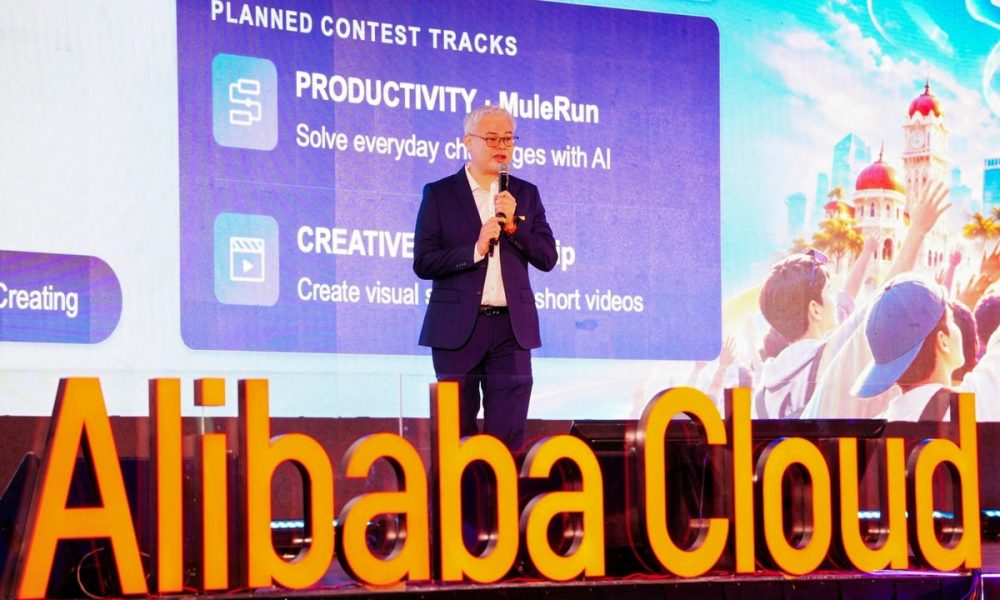
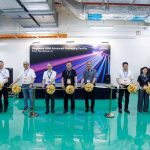
Alibaba Cloud has made its third data center in Johor available, bringing its total number of data centers in Malaysia to six.
Quick Skim
Johor Facility Lifts Malaysia Capacity
Johor became the company’s second cloud region in Malaysia in June 2026, complementing its existing region in Kuala Lumpur, which houses three data centers. The expansion forms part of Alibaba’s previously announced US$53 billion investment in AI and cloud infrastructure.
Globally, Alibaba Cloud operates across 109 availability zones in 32 regions. In Malaysia, the company has established a dedicated services team to support regional customers, reflecting the country’s priority status within Alibaba’s Southeast Asia operations.
Qwen4-Max AI Model Presented for Malaysian Market
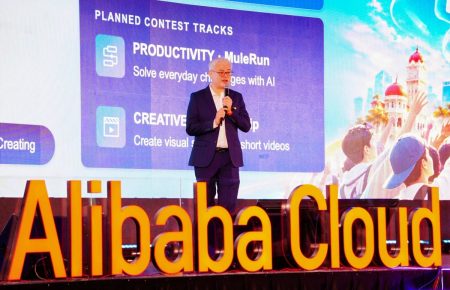
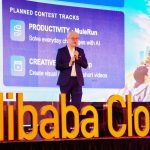
At the Qwen Conference Malaysia 2026, Alibaba Cloud introduced its latest AI model, Qwen4-Max, which features 2.4 trillion parameters and native vision capabilities. It supports a context window of up to one million tokens, underlying enhanced language understanding and multitasking performance. The model placed sixth on the Code Arena coding leaderboard and demonstrated capabilities in agentic tasks, productivity, and visual reasoning benchmarks.
Collaborations Span Telecommunications, Energy, Software and Content Creation
Alibaba Cloud has signed new partnership agreements with several local organisations to integrate AI into their operations. CelcomDigi inked a memorandum of understanding to develop API-based digital solutions that combine cloud and connectivity services, alongside joint staff training initiatives.
In energy, AFED Digital utilises Alibaba Cloud infrastructure to run AI-based software platforms EDAFY and Dynectus, which support upstream oil and gas operations and enterprise resource planning tasks respectively. In digital content, DayDreamer Group employs Alibaba’s AI models via the Model Studio for its AI-powered video creation platform, Theatre.
The company also collaborates with AIGC Lab Malaysia, a community focused on AI-generated content, to conduct workshops and develop industry skills under a formal MoU. Existing deployments supported include TNG Digital’s use of Alibaba Cloud’s Qoder coding tool, which the customer has positively reviewed for improving development productivity.
Regulatory Challenges Affect AI Deployment Timelines
Alibaba Cloud executives acknowledge that Malaysian organisations face regulatory and integration challenges that affect AI adoption. Financial institutions and government agencies, for instance, require extended evaluation periods due to compliance with directives from Bank Negara Malaysia and other authorities.
Choong Hon Keat, General Manager of Malaysia at Alibaba Cloud Intelligence, said these longer timelines do not indicate reluctance but reflect the necessity to balance business value with regulatory obligations. The diverse challenges vary by sector and organisation scale.
Lin En Shu, Head of Solutions Architect at Alibaba Cloud Intelligence, described a significant challenge as understanding where AI fits within existing business processes. Content generation is generally simpler to implement, whereas agentic AI—where AI takes over tasks previously performed by employees—requires extensive planning and monitoring.
Applications such as AI-generated advertisements have seen faster uptake in Malaysia, while more complex workflow automation is still under development. Alibaba Cloud provides both public and private cloud deployment options to meet data classification and operational needs, enabling on-premises AI model deployment where necessary.
Photo: CRN Asia