
At Singapore’s First Urban Mobility Week, Reliability Quietly Outranked Autonomy
The self-driving buses drew the crowds at Singapore’s inaugural Urban Mobility Week; the signatures went to rail asset lifecycles, fleet upkeep and local engineering.

6 Nov 2026 · On the ground at Singapore Urban Mobility Week by Industrial Gemba’s Editorial Team
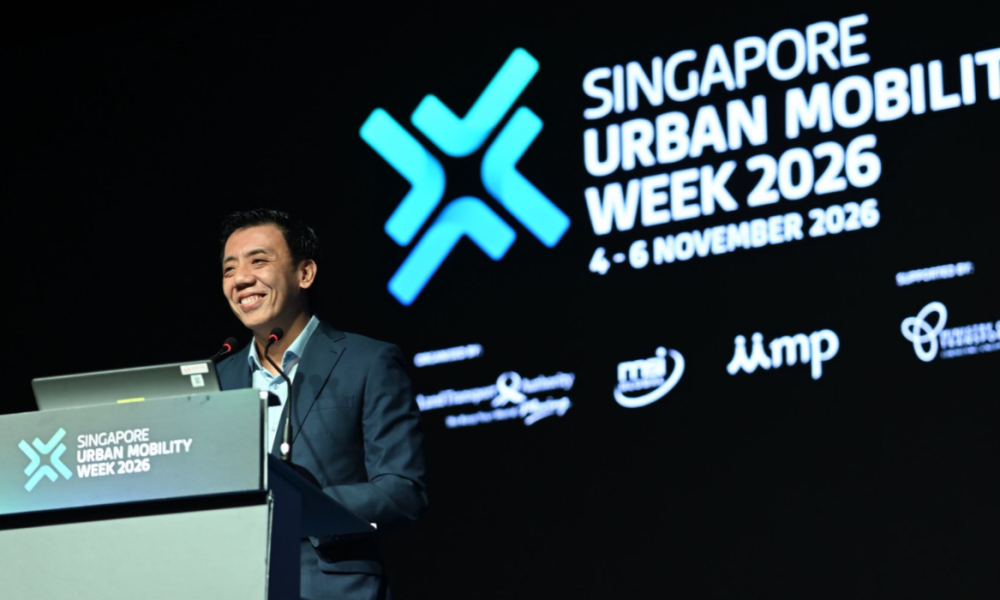
Singapore ran its inaugural Urban Mobility Week this week, 4 to 6 November, under the theme “Drive the Future.” The Land Transport Authority, MSI Global and MP Singapore pulled policymakers, operators and vendors into one hall.
Transport Minister Jeffrey Siow opened the week with the vision: autonomous innovation, smart infrastructure, a city designing mobility around commuters. The Leaders’ Summit on 4 November ran four LTA-led panels, commuter needs, autonomous-vehicle deployment, workforce transformation and rail renewal, and the Industry Forums that followed split the field into autonomous and intelligent mobility, digitalisation and IoT, future-ready infrastructure, and sustainable transport.
The autonomy exhibits drew the crowds. Buses sat on the floor, and the conversation around them ran well ahead of the kerb. Here is where the Gemba read matters. Singapore’s actual self-driving pilot is real, but it is a pilot: in October 2025 LTA awarded a roughly S$8.1 million contract to a consortium of MKX Technologies, Zhidao Network Technology and BYD (Singapore) for six autonomous buses, which are due to run on Services 400 and 191 in a hybrid fleet from the second half of 2026, with a safety operator on board. The first bus arrived around March 2026 for safety checks. The vehicles are on the road, under supervision, on fixed routes.
In Minister Siow’s opening address, he was candid that he came back from autonomous rides in Guangzhou and the San Francisco Bay Area convinced Singapore had to move early. He counted 25 autonomous passenger vehicles already on local roads, with a handful of commercial AVs in trials, and said rider feedback had settled into the best kind of verdict: Boring. From December, Singapore will publish a quarterly report on every AV deployment, its scale, rider experience and safety outcomes. It is a real commitment. It is also, tellingly, one framed around safety data and public accountability, which is reliability by another name.
And notice what Singapore’s own success story actually rests on. When Minister Siow traced what made the network world-class, the climax was not autonomy. It was maintenance. In the 2010s Singapore retrofitted sensors across its trains and tracks and trained crews to catch failures before they happened, condition-based maintenance, and rail reliability now runs above 3 million mean kilometres between failure, thirty times the rate before that effort began.
MoUs Inked
The deals with inked pointed down, into maintenance, inspection and asset lifecycle. Look at what SMRT alone signed across the week:
- STRIDES Mobility arm agreed to adapt the group’s Bus 4.0 fleet capabilities to waste-collection fleets with CORA Environment
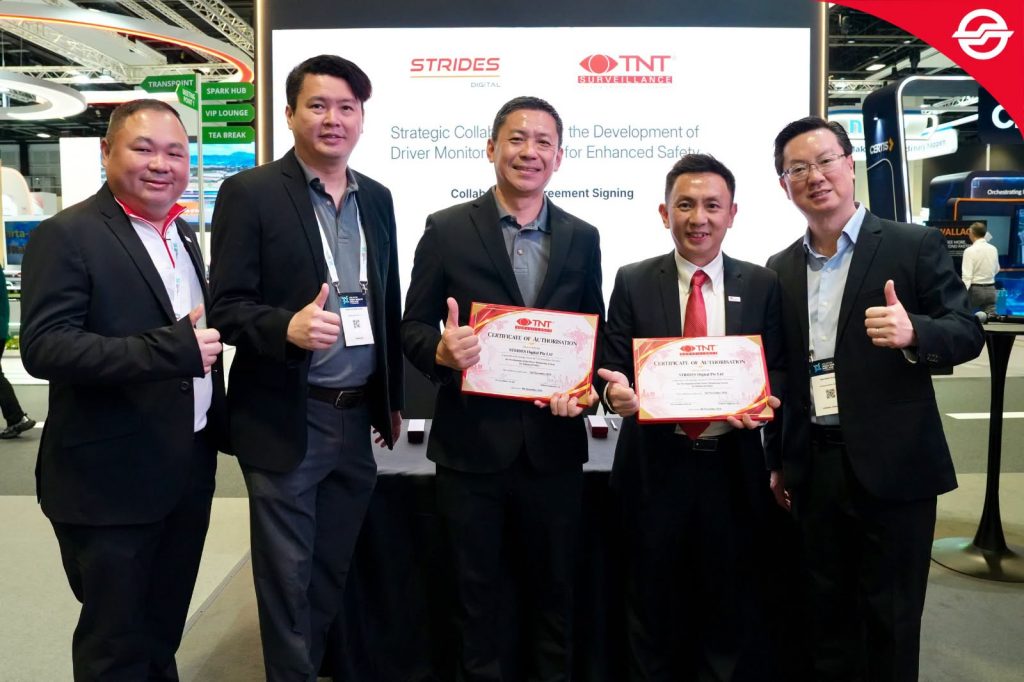
- STRIDES Digital teamed with TNT Surveillance on a driver-monitoring system that tracks alertness and behaviour
- SMRT Buses signed with STA Inspection to bring technology and automation to bus inspection; and
- SMRT Buses entered a strategic industrial collaboration with ST Engineering Mobility Services (STEMOS) on sustainable bus asset management, covering electric-bus training infrastructure, parts and supply-chain collaboration, and maintenance and engineering across a bus’s lifespan.
Siemens Mobility pointed the same way. It used the inaugural week to deepen its work with SBS Transit through two MoUs and to pick up a signalling contract abroad, all of it about keeping existing systems running rather than launching new ones.
Both signings deepened Siemens’ work with the SBS Transit group:
- An MoU on rail asset-lifecycle management through technology transfer, diagnostics and repair
- The second frames future work on rail digitalisation, safety and cross-border initiatives.
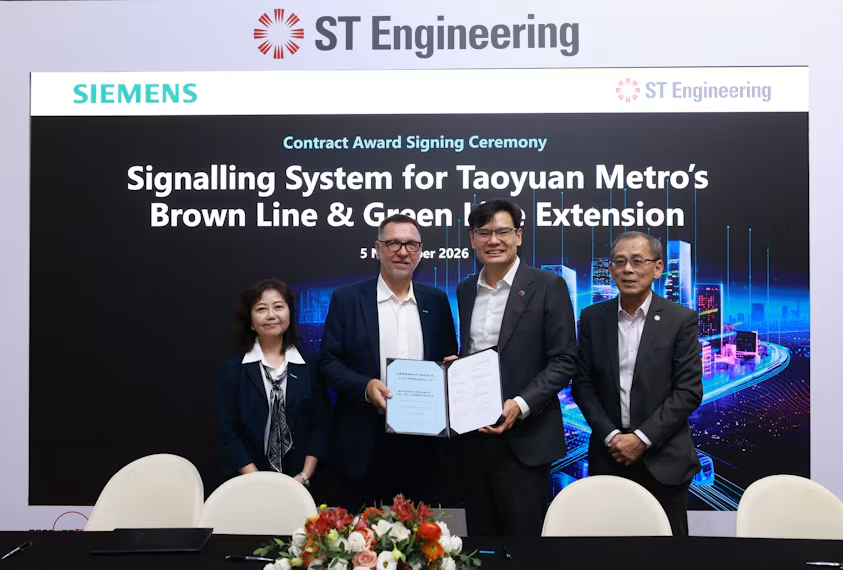
Separately, ST Engineering’s Urban Solutions business awarded Siemens’ Taiwan branch the signalling contracts for Taoyuan Metro’s Brown Line and Green Line Extension, built on Siemens’ Signalling X technology, a reminder that Singapore’s transport engineering travels as an export, not just a domestic programme.
Buses went Electric, Quietly
The other thing that happened without a headline was electrification. JBM Electric Vehicles used the week to launch the JBM ECOLIFE, a 12-metre, low-floor, fully electric city bus. The exhibitor list were a who’s-who of the bus world: BYD, Yutong, Wrightbus and Zhongtong on the maker side, with SBS Transit, SMRT, Go-Ahead Singapore and Tower Transit on the operator side.
The scale behind it is a government target. Singapore is aiming for more than 3,000 electric buses by 2030. The makers on the floor were selling into a mandate.
That split is the quiet story. The makers are selling electric drivetrains that are ready; the operators are the ones who have to depot them, charge them, and keep them turning for a 15-year service life. The hard part of electrification, like the hard part of autonomy, is the infrastructure and the maintenance behind it.
The Gemba Takeaway
If you run or buy transport infrastructure in Asia-Pacific, the signal from SUMW is where the risk and the spend actually sit. The autonomy and electrification on the show floor are real and coming, but they are the easy part to admire and the hard part to operate. The value, and the exposure, is in the layer underneath: asset-lifecycle management, local engineering capability, signalling, the maintenance contract after the launch. Autonomy still has a human in the loop; electrification still has a depot to build.
This is part of Industrial Gemba’s coverage from Singapore Urban Mobility Week.