
Chinese Universities Adapt Curricula and Infrastructure as AI Alters Talent Requirements
Chinese universities are revising teaching methods and campus resources to develop interdisciplinary skills and integrate AI, addressing evolving industrial demands.

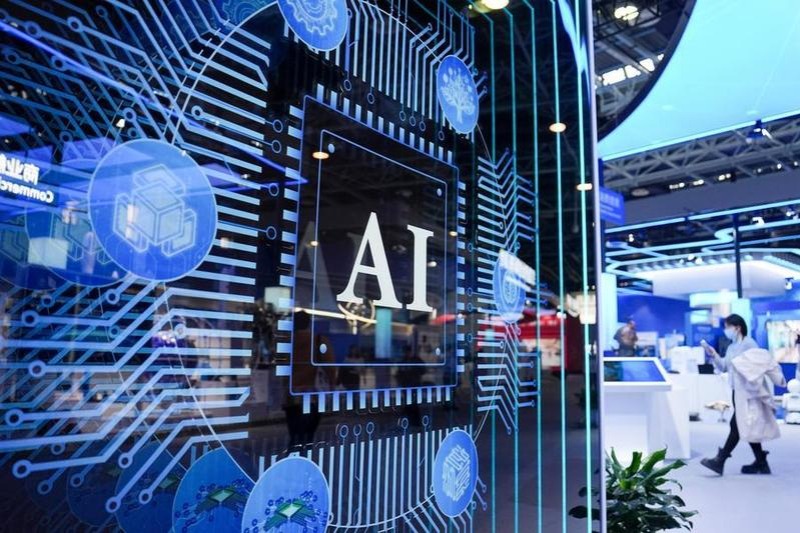
Chinese universities are modifying curricula and redefining infrastructure around artificial intelligence to address changes in talent requirements and industrial expectations, according to academics and industry leaders at the HKU Talent Forum in Beijing.
Quick Skim
Curricula Evolving to Foster Learning and Interdisciplinary Skills
At the University of Hong Kong Beijing Center, scholars and executives discussed the need for universities to shift away from rote knowledge delivery towards teaching students how to learn and adapt. Lin Chen, vice-president of HKU, emphasised that talent must combine a strong theoretical foundation with an inquisitive mindset and the ability to make judgements under uncertainty.
Tan Jianrong, academician of the Chinese Academy of Engineering, highlighted the importance of breaking disciplinary barriers to cultivate interdisciplinary competence, cautioning that education should prioritise teaching students how to “fish” rather than providing knowledge directly.
AI Drives a New Campus Infrastructure Paradigm
Tsinghua University’s Xue Lan noted AI’s significant but still circumscribed impact in areas like coding, while broader applications remain limited. He predicted that future university facilities will integrate computing platforms and intelligent tutoring systems alongside traditional physical resources. Several Chinese universities have recently expanded AI access as standard infrastructure, including the University of Science and Technology of China’s 100 million tokens per student daily allocation, Beijing University of Posts and Telecommunications providing free computing accounts to nearly 10,000 freshmen, and Tongji University issuing 100 million tokens weekly to its academic community.
Industry Views on Talent and Organisational Adaptation
Executives from JD.com and Xiaomi stressed the rapid iteration cycles and uncertainty reshaping industry demands. Duan Nan of JD.com described the need for execution and interdisciplinary agility, emphasising judgment skills to evaluate AI outputs effectively. Wang Bin of Xiaomi highlighted the necessity of embracing continual organisational change and lifelong learning, acknowledging the obsolescence of his core NLP expertise and the integration of new AI tools in daily operations. Xiaomi is conducting “AI-native” experiments and facilitating frequent knowledge sharing within the company.
These developments indicate a strategic reorientation in higher education and industry within Asia-Pacific, where AI is prompting reconsideration of graduate competencies, infrastructure investment, and organisational flexibility.
Going forward, developments in AI integration both on campuses and within corporations will continue to influence how talent is cultivated and deployed across the region’s innovation ecosystems.