



Manila South Harbor Adds Six Hybrid RTG Cranes to Boost Capacity and Cut Emissions
Asian Terminals Inc. (ATI) and DP World have commissioned six hybrid rubber-tired gantry cranes at Manila South Harbor, expanding cargo-handling capacity while supporting the terminal’s shift towards...

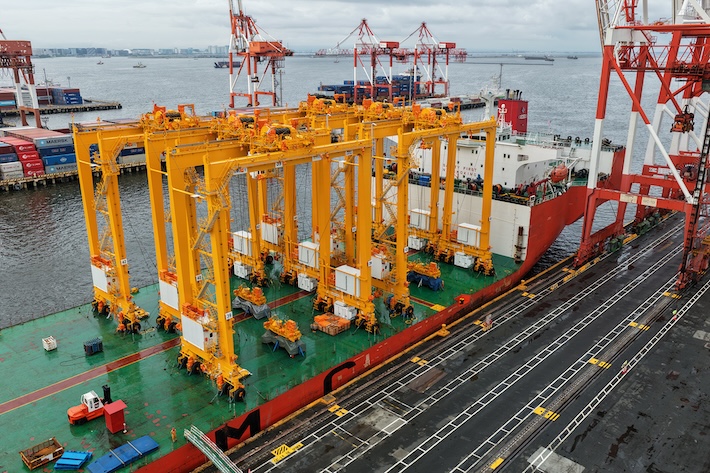
Asian Terminals Inc. (ATI) and DP World have commissioned six hybrid rubber-tired gantry cranes at Manila South Harbor, expanding cargo-handling capacity while supporting the terminal’s shift towards lower-emission port operations.
Quick Skim
The new cranes bring the terminal’s RTG fleet to 29 units and are designed to improve container stacking, truck turnaround and operational safety.
Hybrid Cranes Expand Container Handling
Manufactured by Shanghai Zhenhua Heavy Industries (ZPMC), the new RTGs use hybrid technology to reduce fuel consumption and emissions compared with conventional diesel-powered equipment.
Each crane can stack containers up to six high, giving Manila South Harbor additional yard-handling capacity as cargo volumes increase.
The equipment is also designed so it can eventually be converted to fully electric operation.
Automation Features Target Safer Operations
The cranes are equipped with several automated safety and operating technologies, including:
- Automatic gantry steering
- Anti-sway systems
- Truck detection
- Chassis positioning
- Emergency stop functions
These systems are designed to support more precise container movements and reduce operational risks in busy terminal environments.
South Harbor Capacity Reaches 2 Million TEUs
The crane deployment forms part of a wider modernisation programme at Manila South Harbor.
ATI and DP World previously expanded Pier 3 and introduced two additional quay cranes, helping increase annual container-handling capacity from 1.45 million TEUs in 2021 to 2 million TEUs in 2025 — an increase of nearly 40%.
The partners are also investing in landside infrastructure, digital systems and next-generation cargo-handling equipment.
Electric Equipment Fleet Continues to Grow
Manila South Harbor has already begun electrifying other parts of its terminal fleet.
In 2025, the terminal introduced 15 fully electric internal transfer vehicles, supported by quick-charging infrastructure — described as a first for the Philippines.
By the end of 2026, the port expects to deploy:
- Three electric empty-container handlers
- Two electric reach stackers
- An additional 15 electric internal transfer vehicles
The investments will further reduce reliance on diesel-powered equipment across container-yard operations.
Port Modernisation Supports Philippine Trade
ATI and DP World’s investment programme extends beyond Manila South Harbor to facilities and logistics infrastructure across Manila, Batangas, Cavite and Laguna.
The wider strategy focuses on increasing capacity while improving efficiency, resilience and sustainability across the Philippines’ port and logistics network.
For Manila South Harbor, the addition of hybrid cranes shows how terminal modernisation is increasingly combining capacity expansion, automation and equipment electrification rather than treating them as separate projects.