




Nokia Eyes Bigger India Manufacturing Role but Local Component Costs Remain a Barrier
Nokia plans to expand India’s role in its global manufacturing and export network, but the telecom equipment maker says locally sourced components can cost 20% to 80% more than comparable parts from...

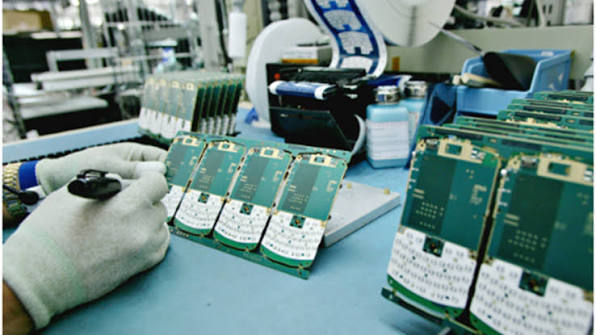
Nokia plans to expand India’s role in its global manufacturing and export network, but the telecom equipment maker says locally sourced components can cost 20% to 80% more than comparable parts from China and Vietnam, creating a major challenge for deeper localisation.
Quick Skim
- Chennai Factory Expands Export Role
- Local Components Cost Up to 80% More
- Stronger Supplier Base Could Reduce Import Risk
- Telecom Equipment Requires High Reliability
- Nokia Prepares for Next Manufacturing Incentive Phase
- AI Becomes Part of Nokia’s Network Architecture
- India’s Manufacturing Ambition Depends on Supplier Competitiveness
India country manager Vibha Mehra said Nokia sees India as an increasingly important production base, but local suppliers must become more competitive on price while meeting the company’s quality and volume requirements.
Chennai Factory Expands Export Role
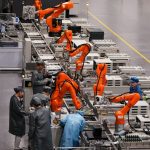
Nokia’s Chennai manufacturing facility has operated for around 17 years and has produced more than 8 million telecom units.
Around 40% to 45% of the plant’s output is currently exported, and Nokia is looking to increase that share further after production shifted more heavily towards the domestic market during the peak of India’s 5G rollout.
The company’s plans would strengthen India’s position within Nokia’s broader global telecom equipment supply chain.
Local Components Cost Up to 80% More
Cost competitiveness remains one of the biggest obstacles to increasing local sourcing.
Mehra said some components sourced from India carry a 20% to nearly 80% price disadvantage compared with equivalent products available from manufacturing hubs such as Vietnam and China.
Nokia evaluates potential local suppliers against three main criteria: quality, quantity and price.
While Indian suppliers may be able to meet technical requirements, pricing remains the most common challenge when the company decides whether to localise a component.
Stronger Supplier Base Could Reduce Import Risk
Nokia sees value in developing a larger domestic supplier ecosystem despite the current cost gap.
Greater localisation could reduce exposure to import duties, geopolitical disruption and international supply-chain risks, particularly as telecom equipment increasingly becomes strategically important infrastructure.
The Indian government has been supporting domestic telecom and electronics manufacturing through programmes including the Telecom Production Linked Incentive scheme and the Electronics Component Manufacturing Scheme.
However, Nokia said suppliers approved under newer incentive programmes will still require time to begin commercial production and complete the company’s qualification process.
Telecom Equipment Requires High Reliability
Supplier qualification can be particularly demanding for telecom infrastructure because equipment must operate reliably for long periods.
Nokia said its approval process is stringent because failures in components used across mobile and fixed networks can affect critical communications infrastructure.
This means localisation depends not only on the availability of domestic suppliers but also on their ability to deliver components consistently at the required technical standard and scale.
Nokia Prepares for Next Manufacturing Incentive Phase
Nokia is also preparing for the next phase of India’s telecom manufacturing incentive programme after the current scheme expires in March 2027.
The company said it achieved all of its annual employment and revenue targets under the existing PLI 2.0 programme.
Future incentives could play an important role in determining whether domestic suppliers can narrow the cost difference with larger manufacturing ecosystems elsewhere in Asia.
AI Becomes Part of Nokia’s Network Architecture
Alongside manufacturing expansion, Nokia is embedding artificial intelligence more deeply into its telecom products.
Mehra said AI is becoming a native component of autonomous networks, fixed networks and optical systems.
AI can also be added to existing radio access networks to improve operational efficiency, while autonomous network technologies are being designed to manage and optimise infrastructure with less manual intervention.
India’s Manufacturing Ambition Depends on Supplier Competitiveness
Nokia’s plans show both the opportunity and challenge facing India as it seeks a larger role in global electronics and telecom manufacturing.
The country already offers a major domestic market, established production capacity and government incentives, but the next stage of localisation will depend on whether its supplier ecosystem can compete with China and Vietnam on cost, scale and reliability.
For Nokia, a more competitive domestic component base could allow India to move beyond assembly and become a larger manufacturing and export hub within its global supply chain.