

Orion Plans 1 Trillion Won Vietnam Production Base by 2030 for Exports Expansion
Orion aims to build new manufacturing plants in Vietnam with annual output valued at 1 trillion won, expanding exports to markets including the Middle East and Africa.

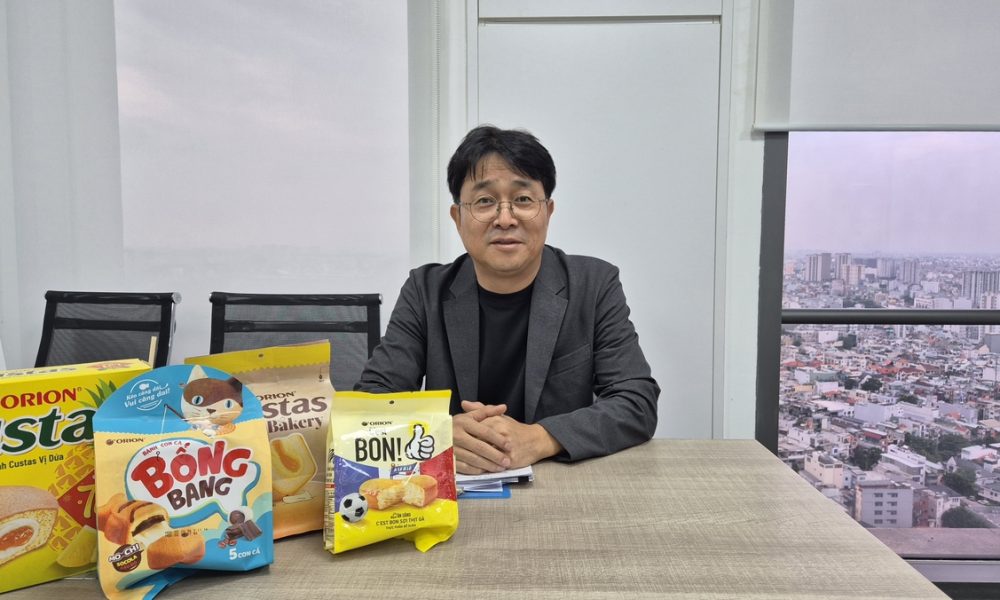
Orion is set to increase its production capacity in Vietnam to an annual worth of 1 trillion won by 2030, aiming to establish the country as a manufacturing and export hub beyond Southeast Asia to the Middle East and Africa. The company will expand through new plants and logistics facilities, focusing on locally developed products such as rice crackers and candy to strengthen overseas sales.
Quick Skim
Capacity Growth Through New Facilities and Logistics Expansion
The company intends to raise its Vietnamese production capacity through new construction rather than only extending existing lines, which are currently operating above full capacity. Its Vietnam unit reported revenue of 538.1 billion won in the previous year and targets over 900 billion won in domestic sales plus more than 100 billion won in exports long term. Export sales, currently around 7–8% of revenue, are planned to exceed 10%.
Orion operates production bases in northern and southern Vietnam with the My Phuoc plant in Ho Chi Minh City opened in 2006 and the Yen Phong facility near Hanoi in 2009. Output capacity at Yen Phong increased by 50.4% between 2022 and 2023. The total production value rose from 316.5 billion won to 400.9 billion won on a cost basis over the same period.
A third plant focused initially on packaging film production in Bac Ninh province will start operations next month, supplying nearly half of the packaging film used in Vietnamese plants. A fourth plant in southern Vietnam is slated for construction next year, with operations commencing in 2028. Furthermore, a logistics centre in Da Nang is planned to improve distribution efficiency between northern and southern facilities, reducing transportation distances and costs.
Product Localisation and Export Market Diversification
Orion’s product range in Vietnam has expanded from initial Korean snacks to include rice crackers and semi-moist cakes developed specifically for local tastes by dedicated R&D teams established since 2019. Rice crackers, leveraging local japonica rice, generated about 68 billion won in domestic sales last year with sales increasing over 7% through September 2026. The semi-moist cake Bongbang achieved revenues exceeding 10 billion won in its first year.
The company plans to increase exports from 45.9 billion won in 2025 to more than 100 billion won by targeting new regions including the Middle East and Africa. Key export products will be rice crackers, candy and chewing gum, selected for price competitiveness and shelf stability. Current exports include Mongolia, Indonesia, Somalia, and Ethiopia, with new export-only brands developed for the Middle East market.
Implications for Manufacturing and Supply Chains in Asia-Pacific
Orion’s strategy reflects an intensification of localisation and regional integration, enhancing production capacity close to key markets and tailoring products to regional preferences. The expanded logistics infrastructure in Vietnam is designed to optimise supply chain efficiency and product freshness across a geographically dispersed consumer base.
Investment in diversified export markets aligns with broader trends of Southeast Asian manufacturing hubs serving global demand, particularly in emerging regions such as Africa. The company’s approach demonstrates how FMCG manufacturers can leverage local production and R&D capabilities to strengthen competitiveness and resilience in supply chains.
Looking forward, Orion will continue expanding its production facilities and distribution networks throughout Vietnam, alongside ongoing product development for regional and overseas markets, targeting sustained growth through 2030 and beyond.