

Singapore Retains Top Spot in DNV Maritime Cities 2026 Ranking
Singapore remains the leading maritime city in DNV’s 2026 ranking, with Shanghai and London following, reflecting shifts in global maritime competitiveness.

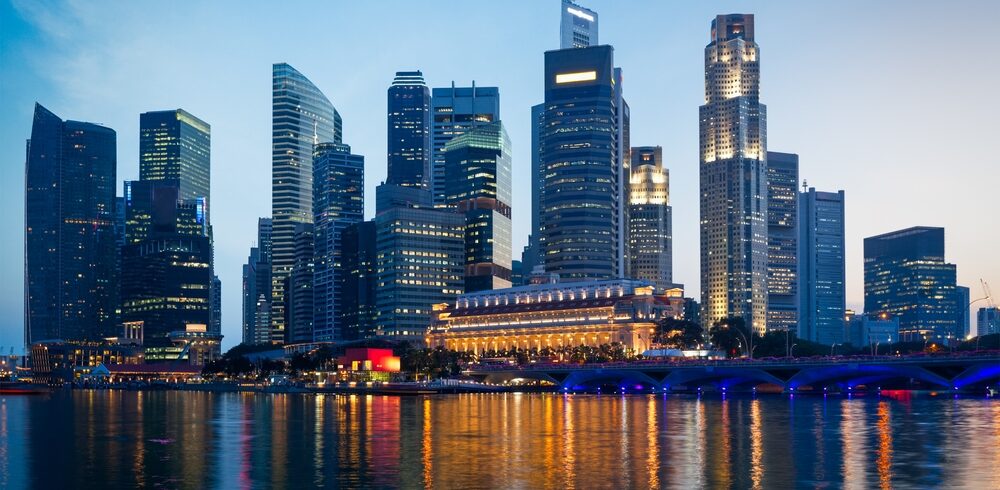
Singapore has maintained its position as the top maritime city in the 2026 edition of the Leading Maritime Cities (LMC) report, published by DNV and Menon Economics, underlining its significance in shipping, port operations, and maritime competitiveness.
Quick Skim
Singapore Leads in Shipping, Ports, and Competitiveness Pillars
The report assesses maritime hubs across five pillars: Shipping, Maritime Finance and Law, Maritime Technology, Ports and Logistics, and Attractiveness and Competitiveness. Singapore ranks first in three of these categories—Shipping, Ports and Logistics, and Attractiveness and Competitiveness—while positioning third in Maritime Finance and Law and fourth in Maritime Technology.
Its sustained leadership is attributed to significant shipowning and fleet management activities, robust port connectivity, alternative-fuel bunkering infrastructure, and a wide network of maritime services, according to DNV.
Asian Cities Strengthen Positions Amid Global Shifts
Shanghai advances to second place, reflecting strong performances in Maritime Technology, Ports and Logistics, and Shipping. The city leads in Maritime Technology, boosted by container throughput, shipbuilding, maritime patents, and fleet size.
London holds third place, leading in Maritime Finance and Law, supported by its established marine insurance, legal services, and financial capabilities. Rotterdam falls to fourth but remains strong in port-industrial activities, energy logistics, digital operations, and alternative-fuel infrastructure. Tokyo rises to fifth place with strong shipowning, financing, insurance, and technical expertise.
Notably, Athens jumps from 35th to 13th place overall due to its significant owner-controlled fleet and concentration of commercial maritime decisions.
Decarbonisation and Resilience Influence Maritime Competitiveness
The report underlines the increasing importance of decarbonisation, digitalisation, and geopolitical factors for maritime centres. Infrastructure investments in alternative-fuel bunkering, shore power, and energy-efficient technologies are critical as the industry transitions towards lower emissions.
Operational resilience and reliable connectivity have gained prominence amid disruptions to shipping routes and supply chains. Cities offering a combination of technical expertise, financial services, stakeholder coordination, and infrastructure stand better prepared to navigate these challenges.
In addition, workforce development and international talent mobility remain essential, especially in sectors requiring expertise in alternative fuels, digital technologies, finance, and risk management.
Implications for Maritime Operations in Asia-Pacific
DNV highlights that maritime leadership increasingly depends on integrating physical infrastructure with commercial decision-making, technology, and specialist services. For industrial operations across Asia-Pacific, cities like Singapore and Shanghai exemplify this through their comprehensive service clusters and infrastructure, supporting supply chain resilience, fleet management, and innovation in decarbonisation efforts.
These dynamics suggest a shift toward maritime centres that can adapt to regulatory and technological changes while maintaining traditional shipping and port activities.
Dubai, ranked 12th overall, is recognised as an emerging maritime hub, regarded by experts as a preferred destination for relocating maritime headquarters and expected to gain prominence over the next five years.
The report’s updated methodology incorporates new indicators such as fleet energy efficiency, alternative-fuel capabilities, and resilience, contributing to changes in city rankings compared with previous editions.
DNV and Menon Economics conclude that the increasing prominence of Asian maritime cities signals a shift in global maritime power, while established European centres continue to play a vital role through strong maritime services and industrial clusters.
Future updates to the LMC report will likely continue to monitor how cities balance maritime scale with adaptability in response to evolving industry and environmental requirements.