


SK Hynix Establishes Testing Facility to Advance Domestic Chip Equipment Suppliers
SK hynix is developing a dedicated test fab to accelerate approval of local semiconductor materials and equipment, addressing South Korea’s reliance on foreign suppliers.

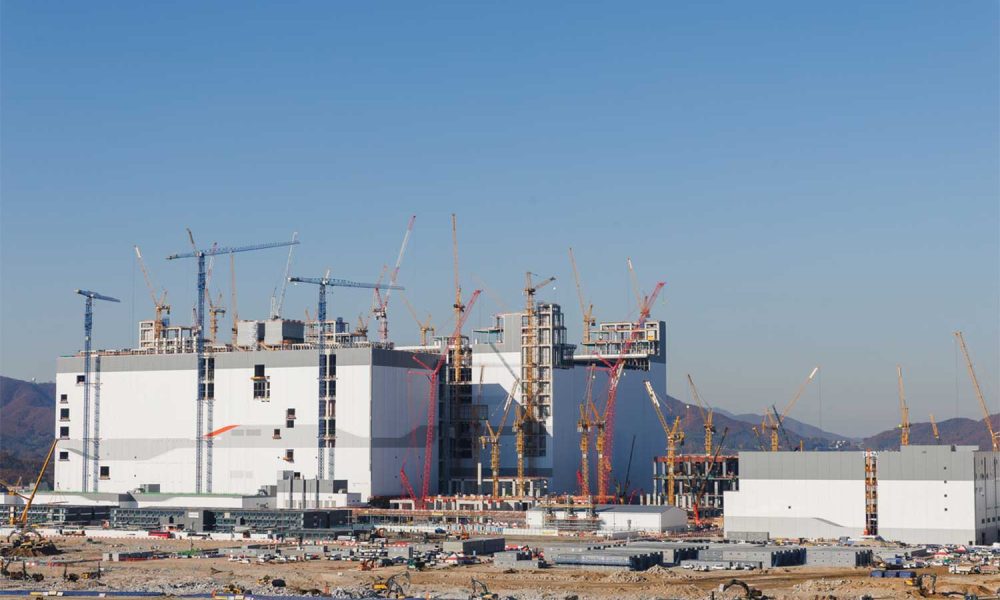
SK hynix is constructing a new testing facility in Yongin, South Korea, designed to assist domestic semiconductor suppliers in obtaining production qualification for materials and equipment, aiming to reduce dependence on foreign sources critical to memory chip manufacturing.
Quick Skim
- Trinity Fab Provides Production-Level Testing for Suppliers
- Reducing Qualification Time for Equipment and Materials
- Addressing Dependence on Foreign Suppliers
- Operational Advantages for Production and Testing
- Financial and Administrative Framework
- Supplier Collaboration and Intellectual Property Arrangements
- Implications for the Semiconductor Supply Chain in Asia-Pacific
- Looking Ahead
Trinity Fab Provides Production-Level Testing for Suppliers
The new site, named Trinity Fab, occupies a 3,300-square-metre space adjacent to SK hynix’s production area. It will include 51 machines for material and component evaluation and 15 rooms that suppliers can use to install equipment and conduct testing under conditions similar to those in commercial chip fabrication.
SK hynix representatives noted that Trinity Fab is physically separated from the active cleanroom by a wall to maintain security and contamination control. The facility is expected to open its cleanroom environment by May 2027, enabling regular testing from the fourth quarter of that year.
Reducing Qualification Time for Equipment and Materials
Currently, qualifying new semiconductor equipment and materials for high-volume production can take between five to six years. The foundation managing Trinity Fab estimates that the facility will cut this period by about a year.
One challenge identified is the difference between laboratory test conditions and high-end production environments, such as wafer size variations—from 8-inch wafers often used in research labs to 12-inch wafers standard in chip plants—which can cause equipment to perform differently.
Addressing Dependence on Foreign Suppliers
South Korea maintains a significant leadership position in memory chip output but sources only around 30 percent of semiconductor materials, parts, and equipment domestically, according to Lee Ki-jung, head of the Trinity Fab foundation.
The 2022 disruption of neon gas supplies following geopolitical tensions highlighted the risks of dependence on foreign inputs. South Korean companies TEMC and POSCO formed a partnership to produce neon domestically from steelmaking byproducts, achieving a 40 percent domestic supply share for SK hynix by late 2022 and saving the company an estimated 30 billion won in purchases.
Operational Advantages for Production and Testing
One of the main bottlenecks for suppliers is securing enough production line capacity for qualification testing without disrupting chip output. Trinity Fab offers a solution by enabling product trials under actual production-like conditions without interfering with ongoing manufacturing.
Facilities of this nature are uncommon in South Korea and aim to smooth the path for suppliers in both development and commercialisation phases. While the facility excludes extreme ultraviolet (EUV) lithography equipment, products for EUV processes will continue to require testing on SK hynix’s main lines.
Financial and Administrative Framework
The entire Trinity Fab project is budgeted at around 875 billion won, with funding split roughly equally between the central and local governments (431.3 billion won) and SK hynix (443.2 billion won) through provision of space, personnel, and other support.
A nonprofit foundation will operate the testing centre and charge suppliers fees yet to be determined. Government funding is planned to phase out by 2031, at which point the foundation will need to be self-sustaining.
Supplier Collaboration and Intellectual Property Arrangements
SK hynix procurement strategy chief Lee Hyun-chul explained that suppliers and the company may enter into exclusive sales agreements for certain technologies developed jointly, typically limited in duration depending on the technology and project.
Additionally, SK hynix offers a development cost-sharing programme, covering up to 50 percent of supplier R&D expenditures. This programme reimburses suppliers based on technical milestones and contributions to the supply chain, including in cases where projects do not proceed to purchase orders.
However, successful testing at Trinity Fab does not guarantee an order from SK hynix, nor does it replace the need to meet qualification requirements of other major chipmakers such as Samsung Electronics and Micron.
Implications for the Semiconductor Supply Chain in Asia-Pacific
The establishment of Trinity Fab could bolster South Korea’s semiconductor ecosystem by speeding innovation cycles and enabling greater domestic sourcing of materials and equipment. This supports broader regional efforts to localise critical components amid global supply chain uncertainties.
For industrial operations, the facilitation of faster qualification also reduces development risks and costs for equipment suppliers, potentially improving the resilience and responsiveness of semiconductor production.
Looking Ahead
The Trinity Fab foundation’s CEO Lee Ki-jung acknowledged this initiative is unprecedented in South Korea, noting the difficulty in quantifying anticipated outcomes. The next stages will focus on operationalising the test facility, setting supplier participation criteria, and refining incentives to maximise industrial benefits.