

Surface to Shore. Weston Robot’s Three-Pillar Strategy.
11 Nov 2026 · Stories from AIMX by Industrial Gemba’s Editorial Team Weston Robot’s Customer Success Manager Brayton Zhang on humanoids versus cleaning robots, and the boats now collecting...

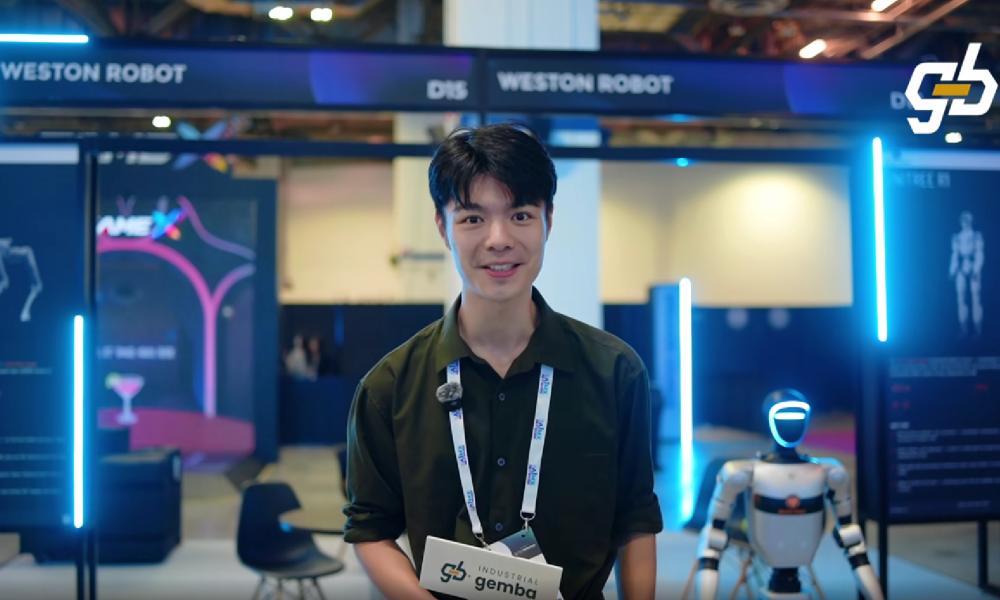
11 Nov 2026 · Stories from AIMX by Industrial Gemba’s Editorial Team
Weston Robot’s Customer Success Manager Brayton Zhang on humanoids versus cleaning robots, and the boats now collecting trash on the Singapore River.
Humanoids may draw trade-show crowds, but autonomous boats and scrubbers pay the bills.
That operational reality underpins Weston Robot, a seven-year-old Singaporean robotics firm and regional distributor for Unitree, the legged-robotics maker that went public in China just ahead of AIMX. Speaking at the showcase, Customer Success Manager Brayton Zhang mapped out an enterprise playbook deliberately split between headline tech and industrial utility.
Three Lines, One Booth
Weston Robot partitions its operations into three distinct categories:
- Humanoid & Legged Systems: High-visibility platforms engineered for complex mobility, research, and live demonstrations.
- Facility Management Automation: Commercial scrubbers, automated guided vehicles (AGVs), and indoor service robots designed for predictable floor plans.
- Unmanned Surface Vessels (USVs): Autonomous watercraft built for outdoor environmental maintenance, inspection, and perimeter work.
The Unglamorous Workhorse
When pressed on practical enterprise value, the team bypassed the walking bipeds entirely, pointing instead toward the Singapore River.
Skimming floating debris and refuse was once manual, labour-intensive waterborne work. Today, Weston Robot’s USVs patrol and collect debris along the waterway autonomously. “It definitely enhances productivity in Singapore,” Brayton notes, highlighting how surface robotics can displace hazardous, repetitive outdoor labor.
The Gemba Takeaway
For facilities managers and municipal planners evaluating automation vendors:
- Look Past the Humanoid Spectacle: Flashy bipedal platforms generate booth foot traffic, but commercial returns live in mundane cleaning and continuous waste handling.
- Request River-Grade Utilisation Data: When vetting commercial service robots, insist on field verification over sales claims, operating hours under harsh conditions, fleet uptime, charging intervals, and documented headcount or labour-hour offsets.
This interview is part of Industrial Gemba’s coverage from AIMX – the region’s AI event featuring real-world use cases, innovation showcases, and strategic insights. Responses have been edited for length and clarity. Watch the full interview on YouTube.