






Humanoid Robots Move Closer to Commercial Use at China’s World AI Conference
Humanoid robots are moving closer to real-world deployment in China, with companies showcasing applications in hospitality, retail and service operations at the 2026 World AI Conference in Shanghai....

Humanoid robots are moving closer to real-world deployment in China, with companies showcasing applications in hospitality, retail and service operations at the 2026 World AI Conference in Shanghai.
Quick Skim
Held from 17 to 20 July 2026, the World AI Conference highlighted China’s growing ambitions in artificial intelligence and robotics, with humanoid systems demonstrating tasks ranging from sorting groceries and serving tea to managing hotel laundry operations.
This year’s event attracted more than 400,000 attendees and 1,117 exhibitors, up from around 800 exhibitors in 2025. More than 300 products also made their debut during the four-day conference.
Humanoid Robots Move Into Service Operations
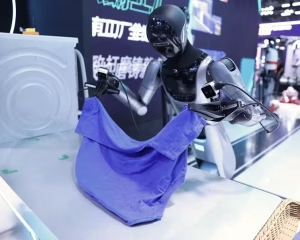
Among the technologies showcased was Keenon Robotics’ XMAN-R1, a humanoid robot currently being tested in hotels in China.
The robot can travel to guest rooms, collect used linens, transport them to laundry facilities and fold them after washing. Keenon already supplies service robots for hotel operations, including systems used to deliver food and other items directly to guest rooms.
The company sees humanoid robots as a way to support workers rather than directly replace them.
Keenon Robotics Chief Operating Officer Wan Bin said robots can cover shifts during employee breaks and allow businesses to extend operating hours, creating a model where robots and employees work alongside each other.
More than half of Keenon’s business comes from overseas markets, particularly countries including the United States, Japan, South Korea and markets in Europe where labour shortages and higher staffing costs are increasing interest in automation.
China Builds a Growing Humanoid Robotics Industry
China is now home to around 140 humanoid robot manufacturers, which have developed more than 400 complete robot models, according to official statistics cited by CNA.
During the first half of 2026, China exported more than 10,000 AI-powered bionic robots to 90 countries.
The industry continues to attract substantial investment as companies move from prototype development towards commercial applications.
Some humanoid robots have already reached commercial viability in controlled environments such as hotels, restaurants and office buildings. However, wider deployment in more complex operating environments will require further improvements in mobility, intelligence and reliability.
Retail Becomes Another Testing Ground
Retail applications were another major focus at the conference.
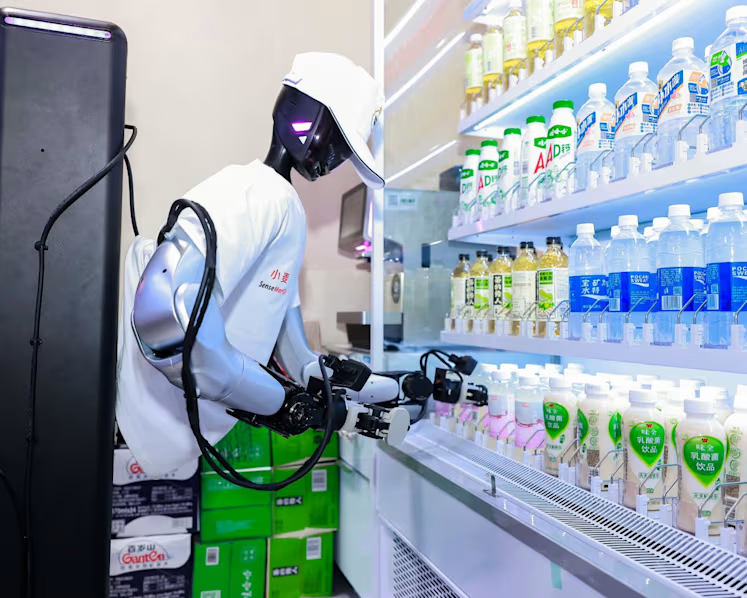
SenseTime has developed 20 robot-operated convenience kiosks under its SenseMart Go concept, with plans to expand the network to hundreds of locations across China.
At the stores, humanoid robots can greet customers, take orders, retrieve products and restock shelves.
SenseTime SmartGo Chief Technology Officer Liu Hengyi said individual stores can reach break-even within about one year.
He also said the cost of humanoid robots is declining as China develops a more complete domestic robotics supply chain.
The expansion of the local supply chain is helping lower costs across components, manufacturing and system integration, supporting broader commercial deployment.
Robotics Supply Chain Supports Commercialisation
China’s progress in humanoid robotics is closely linked to its manufacturing ecosystem.
Developing humanoid robots requires a combination of technologies including electric motors, actuators, sensors, batteries, control systems, AI models and precision components.
As these supply chains develop, robotics manufacturers are increasingly able to move from demonstration systems towards products designed for repeated use in commercial environments.
The growing number of manufacturers and robot models shown at the World AI Conference reflects the rapid development of the sector.
World AI Conference Highlights China’s AI Ambitions
Robotics formed part of a much broader showcase of artificial intelligence technologies at the Shanghai event.
Chinese President Xi Jinping delivered a keynote address at the conference, his first appearance at the annual event since it began in 2018.
He called for greater international cooperation around AI development and governance and announced plans for China to provide AI training opportunities for developing countries and establish international AI application cooperation centres.
The expansion of the conference also reflects the scale of investment currently flowing into China’s AI ecosystem.
For robotics companies, the focus is increasingly shifting from demonstrating what humanoid robots can do towards proving that they can operate reliably and economically in real commercial environments.
As manufacturers continue improving hardware, AI capabilities and production costs, humanoid robots are moving closer to wider deployment across hospitality, retail and other labour-intensive industries.