






China’s TianGong Ultra Shifts Focus From Record Sprint to Real-World Industrial Work
China’s TianGong Ultra humanoid robot is shifting from record-breaking demonstrations towards practical industrial applications, as its developers focus on improving reliability, mobility and...

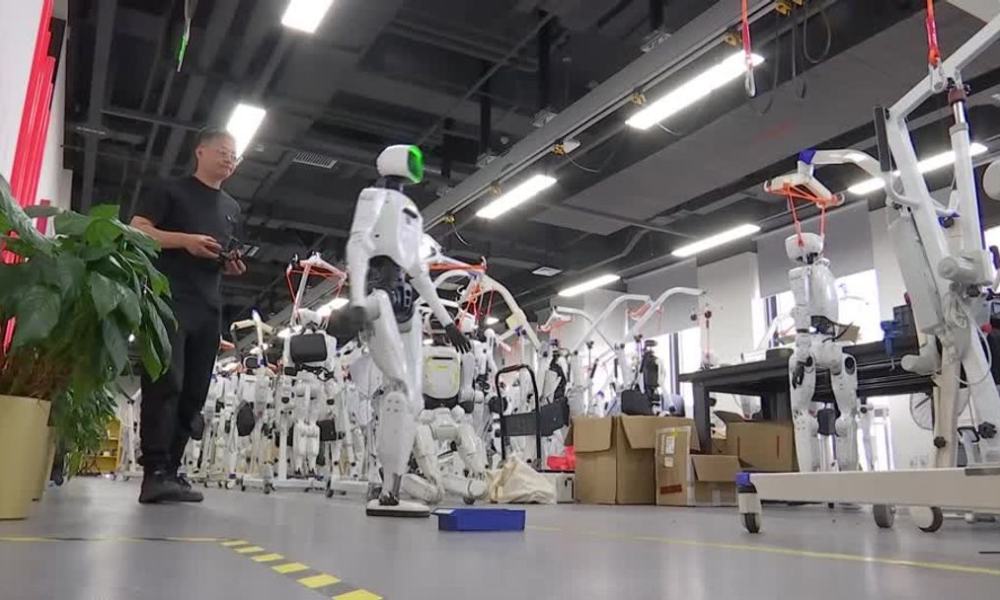
China’s TianGong Ultra humanoid robot is shifting from record-breaking demonstrations towards practical industrial applications, as its developers focus on improving reliability, mobility and usability for real-world work.
Quick Skim
The robot completed the 100-metre final at the World Humanoid Robot Games in Beijing in 8.64 seconds, after progressively improving from 9.39 seconds in qualifying and 8.86 seconds in the semifinal.
Developed by the Beijing Humanoid Robot Innovation Center, also known as X-Humanoid, TianGong Ultra has become a showcase for China’s rapidly developing humanoid robotics sector.
Reliability Becomes the Next Target
Following the competition, the development team is turning its attention from outright speed towards making humanoid robots dependable enough for everyday use.
Lead engineer Jack Guo said the priority is to convert high performance into greater reliability and usability, particularly in the robot’s mechanical systems and motion control.
Developing more advanced AI capable of handling complex autonomous tasks is expected to take longer.
The shift reflects a wider challenge facing humanoid robotics: impressive demonstrations must ultimately translate into machines capable of operating consistently for long periods in factories, warehouses and other working environments.
Factory Trials Already Underway
X-Humanoid has already begun exploring industrial applications.
At Foton Cummins’ engine factory in Beijing, its humanoid robots have been tested moving boxes, with the Tianyi 2.0 model handling loads of around 8 to 12kg and placing them onto shelves.
The deployment remains at an early stage, but it provides an example of how humanoid robots could eventually perform material-handling and logistics tasks in manufacturing environments.
X-Humanoid has also developed collaborations with companies and research organisations covering industrial manufacturing and other specialised applications.
Mobility Development Supports Industrial Use
TianGong Ultra was not originally created simply to compete in athletics.
The high-speed running programme is being used to develop more general robot mobility, including balance, joint coordination and the ability to respond to changing terrain.
During the 100-metre competition, the robot used trained motion-control strategies that continuously adjusted its joints and balance rather than requiring an operator to direct every individual movement.
The smaller TianGong Omni has also completed an internal test climbing from the first to the 17th floor of X-Humanoid’s headquarters, demonstrating another form of mobility that could eventually support real-world deployment.
Industrial Roles Could Come First
X-Humanoid expects smaller humanoid platforms to find early applications in commercial services and light industrial work.
Larger robots such as Ultra could eventually be used for tasks including outdoor inspections or emergency response, where mobility across difficult environments becomes important.
Before that happens, developers still need to address issues including durability, braking, weight and safe operation around people and equipment.
Ultra weighs around 75kg and can exceed 17 metres per second at top speed, making controlled stopping an important engineering challenge.
Beijing Builds Humanoid Robotics Cluster
X-Humanoid is based in Yizhuang, one of Beijing’s major technology and robotics clusters.
The centre was established in 2023 and is backed by government-linked and private investors, including technology and robotics companies.
Its pilot production and verification platform is capable of trial production and testing of around 5,000 embodied-intelligence robots annually, supporting the transition from research to industrialisation.
The cluster combines robotics hardware, motion-control technology, AI development and manufacturing infrastructure as China works to build a larger domestic humanoid robotics ecosystem.
Humanoid Robotics Moves Beyond Demonstrations
TianGong Ultra’s record sprint demonstrates how quickly humanoid locomotion is improving, but its developers now see commercial usefulness as the more important test.
For manufacturers, the potential lies less in how fast robots can run and more in whether they can move materials, inspect equipment, navigate factories and perform repetitive physical work safely and reliably.
China’s humanoid robotics sector is increasingly entering that next phase, where engineering performance must be converted into repeatable industrial deployment.