



China Advances AI-Driven Manufacturing to Enhance Supply Chain Resilience
China is accelerating integration of AI in manufacturing to improve factory intelligence and supply chain resilience, with key developments showcased at Hefei’s World Manufacturing Convention.

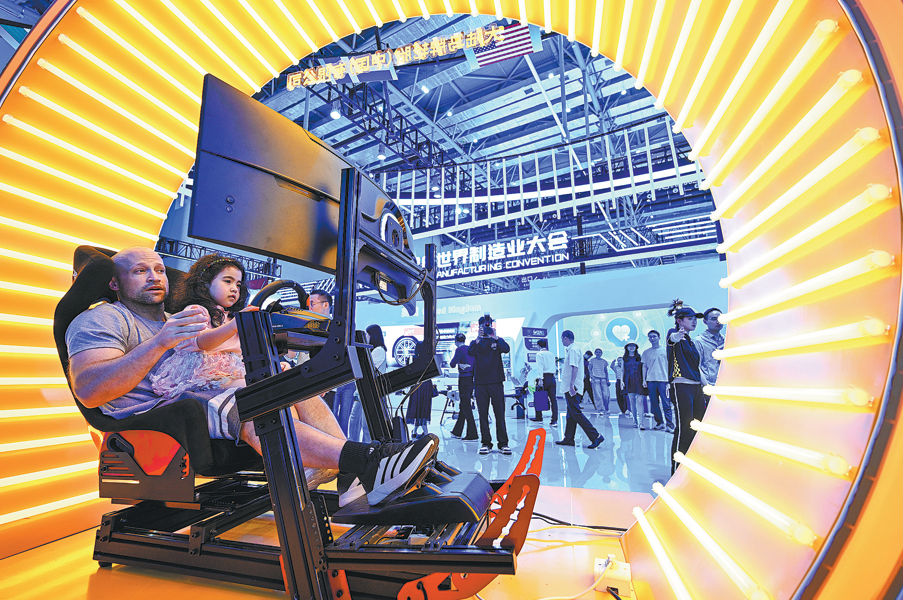
China is prioritising the integration of artificial intelligence into manufacturing to enhance factory automation and strengthen critical supply chains, officials and industry experts said at the 2026 World Manufacturing Convention in Hefei, Anhui province. This initiative aligns with recent directives from national leadership calling for advanced manufacturing capabilities and more resilient industrial chains.
Quick Skim
AI Integration and Smart Factory Development Accelerate
Xin Guobin, vice-minister of industry and information technology, outlined steps to advance intelligent manufacturing, including cultivating smart factories, developing open-source foundation models and industry-specific AI applications, and strengthening domestic manufacturing software and hardware. He also highlighted efforts to accelerate the low-carbon transformation of factories.
Liang Yanshun, Party secretary of Anhui, noted the scale of local manufacturing output, stating factories produce approximately 190 home appliances, 50 laptops, and 4 new energy vehicles every minute. He attributed this performance to Anhui’s focus on technological innovation and intelligent transformation, supporting export growth.
Memory Chip Production Reflects Manufacturing Advancement
ChangXin Memory Technologies (CXMT), based in Hefei, announced the mass production of its fifth-generation DRAM platform, marked by a 50 per cent increase in usable chips per wafer compared with its predecessor. The platform’s 24GB LPDDR5X mobile memory chips are now in volume production and feature in flagship Chinese smartphones.
CXMT’s vice-president Luo Xiaodong detailed that the company reduced the half-pitch spacing in its memory arrays to 11.95 nanometres, positioning the firm near the leading edge of global DRAM manufacturing technology.
During the 14th Five-Year Plan period (2021–25), Anhui’s large industrial companies increased revenue from 3.8 trillion yuan to 5.9 trillion yuan (US$866 billion), ranking fifth nationally. Carlos Magarinos, global chairman of the Global Alliance of SMEs, emphasised Anhui’s rapid industry growth in sectors such as new energy batteries and electronic information.
Implications for Manufacturing and Supply Chain Resilience
Industry experts state China’s manufacturing priorities are shifting towards producing smarter and greener technologies. Tian Jietang of the State Council’s Development Research Center stressed the need for enhanced advanced manufacturing capabilities and resilient supply chains amid growing international competition.
China’s focus on embedding AI into manufacturing processes is expected to optimise production efficiency, reduce emissions, and bolster supply chain robustness. This aligns with the country’s broader industrial and sustainability objectives.
Going forward, developments in intelligent manufacturing and semiconductor production, particularly in Anhui province, will be key indicators to monitor in China’s industrial strategy and its global market positioning.