


Singapore’s Fourth Egg Farm Breaks Ground With AI Monitoring and 380 Million-Egg Target
Singapore’s fourth egg farm, DoMo Farm, has broken ground at Lim Chu Kang after a four-year delay, with production now expected to begin in 2028. The S$110 million facility will use AI-powered...

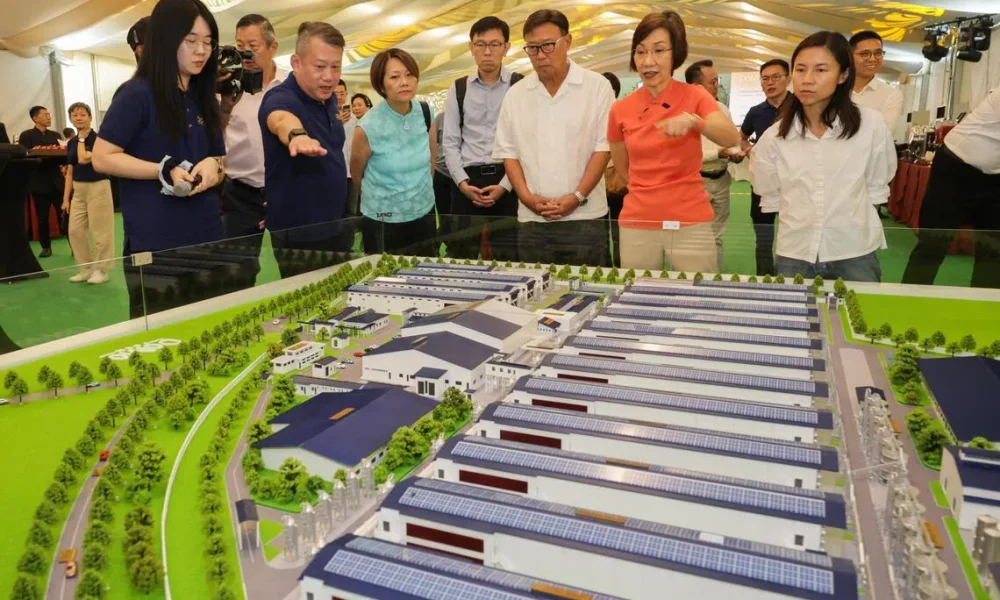
Singapore’s fourth egg farm, DoMo Farm, has broken ground at Lim Chu Kang after a four-year delay, with production now expected to begin in 2028. The S$110 million facility will use AI-powered monitoring, climate-controlled systems and automated operations to produce Japanese-grade eggs at industrial scale.
Quick Skim
- AI Robots to Monitor Hen Health
- Biosecurity Requirements Led to Major Redesign
- Farm Operations Consolidated Into Two Main Sites
- Production Could Exceed 500 Million Eggs a Year
- Automation Extends Beyond Animal Monitoring
- Supply Chain Shocks Added to Project Delays
- Smart Farming Becomes Part of Singapore’s Food Resilience Strategy
The farm, owned by ISE Foods Holdings, is targeting annual production of around 380 million eggs, with plans to eventually expand beyond 500 million eggs a year.
AI Robots to Monitor Hen Health
One of the farm’s key technologies will be patrol robots operating inside the egg-laying houses.
Each house will contain around 150,000 hens arranged across six rows of 10-tier cages. The robots will move through the houses using AI-powered predictive health monitoring, thermal sensors and cameras to assess the condition of individual birds.
The system is designed to identify potential health issues earlier, allowing farm operators to intervene before disease spreads more widely.
For large-scale poultry operations, this could reduce dependence on manual inspection while improving visibility across thousands of animals.
Biosecurity Requirements Led to Major Redesign
The project was originally expected to begin operations in 2024 but was delayed as the company reviewed its farm layout and biosecurity requirements.
ISE Foods Holdings said its original 10-hectare site was too small to meet both production targets and the separation requirements needed to reduce disease risk.
Egg-laying houses need sufficient spacing to maintain ventilation and prevent contaminated air from moving between buildings during a disease outbreak.
The farm must also separate transport routes for clean materials such as feed from vehicles handling manure and other waste.
The company subsequently secured a larger 15-hectare site, allowing more of its operations to be consolidated.
Farm Operations Consolidated Into Two Main Sites
The 15-hectare site will contain egg-laying houses and pullet facilities, where young chickens are raised before becoming laying hens.
It will also include a manure-treatment facility that uses fermentation to convert poultry waste into organic fertiliser.
A separate four-hectare site is planned for a hatchery and breeder facility in a later phase after 2028.
Once completed, this would allow DoMo Farm to reduce its dependence on imported day-old chicks.
Until then, the farm will initially use chicks imported from Malaysia, similar to Singapore’s three existing egg farms.
Production Could Exceed 500 Million Eggs a Year
Singapore’s existing egg farms produced more than 736 million eggs in 2025, while total national consumption exceeded 2.2 billion eggs.
DoMo Farm is targeting approximately 380 million eggs annually when production begins in 2028.
The company plans to eventually raise output beyond 500 million eggs per year.
At that level, locally produced eggs could account for more than half of Singapore’s 2025 consumption volume.
Automation Extends Beyond Animal Monitoring
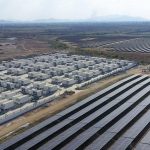
DoMo Farm will also incorporate an automated egg warehouse, solar power and climate-controlled facilities.
These systems are intended to improve operating efficiency while supporting Singapore’s broader push towards more technology-intensive food production.
Automation is particularly important in Singapore, where farms face constraints including high labour costs, limited land and strict environmental requirements.
The ability to monitor animals, control environmental conditions and automate material handling could therefore play a major role in improving productivity.
Supply Chain Shocks Added to Project Delays
The project was also affected by higher construction and equipment costs following the pandemic and the Russia-Ukraine war.
ISE Foods Holdings said supply-chain disruption and energy-related inflation increased uncertainty around the original development plan.
However, the delay also gave the company additional time to redesign the facility and adopt more mature AI technologies than were available when the farm was first planned.
Smart Farming Becomes Part of Singapore’s Food Resilience Strategy
DoMo Farm shows how Singapore is combining food security with automation and digital monitoring.
Instead of relying only on expanding physical production capacity, the new facility is designed around AI health monitoring, climate control, automation, waste treatment and renewable energy.
For industrial agriculture, the project reflects a wider trend towards treating farms more like highly controlled production facilities, where equipment reliability, data, biosecurity and process automation directly influence output.