Ryder Industries Expands Vietnam Manufacturing Capacity Fourfold by 2027
Ryder Industries is building a large manufacturing campus in Vietnam to enhance production capacity and supply chain resilience by late 2027.

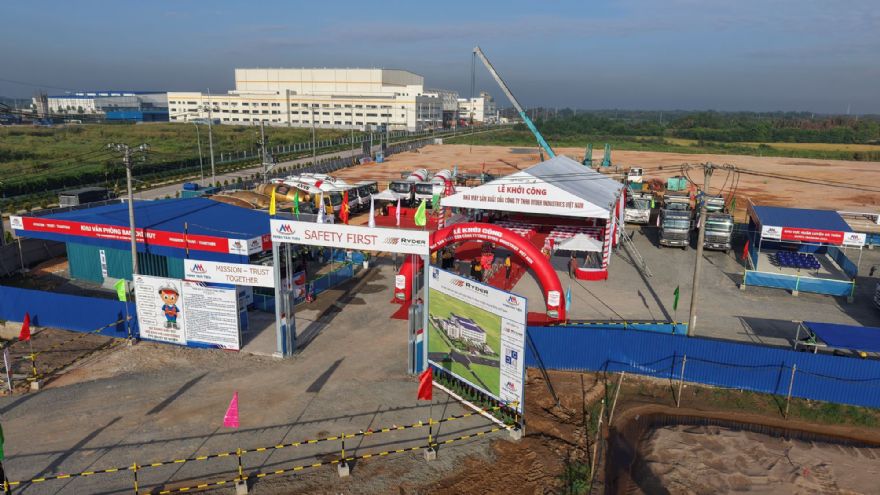
Ryder Industries is expanding its manufacturing operations in Vietnam with a new facility that will increase production capacity by around four times, aiming to support OEM supply chain resilience and meet growing electronics manufacturing service (EMS) demand.
New Integrated Facility To Consolidate Manufacturing Processes
The new site will occupy 22,000m² of land with a combined floor area of 38,000m² across four buildings. It will integrate Ryder’s existing capabilities, including printed circuit board assembly (PCBA), plastic injection moulding, and final assembly, alongside additional plastic tool making operations.
Construction is scheduled for completion with full production commencing by the final quarter of 2027. The facility is located near Ryder’s current Vietnam site and approximately 30 minutes from the Long Thanh International Airport, facilitating logistical efficiency.
Ryder also plans to install a 1MW rooftop solar system as part of its sustainability initiatives.
Vietnam Positioned as a Strategic Manufacturing Hub
Vietnam’s expanding electronics sector, skilled workforce, and infrastructure investments have attracted global manufacturing diversification. Electronics exports hit $165 billion in 2025, increasing by 30% and representing 35% of the country’s total exports.
Thomas Studd, vice chairman of Ryder Industries, noted that supply chain resilience is a key priority for manufacturers and that broadening manufacturing capacity in Vietnam enhances flexibility without sacrificing quality or engineering support.
This expansion aligns with Ryder’s objective to provide scalable manufacturing capacity with consistent quality, responding to growing demand for advanced electronics in Asia-Pacific.
Ryder’s progress in Vietnam will be indicative of how EMS providers adapt capacity and operational models to meet evolving market and supply chain requirements across the region.