Kawasaki Heavy Develops Four-Legged AI Robot for Shipyard Welding, Painting and Inspection
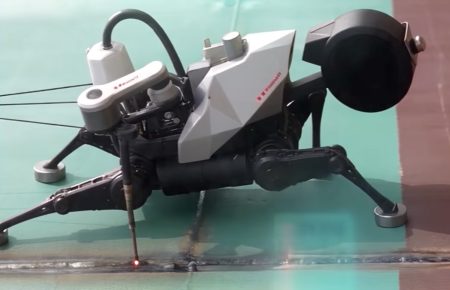
Kawasaki Heavy Industries is developing a four-legged Physical AI robot designed to move across ship hulls and other difficult-to-access surfaces, targeting shipyard tasks such as welding, painting...

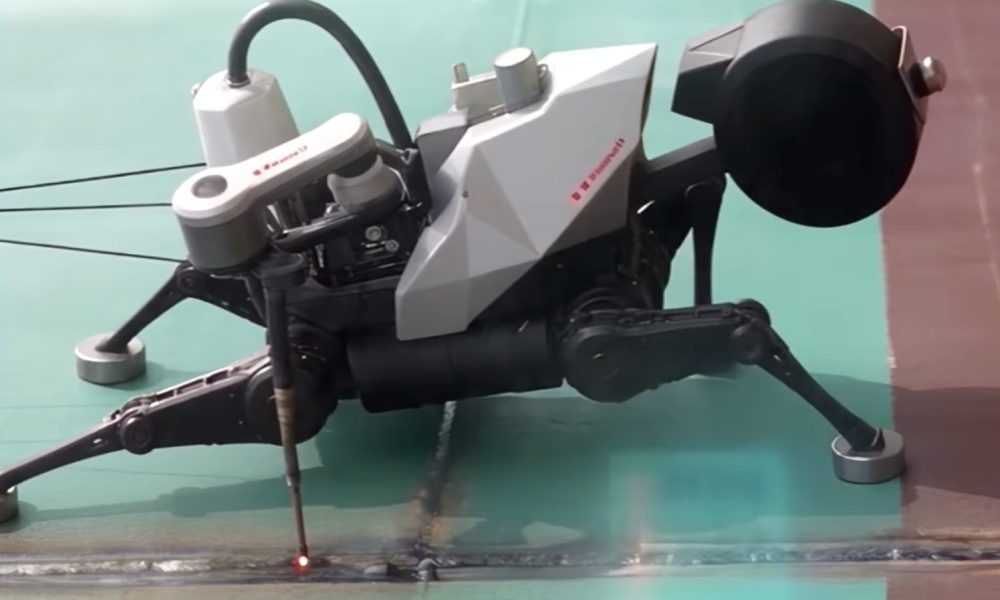
Kawasaki Heavy Industries is developing a four-legged Physical AI robot designed to move across ship hulls and other difficult-to-access surfaces, targeting shipyard tasks such as welding, painting and inspection that remain challenging for conventional automation.
Quick Skim
- Robot Designed for Hard-to-Reach Shipyard Areas
- Physical AI Enables Autonomous Movement and Work Planning
- Welding, Painting and Inspection Among Target Tasks
- Sakaide Shipyard to Begin Testing in 2027
- Labour Shortages Accelerate Shipyard Automation
- Global Shipbuilders Increase Robotics Investment
- Kawasaki Expands Broader Physical AI Portfolio
The robot is expected to begin testing at Kawasaki Heavy’s Sakaide shipyard in Kagawa Prefecture in 2027, with commercial deployment targeted for 2028.
Robot Designed for Hard-to-Reach Shipyard Areas
Unlike conventional industrial robots that typically operate from fixed positions, Kawasaki Heavy’s new machine uses four legs to move around complex ship structures.
The robot is being designed to operate on:
- Curved hull surfaces
- High or elevated sections
- Vertical wall-like structures
- Outdoor shipyard areas
- Other locations difficult for fixed robots to access
This could allow shipbuilders to automate work in parts of a vessel where conventional robotic arms or factory-style automation are difficult to deploy.
Physical AI Enables Autonomous Movement and Work Planning
The robot uses Physical AI to navigate its environment and determine how to carry out assigned work.
Rather than following only predefined movements, the system is intended to move autonomously and plan its own actions based on the surrounding physical environment.
This is particularly relevant to shipbuilding, where vessels are large, irregular structures and working conditions can change significantly between projects and production stages.
Welding, Painting and Inspection Among Target Tasks
Kawasaki Heavy sees several potential applications for the robot.
These include welding, painting and inspection, particularly in areas where workers currently need to operate at height or in difficult physical conditions.
Automating these activities could reduce worker exposure to hazardous environments while also allowing shipyards to apply robotics to a wider portion of the production process.
Inspection applications could also allow sensors and cameras to be moved directly across ship surfaces to identify defects or areas requiring further work.
Sakaide Shipyard to Begin Testing in 2027
Kawasaki Heavy plans to begin testing the robot at its Sakaide shipyard next year.
The trials will provide an opportunity to evaluate how reliably the machine can move around real ship structures and perform industrial tasks under shipyard conditions.
The company is targeting commercial use in 2028, giving it roughly two years to refine the technology before wider deployment.
Labour Shortages Accelerate Shipyard Automation
Japan’s shipbuilding sector is facing an ageing workforce and shortages of skilled workers.
Shipyards also need to preserve specialist knowledge as experienced welders and other tradespeople retire.
Kawasaki Heavy President Yasuhiko Hashimoto has identified Physical AI as one technology that could accelerate the transformation of shipbuilding.
Robots capable of operating in irregular shipyard environments could allow skilled workers to focus more heavily on supervision, complex technical work and process management.
Global Shipbuilders Increase Robotics Investment
Kawasaki Heavy is not alone in developing new shipyard robotics.
Major shipbuilding groups including HD Hyundai, Hanwha Ocean, Samsung Heavy Industries, Imabari Shipbuilding and HII are also investing in automation and robotics.
Applications range from robotic welding and surface treatment to autonomous material handling, digital twins and AI-assisted production planning.
The growing investment reflects the difficulty of applying traditional factory automation to shipbuilding, where each vessel can involve large structures, changing layouts and significant manual work.
Kawasaki Expands Broader Physical AI Portfolio
The shipyard robot forms part of a wider Physical AI strategy at Kawasaki Heavy.
The company has also developed an eight-axis Physical AI industrial robot, healthcare-assistance robots with Foxconn and technologies for surgical robotics.
Kawasaki Heavy has additionally established a dedicated Physical AI centre in Silicon Valley.
Its shipyard project shows how the company is extending those capabilities into heavy industry, where robots must operate safely and reliably in much less structured environments than conventional automated production lines.