Hitachi and Fanuc Develop Physical AI Systems for Manufacturing Automation
Hitachi and Fanuc have partnered to develop physical AI for manufacturing, testing initial systems in Hitachi factories before broader deployment in fiscal 2027.


Hitachi and Fanuc have entered a strategic partnership to develop and commercialize physical AI systems aimed at automating manufacturing tasks reliant on skilled workers, with initial testing set for Hitachi’s factories in Japan’s Ibaraki region.
Quick Skim
Collaboration Combines AI and Robotics Expertise
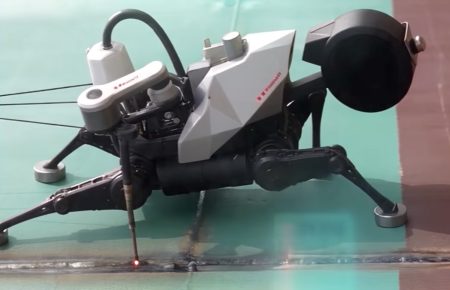
The collaboration integrates Hitachi’s physical AI technology and operational expertise with Fanuc’s industrial robots, control systems and robotics AI. The goal is to create systems capable of adapting to dynamic production conditions and tasks that require human judgement.
Hitachi’s manufacturing sites have been designated as “Customer Zero” to facilitate testing and refinement based on real production data before wider commercial deployment, expected to commence in fiscal 2027.
Testing Focuses on Parts Handling and Production Flexibility
Initial applications being evaluated include parts picking with variable shapes and production changeovers during factory line adjustments. The companies will assess recognition accuracy, robot motion, takt time and manufacturing quality.
The testing will also leverage Hitachi’s edge AI semiconductor technology in combination with Fanuc’s industrial robots, aiming for continuous learning from factory operations instead of relying solely on imitation learning or digital-twin simulations. This approach is intended to improve adaptability to site-specific production rules and varied conditions.
Beyond tasks like machine loading, machining, assembly and material transfer, the systems target automating work currently dependent on skilled human labour.
Implications for Manufacturing Operations
According to Hitachi, the partnership will contribute towards improving productivity and quality while addressing labour shortages in manufacturing. The integration of physical AI with robotics is expected to enhance operational flexibility and support continuous improvement on production lines.
Hitachi and Fanuc plan to expand deployment across industries including semiconductors, pharmaceuticals, automotive, logistics, food, shipbuilding and agriculture, utilising their global customer networks.
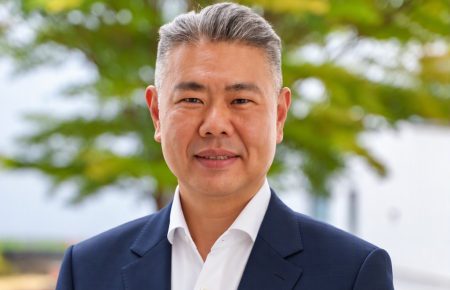
Hitachi president and CEO Toshiaki Tokunaga highlighted the commitment to providing integrated support from AI implementation through ongoing operation. Fanuc president and CEO Kenji Yamaguchi noted that the practical deployment of physical AI in industrial robots is becoming a reality across sectors.
Future developments should focus on scaling the technology to diverse manufacturing environments and verifying long-term operational impacts on efficiency and workforce dynamics.