
Southeast Asia’s Battery Storage Barriers Are Mostly Regulatory, Not Technical
Southeast Asia’s Battery Storage Barriers Are Mostly Regulatory, Not Technical Battery energy storage deployment across Southeast Asia is being held back more by market rules, policy uncertainty and...

Southeast Asia’s Battery Storage Barriers Are Mostly Regulatory, Not Technical
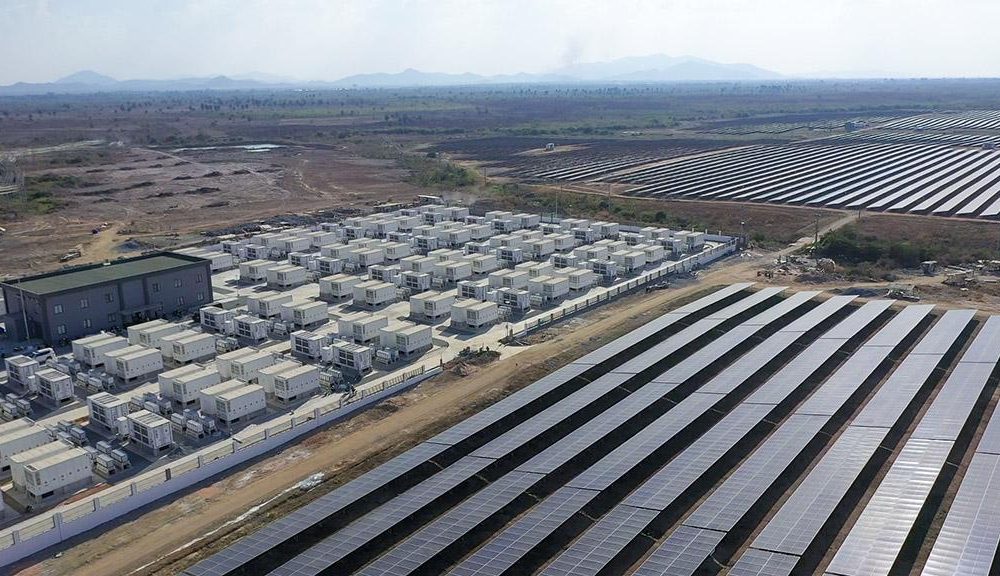
Battery energy storage deployment across Southeast Asia is being held back more by market rules, policy uncertainty and financing structures than by technology, according to a joint assessment by the ASEAN Centre for Energy and the International Energy Agency.
Quick Skim
- Renewable Energy Capacity Could Reach 231GW by 2030
- Most ASEAN Markets Still Lack Mature Storage Frameworks
- Single-Buyer Power Markets Limit Revenue Opportunities
- Philippines and Singapore Offer More Flexible Models
- Grid Codes and BESS Classification Remain Unclear
- Thailand Targets 14.5GW of Battery Storage
- Vietnam Plans Up to 16.3GW by 2030
- Indonesia Targets 6GW of Utility-Scale BESS
- Cambodia Could Need Around 2GW of Storage
- Financing Remains Another Major Barrier
- Data Centres Add Pressure to Regional Power Systems
- ASEAN Pushes Common Battery Standards
- Southeast Asia’s Storage Challenge Shifts to Policy
The region is expected to add significantly more renewable energy over the rest of the decade, increasing the need for storage to balance solar and wind generation and support grid reliability.
Renewable Energy Capacity Could Reach 231GW by 2030
Southeast Asia had around 53.7GW of variable renewable energy capacity in 2024, primarily solar and wind.
That could rise to about 231GW by 2030, representing roughly 28% of installed power capacity and 21% of electricity generation across the report’s ASEAN scenarios.
Battery storage will become increasingly important as variable renewable energy reaches higher shares of the regional electricity mix.
The ASEAN Renewable Energy Long-term Roadmap suggests storage capacity could increase by around five times from 2024 levels.
Most ASEAN Markets Still Lack Mature Storage Frameworks
The report groups ASEAN countries according to the maturity of their renewable-energy integration and market frameworks.
The Philippines and Singapore are classified as transformational markets, where storage already has greater access to commercial revenue opportunities.
Cambodia, Indonesia, Malaysia, Thailand and Vietnam are categorised as enabling markets, while Brunei, Laos, Myanmar and Timor-Leste remain at an earlier foundational stage.
The differences show that battery deployment is not progressing evenly across Southeast Asia.
Single-Buyer Power Markets Limit Revenue Opportunities
One of the biggest challenges is the structure of electricity markets.
Many ASEAN countries still operate under a single-buyer model, where one utility purchases electricity from generators.
This can restrict battery projects because storage may not have access to multiple revenue streams such as:
- Energy trading
- Capacity payments
- Frequency regulation
- Reserve services
- Other ancillary grid services
In these markets, long-term power purchase agreements and regulated procurement programmes become particularly important to making BESS projects financially viable.
Philippines and Singapore Offer More Flexible Models
The Philippines and Singapore provide examples of markets where battery storage has greater commercial flexibility.
The Philippines operates a wholesale electricity market with five-minute dispatch and settlement and introduced a reserve market in 2024.
Its fourth Green Energy Auction awarded 20-year contracts covering 1.19GW of renewable energy projects paired with at least four hours of storage.
Singapore, meanwhile, reached its 200MW energy storage target for 2025 two years ahead of schedule in 2023.
These markets allow storage projects to access more than one source of revenue, improving project economics.
Grid Codes and BESS Classification Remain Unclear
Several ASEAN markets still lack clear technical and regulatory frameworks governing battery storage.
A BESS can operate as both a power consumer and power generator depending on whether it is charging or discharging.
Without clear asset classifications, developers may face uncertainty over:
- Ownership rules
- Grid connection requirements
- Network charges
- Market participation
- Permitting
- Payment structures
The report recommends that governments clarify these rules as storage becomes a larger part of national power systems.
Thailand Targets 14.5GW of Battery Storage
Thailand’s draft Power Development Plan for 2026 to 2050 includes around 14.5GW of new battery storage capacity by 2037.
However, Thailand still operates largely under an enhanced single-buyer model, with the Electricity Generating Authority of Thailand acting as the main purchaser for large-scale storage.
Regulatory changes, including more flexible power markets and direct power purchase agreements, are being considered to improve the commercial environment for BESS investment.
Vietnam Plans Up to 16.3GW by 2030
Vietnam’s revised power development plan includes up to 16.3GW of BESS capacity by 2030.
The country has also introduced a regulated power purchase agreement framework that includes capacity and energy payments.
However, detailed permitting arrangements for storage projects remain under development.
Vietnam is already moving into a more advanced stage of renewable-energy integration than many other ASEAN countries, increasing the urgency of developing flexible generation and storage capacity.
Indonesia Targets 6GW of Utility-Scale BESS
Indonesia’s PLN electricity plan for 2025 to 2034 includes 6GW of utility-scale battery storage alongside another 3.6GW of solar-plus-storage capacity by 2035.
However, legacy take-or-pay power purchase agreements can reduce system flexibility by requiring utilities to pay conventional generators even when their electricity is not needed.
Reforming some of these contractual structures could become important as renewable energy and battery storage expand.
Cambodia Could Need Around 2GW of Storage
The report estimates that Cambodia may require approximately 2GW of battery storage to support a 42% variable renewable-energy share by 2030.
That compares with a current national target of around 200MW.
The 2GW figure is based on regional energy-system modelling rather than an official Cambodian government target, but it illustrates how quickly storage requirements could grow as solar and wind deployment accelerates.
Financing Remains Another Major Barrier
High upfront costs remain a challenge for battery-storage developers.
The report identifies several financial barriers, including:
- High capital expenditure
- Limited visibility over long-term revenue
- Foreign-exchange risk
- Higher insurance costs
- Uncertainty over project bankability
Battery projects can become easier to finance when developers can combine several revenue streams rather than relying on a single payment mechanism.
Data Centres Add Pressure to Regional Power Systems
Rapid data-centre expansion is adding another reason for Southeast Asian countries to invest in grid flexibility.
Regional data-centre power demand is projected to increase from around 2.6GW in 2025 to 10.7GW by 2035.
That growth will increase the need for reliable power infrastructure, particularly in markets such as Singapore, Malaysia, Indonesia, Thailand and Vietnam.
Battery storage can help support grid stability, manage peak demand and integrate renewable generation into increasingly electricity-intensive digital infrastructure.
ASEAN Pushes Common Battery Standards
For 2026 to 2028, the report recommends developing an ASEAN technical guideline for battery energy storage.
It also calls for safety standards aligned with international frameworks including IEC 62933, IEC 62619 and IEC 62477.
Beyond 2028, the report recommends allowing storage operators to combine revenues across energy, reserve and ancillary-service markets, while reconsidering legacy power contracts where appropriate.
Concessional finance could also help accelerate projects in markets where commercial financing remains difficult.
Southeast Asia’s Storage Challenge Shifts to Policy
Battery technology is already capable of supporting a much larger role in Southeast Asia’s electricity systems.
The bigger challenge is creating the regulatory and commercial environment needed for projects to move from planning into operation.
As renewable-energy capacity, data centres and electricity demand grow, governments will increasingly need to define how storage is classified, paid, connected and operated.
For Southeast Asia, the next stage of BESS growth may therefore depend less on technological improvements and more on market reform, clearer regulation and stronger project bankability.