


Malaysia’s AI and Smart Factory Ambitions Face Growing Engineering Talent Gap
Malaysia’s push into artificial intelligence, semiconductors and smart manufacturing is increasing pressure on its engineering workforce, prompting industry players to focus on both training more...

Malaysia’s push into artificial intelligence, semiconductors and smart manufacturing is increasing pressure on its engineering workforce, prompting industry players to focus on both training more engineers and using Industrial AI to raise engineering productivity.
Quick Skim
- Semiconductor Strategy Targets 60,000 Skilled Engineers
- Industrial AI Could Raise Engineering Productivity
- Smart Factories Need More Than Software
- IME and TVETMARA Target Engineering Pipeline
- Penang Semiconductor Sector Faces Its Own Capacity Challenge
- Industrial Knowledge Becomes a Strategic Asset
- Malaysia Needs Both More Engineers and More Productive Engineers
IME Holdings has brought together SOLIDWORKS, MIMOS and manufacturing experts to discuss how AI can help close the country’s engineering capacity gap, while also signing a letter of intent with TVETMARA Balik Pulau to strengthen the future talent pipeline.
Semiconductor Strategy Targets 60,000 Skilled Engineers
Malaysia’s National Semiconductor Strategy includes a target to develop 60,000 high-skilled semiconductor engineers, supported by around US$6 billion in fiscal incentives.
Malaysia already accounts for roughly 13% of global back-end semiconductor assembly, test and packaging activity, making workforce availability critical as the country seeks to expand further into higher-value chip activities.
At the same time, the New Industrial Master Plan 2030 targets 3,000 smart factories by 2030, compared with just 74 recognised facilities as of May 31, 2026.
That creates a common challenge across AI, semiconductors and advanced manufacturing: all three depend on the same pool of engineers.
Industrial AI Could Raise Engineering Productivity
IME argues that Malaysia cannot solve the capacity problem through training alone.
The second route is to make each engineer more productive by using AI to reduce repetitive work and free up time for higher-value activities such as design, problem-solving and innovation.
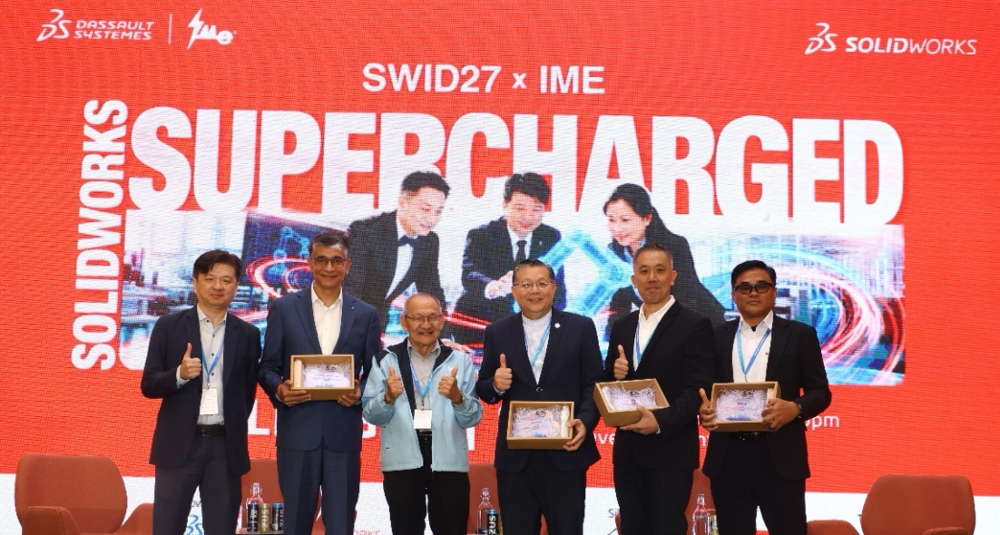
At the IME SOLIDWORKS Innovation Day 2027 in Selangor, panel discussions focused on how Industrial AI differs from general-purpose AI when engineering decisions need to be accurate, traceable and grounded in physical systems.
Participants also examined how manufacturers can capture engineering knowledge before it is lost through retirement or workforce turnover.
Smart Factories Need More Than Software
Malaysia’s manufacturing sector is still early in its AI adoption journey.
Separate industry research has found that many manufacturers remain in the exploration or pilot stage, with workforce capability, technical barriers and limited resources among the main obstacles to scaling AI more widely.
For factories, this means deploying AI successfully requires more than buying software.
Manufacturers also need engineers who understand production systems, machinery, data quality and operational constraints well enough to apply AI safely and effectively.
IME and TVETMARA Target Engineering Pipeline
IME and TVETMARA Balik Pulau have signed a letter of intent to explore cooperation in several areas.
These include:
- Certified SOLIDWORKS Associate qualifications
- Internship opportunities
- Technical sharing sessions
- Industry forums for students and faculty
- An Industrialmanship Programme
The initiative is intended to give students greater exposure to real engineering environments before entering the workforce.
TVETMARA Balik Pulau is part of a network of 25 MARA technical and vocational institutions and is located in Penang, one of Malaysia’s main semiconductor and electronics manufacturing hubs.
Penang Semiconductor Sector Faces Its Own Capacity Challenge
The engineering talent discussion is also moving to Penang, where IME will hold another Industrial AI panel focused specifically on the semiconductor supply chain.
Penang’s electrical and electronics ecosystem includes more than 1,000 companies and over 200,000 workers, according to figures cited by the organisers.
The discussion will examine how AI is changing chip manufacturing, packaging and equipment operations, and whether it can help local suppliers deliver more with limited engineering resources.
Industrial Knowledge Becomes a Strategic Asset
Another issue is how companies preserve engineering knowledge.
Experienced engineers often carry years of production know-how that may not be documented formally.
Industrial AI systems could help structure and capture this knowledge, allowing younger engineers to access previous troubleshooting experience, design decisions and process insights more efficiently.
For manufacturers, this could become increasingly important as experienced workers retire and competition for technical talent grows.
Malaysia Needs Both More Engineers and More Productive Engineers
Malaysia’s industrial ambitions depend on significantly increasing its engineering capacity.
Training more workers remains essential, particularly across semiconductors, automation and smart manufacturing.
At the same time, Industrial AI could help companies stretch existing resources by reducing repetitive engineering work and improving access to technical knowledge.
The challenge is therefore twofold: build a larger engineering workforce and equip that workforce with tools that allow each engineer to contribute more effectively.