



From 60kW to 500kW a Rack. The Number that Broke the Old Data Centre Design
26 Oct 2026 · Stories from Data Centre World Asia Danfoss’s Sankar Padmanabhan on exploding rack density, the electrical choke point, and why bigger isn’t the answer. Modular is. One number tells the...

26 Oct 2026 · Stories from Data Centre World Asia
Quick Skim
Danfoss’s Sankar Padmanabhan on exploding rack density, the electrical choke point, and why bigger isn’t the answer. Modular is.
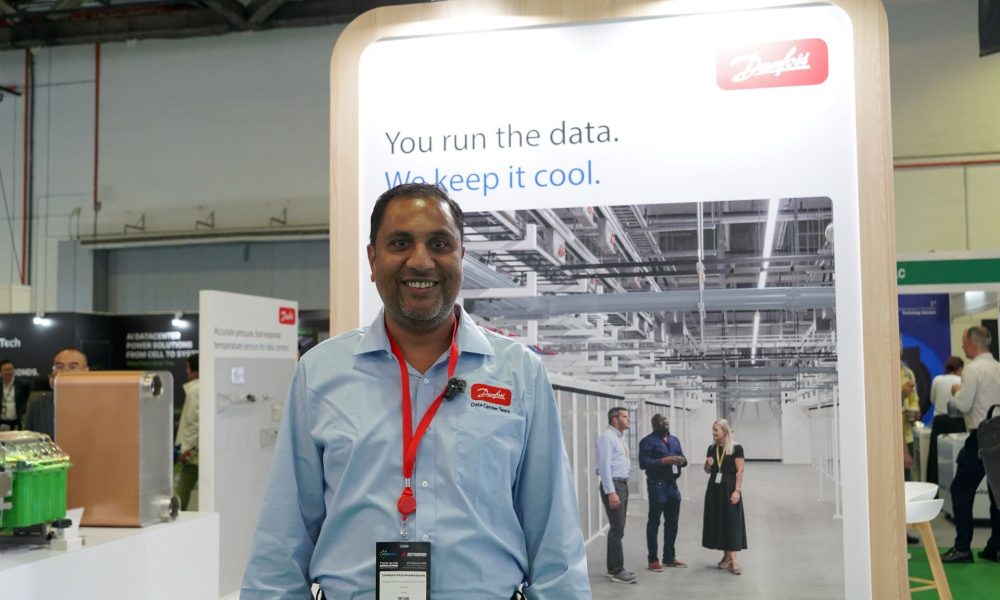
One number tells the story of the last two years. “It started at like 40 to 60 kW per rack, and now we are talking about 120, 150,” says Sankar Padmanabhan, Danfoss’s Global Solutions Expert for data centres. “And there’s also discussion about going to 500 kW per rack.”
The density, the heat rejection and the capacity have, in his word, been exploding, and everything downstream of that number is scrambling to keep up.
The Choke Point is Electrical
Ask what that does to delivery and Sankar points away from the server. “The electrical side of the infrastructure is still the choke point,” he says. Transformers and switchgear carrying the critical lead times. Power still comes from the grid, though he hears the same “bring your own power” talk as everyone else on the floor as capacities climb.
The Waste is Going Out as Heat
Danfoss’s own kit mostly rejects heat to ambient air rather than drawing water, which puts his eye on where the real waste sits. “All the power that you send to a data centre is converted into heat and is just going out to ambient,” he says. Capture it; to heat buildings, or convert it to cooling or electricity, “that will be the greatest benefit.” It is the single biggest pool of recoverable value in the building, and most of it is currently vented to the sky.
Bigger Isn’t the Answer. Modular Is
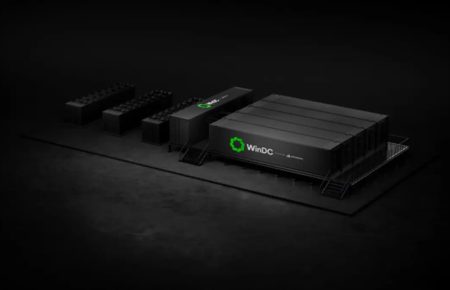
His real-vs-hype call is about how operators scale. The instinct is that a huge data centre needs huge equipment. “What is the best way to do that is being modular in your design,” he counters, “so you can scale up quickly when you are adding more capacity. Speed and adaptability is key in data centres. So you always design for modularity.” It doesn’t all have to be new, either, he sees a steady opportunity converting part of an old facility to liquid cooling and taking the benefit.
The Monday Takeaway
Design for modularity so capacity scales in steps, not step-changes; sequence the electrical long-lead items first, because that’s the choke point; and treat rejected heat as a resource to recover, not an exhaust to vent.
This interview is part of Industrial Gemba’s coverage from Data Centre World Asia. Responses have been edited for length and clarity. Watch the full interview on YouTube.