Singapore BusTech and RailTech Challenges Build Future-Ready Public Transport Skills
Singapore is strengthening technical capabilities across its public bus and rail workforce through the 2026 BusTech and RailTech Grand Challenges, where transport professionals and students tackled...

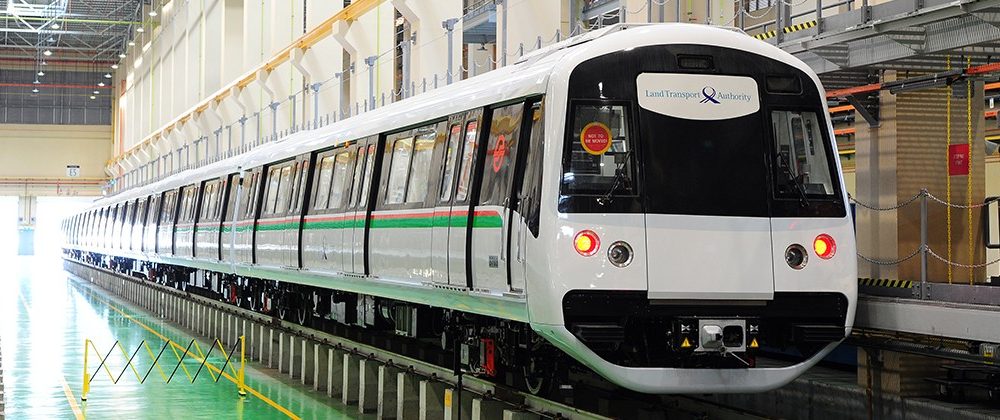
Singapore is strengthening technical capabilities across its public bus and rail workforce through the 2026 BusTech and RailTech Grand Challenges, where transport professionals and students tackled real-world problems involving electric buses, rail systems, automation and machine learning.
Quick Skim
- Electric Bus Diagnostics Put Technicians to the Test
- Students Develop Autonomous Passenger Assistance Systems
- RailTech Focuses on Core Engineering Systems
- Teams Troubleshoot Real Rail Equipment
- Students Automate LRT Mileage Tracking
- Practical Challenges Support Knowledge Transfer
- More Than 600 Public Transport Jobs Available
- Public Transport Moves Towards More Advanced Technical Skills
Held on 24 October at ITE College West, the biennial event brought together the Land Transport Authority, public transport operators, educational institutions and industry partners to develop solutions for a more technology-driven public transport sector.
Electric Bus Diagnostics Put Technicians to the Test
The BusTech Grand Challenge focused on practical skills needed for Singapore’s growing electric bus fleet.
Eight teams from SBS Transit, SMRT Buses, Tower Transit Singapore and Go-Ahead Singapore competed in technical challenges involving electric bus diagnostics and troubleshooting of high-voltage battery systems.
Participants were assessed on their technical knowledge, diagnostic capabilities and compliance with safety requirements.
As electric buses become more common, these skills are becoming increasingly important for maintenance teams responsible for keeping fleets available and reliable.
Students Develop Autonomous Passenger Assistance Systems
The student category brought together 12 teams from seven Institutes of Higher Learning.
Teams were tasked with developing prototypes for an integrated Autonomous Passenger Assistance System designed to improve accessibility and support passengers with different mobility needs.
Their concepts incorporated technologies including:
- Advanced sensing
- Machine learning
- Automation
- Intelligent passenger assistance
Solutions were evaluated on functionality, viability and creativity.
The challenge gave students an opportunity to apply emerging technologies to practical transport problems rather than working only on theoretical projects.
RailTech Focuses on Core Engineering Systems
The RailTech Grand Challenge concentrated on strengthening competencies in rail operations and maintenance.
Six mixed teams of rail technicians and ITE students worked across four core railway domains:
- Signalling
- Rolling stock
- Power systems
- Permanent way systems
Each team paired two experienced rail technicians with three students, creating a direct channel for practical knowledge transfer between current practitioners and future rail workers.
Teams Troubleshoot Real Rail Equipment
Participants were required to complete hands-on engineering tasks including modifying signalling circuits and troubleshooting a high-speed circuit breaker.
A theory component was also introduced this year to strengthen understanding of rail safety and engineering fundamentals.
The combination of practical troubleshooting and technical theory reflects the type of capability needed in modern rail systems, where technicians must understand both physical equipment and increasingly complex electronic control systems.
Students Automate LRT Mileage Tracking
The RailTech Open Innovation Challenge brought together 11 teams from eight Institutes of Higher Learning.
Their task was to develop a solution for automating Light Rail Transit vehicle mileage tracking and demonstrate how the technology could be scaled for use across Rapid Transit System operations.
Projects were assessed on:
- Innovation
- Effectiveness
- Feasibility
- Scalability
Automating mileage tracking could improve asset information and provide more consistent data to support maintenance planning and fleet management.
Practical Challenges Support Knowledge Transfer
One of the key elements of both competitions was collaboration between experienced transport professionals and students.
Rail technicians acted as mentors during the RailTech challenge, allowing students to work directly with practitioners who manage transport systems in daily operations.
This kind of hands-on learning can help preserve technical knowledge while giving younger workers exposure to real maintenance and engineering conditions.
It also supports Singapore’s broader effort to build a stronger pipeline of engineers and technicians for the public transport sector.
More Than 600 Public Transport Jobs Available
Workforce development will continue beyond the competitions.
A Public Transport Career Fair will be held on 17 November 2026 at the Devan Nair Institute for Employment and Employability.
More than 600 vacancies will be available across LTA and public transport operators.
Positions include:
- Assistant Engineers
- Deputy Managers
- Bus Technicians
- Technical Officers
- Station Managers
- Bus Captains
- Enforcement Officers
The career fair forms part of efforts to attract more Singaporeans into technical and operational roles across the public transport industry.
Public Transport Moves Towards More Advanced Technical Skills
Singapore’s bus and rail systems are becoming increasingly dependent on technologies such as electric drivetrains, high-voltage batteries, advanced signalling, automation and machine learning.
That shift is changing the skills required from technicians and engineers.
The BusTech and RailTech Grand Challenges provide a practical way to develop those capabilities by connecting workforce training, education and real-world transport problems.
For Singapore’s public transport sector, future reliability will depend not only on new technology but also on having technicians and engineers capable of diagnosing, maintaining and improving increasingly complex systems.