




XPENG Starts Humanoid Robot Production as IRON Moves Toward Mass Manufacturing
XPENG has commissioned a new humanoid robot production line in Guangzhou, with its next-generation IRON robot autonomously walking off the line as the Chinese company moves from prototype development...

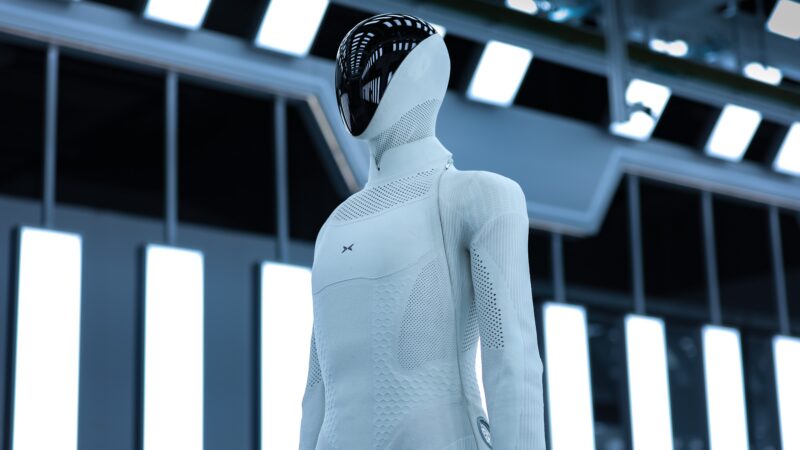
XPENG has commissioned a new humanoid robot production line in Guangzhou, with its next-generation IRON robot autonomously walking off the line as the Chinese company moves from prototype development towards volume manufacturing.
Quick Skim
XPENG said the facility is the first automated production line designed for advanced general-purpose humanoid robots, with more than 80% of its core manufacturing processes automated. The company is applying automotive-grade production and quality-control methods developed through its electric vehicle operations to robot manufacturing.
Automotive Manufacturing Systems Move Into Robotics
The new production line combines precision manufacturing with processes adapted from XPENG’s automotive operations.
According to the company, the facility was designed for high levels of automation, production flexibility and consistent quality across critical manufacturing processes.
The approach reflects a broader shift in humanoid robotics as developers move beyond individual prototypes and begin addressing the manufacturing systems required to build robots repeatedly at larger scale.
XPENG Chairman and CEO He Xiaopeng said the company plans to continue increasing production speed and manufacturing capacity as its robotics business develops.
IRON Uses Three AI Chips for Onboard Intelligence
IRON is designed as a general-purpose humanoid platform capable of operating across different commercial and real-world environments.
The robot has 76 degrees of freedom across its body and 21 degrees of freedom in each hand, giving it a high level of movement and dexterity.
It is powered by three of XPENG’s Turing AI chips, providing up to 2,250 TOPS of effective computing power.
XPENG said the computing architecture allows its Physical AI foundation model to run directly onboard the robot, reducing dependence on remote operation while supporting lower-latency decision-making.
Physical AI Moves Closer to Commercial Deployment
XPENG is positioning IRON as part of its wider Physical AI strategy, which applies artificial intelligence to machines capable of sensing and interacting with real-world environments.
Rather than operating solely through predetermined movements, the company is developing the robot to perform increasingly complex tasks using onboard AI and to improve through interaction with real-world environments.
Initial commercial deployments are expected to take place in XPENG’s own stores and campuses.
A broader market launch and deliveries in China and overseas markets are planned for 2027.
Mass Production Targeted by End of 2026
XPENG plans to begin mass production of its humanoid robots by the end of 2026.
The commissioning of the production line is therefore an important step between prototype development and commercial-scale manufacturing.
For humanoid robotics companies, scaling production requires more than developing capable AI models. Manufacturers also need repeatable assembly processes, component supply chains, quality-control systems and production equipment capable of delivering consistent robot performance.
XPENG’s decision to adapt automotive manufacturing practices gives it an existing foundation for addressing those requirements.
Robotics Business Raises More Than US$900 Million
The manufacturing milestone follows a major funding round for XPENG’s robotics business.
In August, the unit raised more than US$900 million at a post-money valuation exceeding US$6.3 billion, with investment led by IDG Capital and participation from Gaorong Ventures, Tencent and Alibaba.
XPENG said the funding would support humanoid robot mass production, continued development of Physical AI models and future commercial deployment.
The investment underscores growing capital flows into China’s embodied and Physical AI sector as companies compete to move humanoid robots from demonstrations into commercial operations.
Humanoid Robotics Enters Manufacturing Phase
The launch of XPENG’s production line signals a shift in the humanoid robotics industry from primarily research-led development towards industrial manufacturing.
Automated production, quality control and scalable assembly will become increasingly important as developers target wider commercial deployment.
XPENG’s strategy brings together automotive manufacturing, onboard AI, robotics and large-scale production systems, positioning humanoid robots as a new manufacturing category rather than purely an experimental technology.
With IRON scheduled for mass production by the end of 2026 and wider deliveries planned for 2027, the next test will be whether these systems can move from controlled deployments into repeatable commercial applications at scale.