India Opens Port-Based E-Methanol Facility to Support Maritime Decarbonisation
India has started development of its first port-based e-methanol plant at Kandla to supply green maritime fuel and aid net zero goals by 2070.

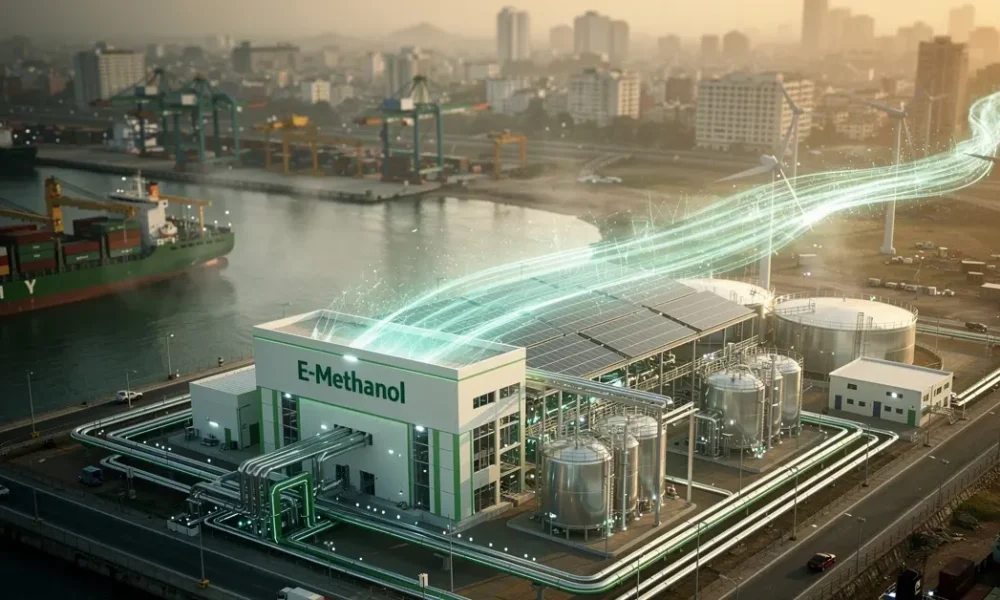
India has initiated construction of an e-methanol production facility at Deendayal Port Authority in Kandla, Gujarat, aimed at supporting decarbonisation in maritime transport and expanding clean energy exports along the Asia-Europe corridor.
E-Methanol Facility Features and Development Timeline
The plant will produce 150 tonnes per day of e-methanol using renewable energy sources, water, and carbon dioxide derived from biological processes. Initial operations will begin with a 50-tonne-per-day unit by January 2027, followed by expansion to 150 tonnes per day by March 2027.
The project represents a joint effort between Deendayal Port Authority and Assam Petro-Chemicals Limited, with a total investment of ₹2,300 crore (approximately US$276 million). The first phase accounts for ₹1,200 crore (US$144 million) and the second phase for ₹1,100 crore (US$132 million), with a capital contribution split of 76:24.
Implications for Maritime Operations and India’s Industrial Strategy
The facility is positioned to support cleaner shipping on one of the world’s busiest trade routes by providing a lower-cost green fuel alternative, estimated at around US$750 per tonne compared to international rates near US$1,300 per tonne. This aligns with India’s goals to expand its commercial fleet and increase domestic shipbuilding capacity.
The project is also expected to generate more than 3,500 direct and indirect jobs across transport, storage, fuel production, and associated services. Deendayal Port Authority will provide equity capital alongside land, desalinated water, and renewable energy inputs, including green hydrogen.
Officials indicated that this development is part of India’s broader maritime modernisation and energy self-reliance programmes, aiming to position the country as a key player in the global green fuel supply chain.
According to government statements, the Kandla plant will serve as a model for future port-based green fuel hubs across India, supporting the government’s target of reaching net zero emissions by 2070.