Asia’s Next Wave of AI Startups Moves From Software Into the Physical World
Asia’s Next Wave of AI Startups Moves From Software Into the Physical World More than half of the companies recognised in the 2026 NextGen Tech 30 are applying AI to physical industries such as...

Asia’s Next Wave of AI Startups Moves From Software Into the Physical World
More than half of the companies recognised in the 2026 NextGen Tech 30 are applying AI to physical industries such as manufacturing, construction, healthcare, logistics and space, marking a shift away from the software-heavy startup cohorts of previous years.
Quick Skim
- Physical AI Becomes a Bigger Part of the Cohort
- Groundup.ai Among Companies Applying AI to Industry
- Humanoid Robotics Moves Into Focus
- AI Expands Into Healthcare and Other Physical Industries
- Scaling Requires More Than Technology
- Singapore Positions Itself as a Regional Scaling Hub
- AI Moves Deeper Into Industrial Operations
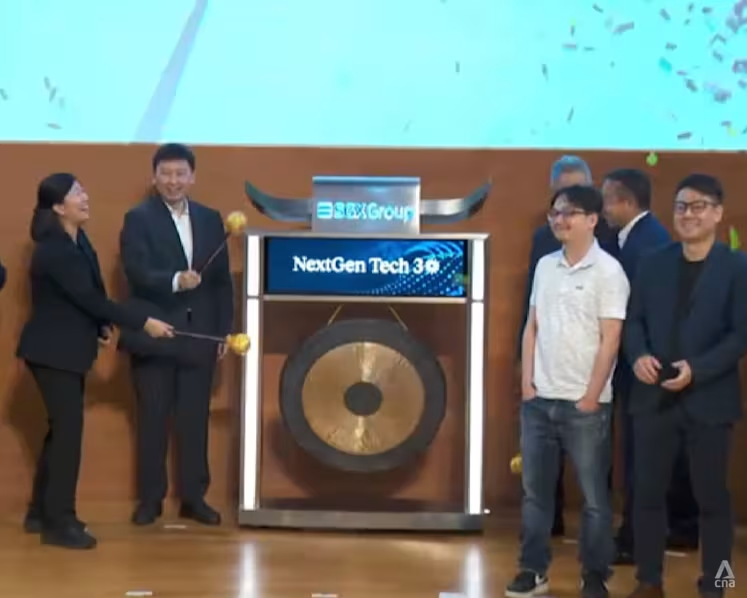
The 30-company cohort was unveiled in Singapore by Granite Asia and the Singapore Exchange, bringing together growth-stage technology firms from across Asia. Nearly half are headquartered in Singapore, while about a third are from Japan, with others from China, India, Malaysia and South Korea.
Physical AI Becomes a Bigger Part of the Cohort
This year’s companies span technologies including humanoid robots, industrial maintenance systems, underwater drones, custom silicon, hyperspectral satellites and sustainable aviation fuel systems.
Granite Asia described the trend as part of what it calls “AI 3.0” — a phase where AI models and agents move beyond software and are deployed directly into real-world environments.
For industrial companies, this means AI is increasingly being connected to machines, physical assets and operational workflows rather than operating only as a digital tool.
Groundup.ai Among Companies Applying AI to Industry
Singapore-based Groundup.ai was among the companies recognised in the 2026 cohort.
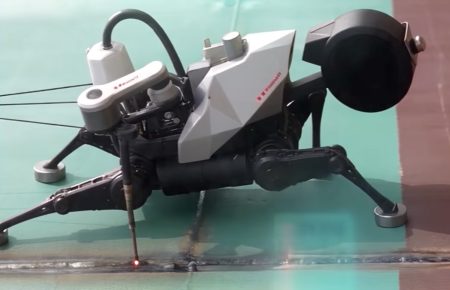
The company applies AI to industrial maintenance, using machine data to identify equipment anomalies and support maintenance teams in monitoring physical assets.
Its inclusion reflects the broader shift within the cohort towards technologies that operate directly across factories, infrastructure and other physical environments.
Humanoid Robotics Moves Into Focus
Another Singapore company, Menlo Research, is developing an open-source humanoid robot called Asimov alongside its AI agent, Jan.
Founder Daniel Ong highlighted one of the biggest challenges facing humanoid robotics: giving AI systems an understanding of physical space and enabling robots to perform tasks that humans handle intuitively.
Unlike software AI, robots must deal with changing environments, physical contact and movement, making real-world deployment significantly more complex.
AI Expands Into Healthcare and Other Physical Industries
Japanese startup Craif is applying AI to cancer screening through technology that analyses microRNA extracted from urine.
The company said its system can identify signals associated with cancers including pancreatic, lung and breast cancer and is preparing to expand into Southeast Asia, including Singapore.
The cohort also includes companies applying AI across wind farms, warehouses, pharmacies, construction sites and low-Earth orbit.
Together, these applications show how AI investment is spreading into sectors where software must interact directly with equipment, infrastructure and physical processes.
Scaling Requires More Than Technology
As startups move from prototypes into commercial deployment, the challenge increasingly becomes scaling across different markets.
Speakers at the event highlighted access to capital, suppliers, engineering talent and industrial ecosystems as important factors determining whether companies can expand internationally.
Robotics companies in particular depend on dense supplier networks and specialised technical capabilities.
Menlo Research pointed to ecosystems such as Shenzhen and Odense as examples of clusters where hardware companies benefit from close access to suppliers and complementary technologies.
Singapore Positions Itself as a Regional Scaling Hub
NextGen Tech 30 is now in its third edition and is designed to connect growth-stage companies with investors, government agencies and industry partners.
The programme is led by Granite Asia in partnership with SGX and is intended to help Asian technology companies expand beyond their domestic markets.
For Singapore, the initiative also supports efforts to strengthen the country’s role as a base where emerging technology companies can access capital and regional markets.
AI Moves Deeper Into Industrial Operations
The 2026 cohort reflects a broader shift in AI development.
Rather than focusing mainly on chatbots, software applications and digital services, a growing group of companies is building AI systems that interact with machines, industrial assets, robots and infrastructure.
That transition places greater importance on areas such as reliability, hardware integration, safety and real-world performance — factors that will determine whether Physical AI technologies can move from demonstrations into large-scale industrial deployment.