



Industrial AI Advances Towards Controlled Deployment with Infrastructure Challenges
IoT Analytics reports industrial AI is moving from demonstrations to controlled deployments, highlighting infrastructure, safety and economic constraints.


IoT Analytics has identified a transition in industrial AI from pilot demonstrations to limited, tightly controlled deployments, emphasising infrastructure readiness and operational constraints across manufacturing and engineering sectors.
Quick Skim
Use of AI Agents Remains Controlled in Industrial Applications
The research highlights adoption of AI agents capable of operating engineering software within predefined limits. Cadence and Dassault Systèmes demonstrated agents that plan and execute tasks on engineering tools, with human review maintained throughout. This marks a movement from simple AI-generated suggestions towards systems conducting automated actions under strict human oversight.
Security and safety considerations lead vendors to enforce permissions separately from AI models. NVIDIA’s OpenShell runtime exemplifies external enforcement of operational limits. Early factory trial agents were confined to creating maintenance work orders, avoiding direct machine setting adjustments. Such constraints respond to the deterministic and safety-critical nature of industrial environments.
Simulation Gains Role but Real-World Data Remains Critical
The report recognises increased use of robotics simulation for training, yet stresses the importance of measurement data from physical systems in validating reliability. Lightwheel’s calibration of robot simulations against actual force measurements showed a 4.4% error margin, underscoring the value of operational data. Manufacturers with access to accurate real-world data may retain a competitive edge over those relying mainly on synthetic environments.
Data-Centre Infrastructure and Power Limitations Affect Deployment
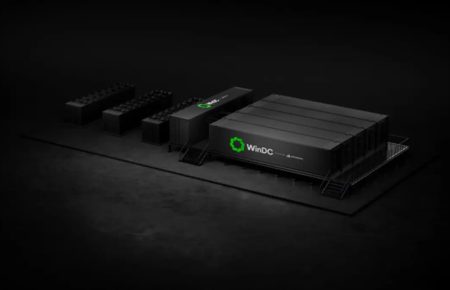
On AI infrastructure, IoT Analytics notes streamlined data-centre deployment via virtual validation and prepared-site designs. For instance, NVIDIA’s DSX POD can reduce installation from six months to as little as 14 days at prepared locations. However, the long-term cost-effectiveness of expedited deployment remains to be determined through completed projects.
Power availability also constrains scaling. Tests with Nscale showed sharing power headroom allowed operation of 192 GPUs instead of 140 at the same 264.4 kW limit, increasing throughput by nearly 50% but raising power draw by 19.7% and latency by 17%. The analysis indicates grid access, especially in Europe, may limit industrial AI and data-centre expansions.
Economic and Operational Factors Shape Industrial AI Adoption
The research emphasises that broader use of AI in industrial settings hinges on cost, integration effort, power supply, and outcome validation as much as on computing power. Factory operators appear likely to expand AI agent permissions cautiously in stages, prioritising reliability and safety. This measured approach may slow uptake compared with less regulated sectors but reflects the specific demands of industrial environments.
Satyajit Sinha, Senior Principal Analyst at IoT Analytics, said the main challenge lies in introducing probabilistic AI into contexts requiring deterministic control with strict safety and repeatability. He noted that “NVIDIA provides important building blocks, but closing this gap requires industrial software vendors, system integrators and manufacturers.”
Industrial AI progress will depend on developing validated, controllable systems that align with economic and operational constraints in manufacturing and engineering environments.