



China Expands Manufacturing Investment in Africa Amid Ongoing Industrial Dependencies
China’s growing manufacturing investment in Africa increases industrial activity but does not yet deliver broad autonomous capability or balanced trade relations.

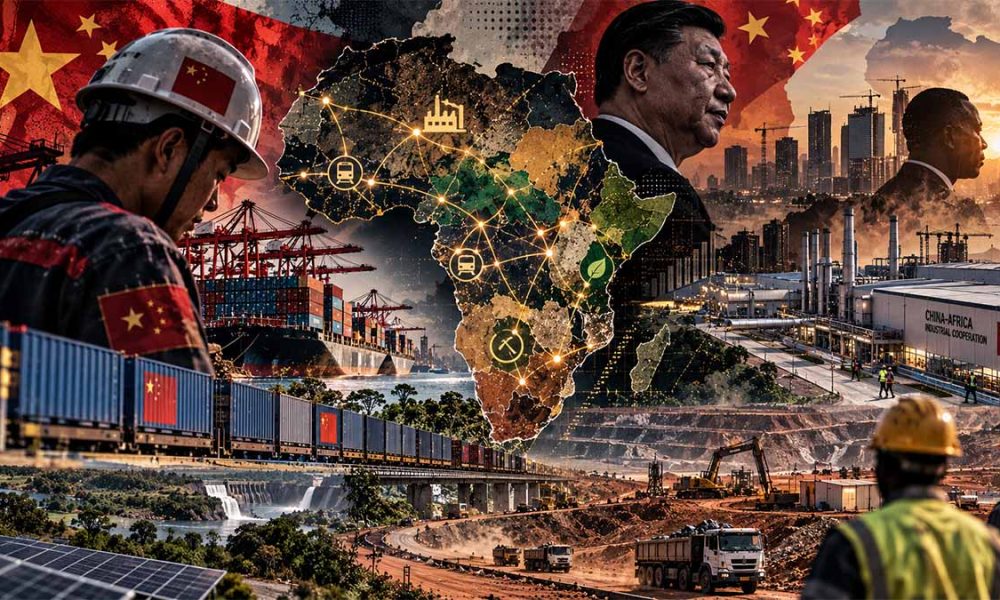
Chinese manufacturing investment in Africa is reshaping economic engagement but falls short of establishing continent-wide industrial autonomy, according to a government-level strategic assessment completed in October 2026.
Quick Skim
- Manufacturing Investment Outpaces Extractive Activities
- Trade Imbalance Persists Despite Industrial Expansion
- East Africa Highlights Complexities of Industrial Development
- Ownership and Control Distinguish Industrial Sovereignty
- Infrastructure and Operational Challenges Affect Competitiveness
- European Strategic Interests in Diversifying Supply Chains
- Outlook to 2035 Hinges on Capability Development
- Key Intelligence Priorities for Policymakers
Manufacturing Investment Outpaces Extractive Activities
In 2025, Chinese direct investment in African manufacturing and processing was reported at $7.7 billion, exceeding the $4.8 billion invested in extractive industries. This shift signifies a diversification beyond traditional resource extraction and infrastructure projects, particularly in East Africa where Kenya and Tanzania have become focal points. However, these figures represent announced transactions and require reconciliation with completed investments and operational capacity.
Trade Imbalance Persists Despite Industrial Expansion
China’s merchandise trade with Africa reached approximately $348.05 billion in 2025. Chinese exports to the continent amounted to $225.03 billion, growing at a faster rate than imports from Africa, which totalled $123.02 billion. This generated a trade surplus of about $102.01 billion in China’s favour, indicating that expanding manufacturing investment has yet to balance trade or significantly increase intra-African technological and commercial capacity.
East Africa Highlights Complexities of Industrial Development
Kenya hosts over 350 Chinese companies with declared projects valued at approximately $11 billion, mostly in manufacturing, though actual operational data remain unverified. Tanzania reported commitments exceeding $12.5 billion since 2017, with manufacturing accounting for nearly two-thirds and an estimated 150,000 jobs associated, yet these figures need validation to discern completed investment and realised employment.
Ownership and Control Distinguish Industrial Sovereignty
Ownership of manufacturing assets in Africa by Chinese firms does not necessarily translate to local industrial sovereignty. Sustainable industrialisation depends on local retention of engineering knowledge, management authority, supplier development, and the ability to generate higher-value exports. Foreign-controlled factories may generate employment and output while remaining reliant on imported inputs, foreign technology, and external commercial networks.
Infrastructure and Operational Challenges Affect Competitiveness
Reliable electricity supply, affordable industrial finance, efficient logistics, and strong supplier networks are critical to industrialisation. Sub-Saharan African firms face frequent electricity outages—with about 72% experiencing interruptions in 2025—raising costs through generator use and reducing production reliability. Such structural limitations often favour foreign-owned enterprises with access to dedicated infrastructure, further challenging domestic suppliers and limiting local value addition.
European Strategic Interests in Diversifying Supply Chains
European governments, including Italy, France, Germany, and the United Kingdom, focus on fostering African industrial autonomy to mitigate strategic dependencies. The European Union’s Critical Raw Materials Act sets benchmarks for domestic extraction, processing, and recycling capacities, while promoting diversified supply sources for critical materials. European programmes, such as Italy’s Piano Mattei and France’s Choose Africa initiative, target infrastructure, enterprise finance, and technical capacity building aimed at supporting commercially viable domestic manufacturers rather than solely competing with Chinese investment volumes.
Outlook to 2035 Hinges on Capability Development
The strategic trajectory for African industrialisation depends on whether foreign investment translates into measurable operational capacity, domestic value added, technological transfer, and expanded supplier networks. Three scenarios frame the outlook: continued selective manufacturing with uneven local capability; accelerated capability capture through coordinated policy and infrastructure; and persistent enclave production dominated by foreign control. Official commitments under the Forum on China–Africa Cooperation (FOCAC) Beijing Action Plan (2025–2027) aim to enhance industrial parks, training, and small and medium enterprise development, but verifying these outcomes remains essential.
Key Intelligence Priorities for Policymakers
Effective assessment of investment impact requires project-level verification of disbursed capital, operational output, workforce technical advancement, domestic supplier integration, and export diversification. Institutions should coordinate to monitor electricity reliability, financial exposure, ownership structures, and technology dependencies. Distinguishing announced investment from realised industrial transformation is critical for protecting public resources and negotiating with foreign investors.
Overall, the expansion of Chinese manufacturing presence in Africa brings increased industrial activity and economic engagement opportunities. However, achieving durable industrial sovereignty will rely on African states’ ability to embed productive knowledge, broaden supplier bases, and secure diversified markets beyond the immediate interests of external investors. External partners must similarly focus on promoting resilient, commercially sustainable supply chains to support African industrial upgrading.