India’s Manufacturing Share Rises to 16.1% Amid Atmanirbhar Bharat Push
Chief Economic Advisor V. Anantha Nageswaran details India's manufacturing growth to 16.1% of GVA and policy drivers including PLI schemes and infrastructure development.

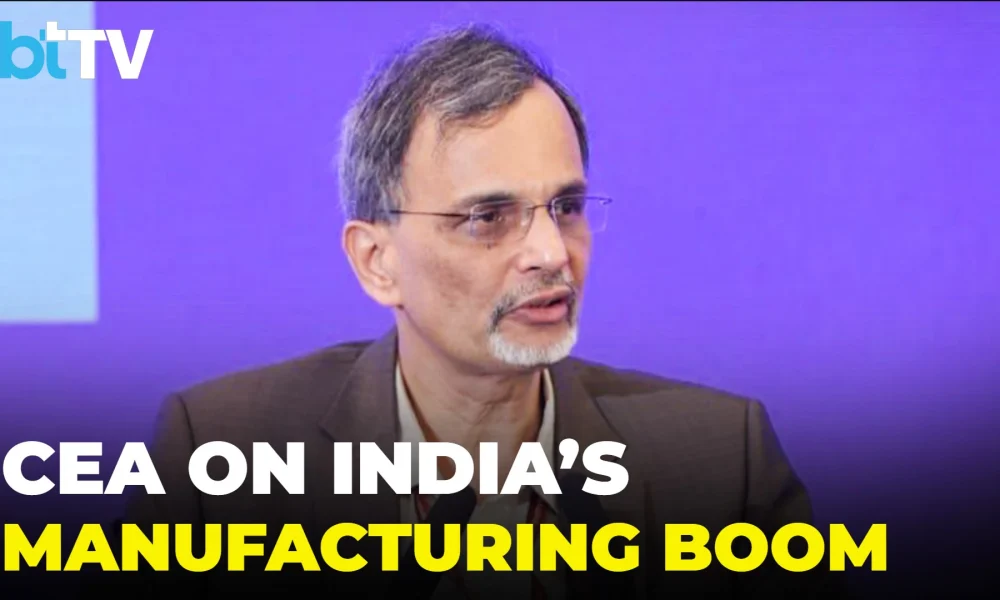
Chief Economic Advisor V. Anantha Nageswaran outlined India’s recent manufacturing growth and related government policies, emphasising the role of the Atmanirbhar Bharat initiative and Prime Minister Narendra Modi’s economic strategy in advancing the sector.
Quick Skim
Manufacturing’s Share in Gross Value Added Increases
Nageswaran noted that manufacturing’s contribution to India’s gross value added (GVA) has increased from approximately 14% to 16.1% in constant-price terms over the past three years. This growth underscores an improvement in the sector amid targeted policy efforts.
Policy Measures Driving Manufacturing Expansion
The Chief Economic Advisor highlighted several government interventions supporting the manufacturing sector. These include the implementation of production-linked incentive (PLI) schemes, enhancements in energy availability, and focused skill development programmes. Additionally, reductions in customs duties on inputs, new free trade agreements, and tax reforms have also helped optimise manufacturing supply chains and cost structures.
Prime Minister Modi’s Role in Economic Strategy
Nageswaran described Prime Minister Narendra Modi as the “architect” behind India’s manufacturing and broader economic policies. Modi’s administration has prioritised infrastructure investment and emphasised self-reliance under the Atmanirbhar Bharat framework, aiming to strengthen domestic industrial capacity.
Alignment with Long-term Economic Vision
The advisor connected current manufacturing initiatives to the government’s Viksit Bharat 2047 vision, which envisages substantial economic development by the country’s 100th year of independence. Manufacturing growth is seen as a key component in achieving sustained economic progress.
Implications for Industrial Operations in Asia-Pacific
India’s increasing manufacturing output, supported by targeted incentives and infrastructure improvements, presents implications for supply chains and industrial competitiveness within the Asia-Pacific region. Enhanced domestic production capacity could reduce import dependency and enable better integration into regional manufacturing networks.
Moving forward, monitoring the implementation and outcomes of the PLI schemes and trade agreements will be instrumental in assessing India’s ability to meet its manufacturing expansion targets and long-term economic goals.